Drone Incursions Expose Moldova’s Rising Security and Economic Burden
Five airspace violations in one day underscore how Russia’s war in Ukraine is imposing mounting security costs on neighboring Moldova.
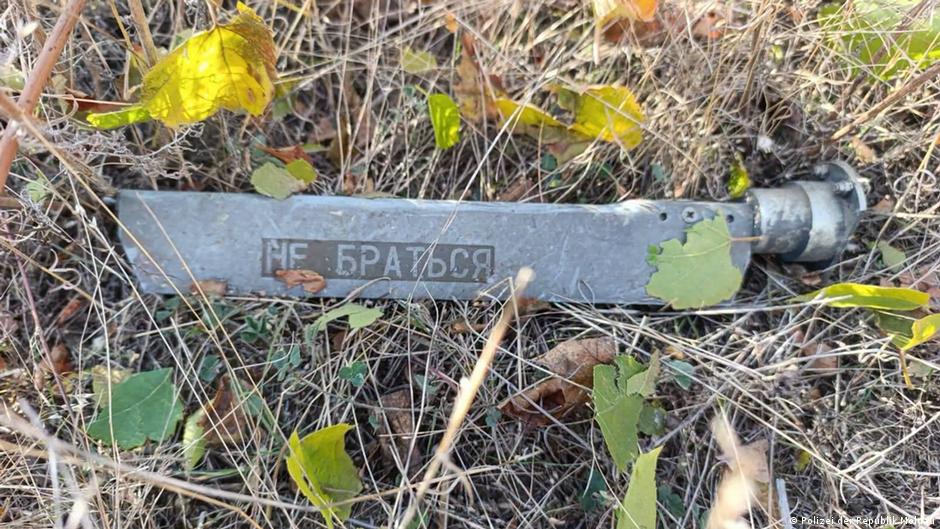
Drones violated Moldova’s airspace five times on October 16, with one aircraft falling and exploding near the village of Novye Kodryany, about 50 kilometers from the Ukrainian border, according to the country’s Defense Ministry. The incidents add to a rapidly growing series of incursions that are turning Russia’s war against Ukraine into a persistent security and economic challenge for one of Europe’s smaller economies.
The Moldovan Defense Ministry said the unmanned aerial vehicle entered the country’s airspace illegally at 4:22 p.m. local time. At 5:06 p.m., the authorities announced that the aircraft had fallen and exploded. Moldovan police subsequently published a photograph of the wreckage on Facebook.
Moldova’s Foreign Ministry strongly condemned the repeated violations, saying such incidents threatened the safety of citizens. It called on Russia to halt its attacks on Ukraine immediately and comply with international law, including respect for Moldova’s sovereignty and territorial integrity.
The repeated incursions are no longer isolated border events: their frequency increasingly makes airspace security a continuing public-policy and resource-allocation problem for Moldova.
A Sharp Acceleration in Airspace Violations
Several hours before the drone fell, the Defense Ministry reported that Moldova’s airspace had been violated seven times since October 10 against the backdrop of Russian attacks on Ukraine. Six of those cases involved drones: two occurred on October 15 and another four during the night of October 16. The later incident near Novye Kodryany brought the number of violations recorded on October 16 to five.
The seventh incident in the earlier tally involved a drone carrying explosives that fell on October 10 in Geamana, also approximately 50 kilometers from the Ukrainian border. The presence of explosives raises the potential economic cost of incursions beyond monitoring and diplomatic action, because an impact near homes, transport infrastructure or productive assets could require emergency operations, repairs and temporary restrictions on local activity.
The October events form part of a broader pattern. Since the beginning of the year, Moldova’s Defense Ministry has recorded 64 violations of national airspace, including 16 during October. Since Russia launched its full-scale war against Ukraine in 2022, the cumulative number has reached 101.
Another serious episode occurred on the morning of October 3, when three missiles and two drones entered Moldovan airspace. All five fell within the country. No deaths or injuries were reported. Moldova’s Defense Ministry said the incident resulted from Russia’s large-scale strikes on Ukraine.
Security Pressure on a Small Economy
For Moldova, the economic significance lies partly in repetition. A single incursion may be handled as an emergency. Frequent incidents, however, can create recurring demands for surveillance, police deployments, explosive-ordnance expertise, communications and coordination between defense and civilian authorities. These obligations compete with other public priorities even when an aircraft falls without causing casualties.
The pattern also illustrates a structural consequence of prolonged warfare: neighboring states can face higher security expenditure without being direct participants in the conflict. Moldova must protect and monitor its airspace while dealing with risks generated outside its borders. The imbalance is especially consequential for a country whose fiscal and institutional capacity is more limited than that of larger European states.
There are also indirect economic channels. Repeated warnings and reports of explosive drones can affect perceptions of risk among residents, businesses, insurers and investors. Border districts may experience the uncertainty most immediately, but national reputational effects can extend further. Even without documented physical damage, a sustained perception that military objects may cross the border can complicate investment decisions and increase pressure for spending on resilience.
Historically, wars have imposed costs on neighboring economies through refugee movements, disrupted trade, damaged transport routes and higher defense requirements. The Moldovan experience highlights a technologically newer version of that spillover: relatively inexpensive unmanned aircraft and long-range weapons can repeatedly penetrate the territory of a neighboring state, forcing it to maintain a more permanent state of readiness.
From Exceptional Incidents to Long-Term Policy
The concentration of 16 violations in October, compared with 64 since the start of the year, points to a recent intensification. It also changes the nature of the policy question. The issue is no longer solely how to respond after debris is discovered, but how Moldova can sustain detection, warning and civil-protection systems over time.
The Moldovan government’s response combines operational reporting with diplomatic pressure. By publicly condemning the incursions and linking them to Russian attacks on Ukraine, the Foreign Ministry has framed the events as violations of sovereignty rather than accidental technical episodes. That position also emphasizes the wider regional consequences of continued strikes against Ukraine.
No casualties were reported in the October 3 incident, while the authorities’ account of the October 16 crash focused on the drone’s fall and explosion. Yet the accumulated figures—101 violations since 2022—show why Moldova increasingly faces a structural burden. Every additional incursion reinforces the need for preparedness, while the possibility of an impact involving explosives means that the financial and human consequences cannot be assessed only by the damage recorded so far.



