EU Leaders Fail to Bridge Deep Divisions Over Seven-Year Budget
Fiscal restraint, new EU-wide levies and looming electoral risks have complicated negotiations over a nearly €2 trillion spending plan.
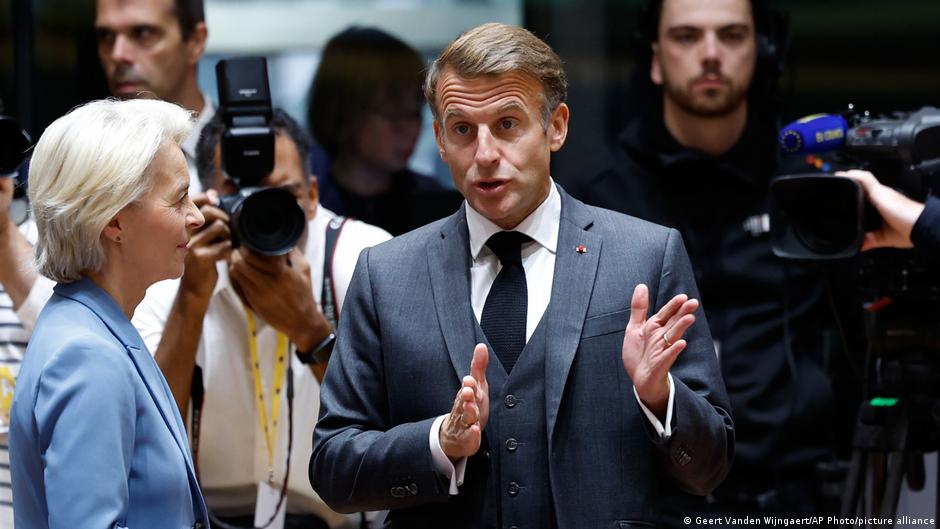
European Union leaders ended the first day of their Brussels summit without an agreement on the bloc’s next seven-year budget, exposing a familiar fault line between governments demanding fiscal restraint and those seeking greater collective spending. Negotiations will resume in December, according to AFP, which cited sources in Germany’s federal government.
The dispute concerns more than the overall size of the EU budget. It reflects competing views of how Europe should finance investment, security and economic adjustment at a time when national governments face their own fiscal pressures. Germany, Austria, Sweden, Denmark, the Netherlands and Finland are calling for savings. France, Spain and Poland, by contrast, support a larger EU budget.
Sources cited by AFP described the summit exchanges as contradictory debates. The positions themselves were already known before leaders met, underscoring that the impasse is structural rather than the result of a late technical disagreement.
A dispute over Europe’s economic priorities
The European Commission presented a draft long-term budget worth almost €2 trillion during the summer. Ireland, which holds the rotating presidency of the Council of the EU, proposed reducing that amount by €140 billion, or approximately 8%.
The proposed reductions would affect spending intended to strengthen competitiveness, support scientific research and finance defence and external policy. Those categories are central to the EU’s attempt to improve productivity, technological capacity and strategic autonomy. Cutting them could ease the burden on contributing governments in the near term, but it would also narrow the pool of common resources available for projects whose benefits extend across national borders.
That tension has appeared repeatedly in negotiations over the EU’s multiannual budgets. Governments judge the package partly through the balance between national contributions and receipts, while the European Commission and supporters of a larger budget tend to emphasise shared objectives. Agriculture and cohesion policy have traditionally absorbed major shares of EU expenditure, making efforts to fund newer priorities especially contentious when governments resist increasing the total envelope.
Before the talks began, German Chancellor Friedrich Merz called for a substantial reduction in the Commission’s proposal. He also categorically rejected allocating additional money to the two large traditional spending areas: agriculture and cohesion policy. His position highlights the difficulty of reconciling demands for restraint with pressure to protect established programmes and expand financing for research, defence and competitiveness.
France seeks revenue beyond national contributions
France used the summit to promote new EU-wide levies that could increase the budget without raising direct contributions from member states. The options discussed include charges on digital services, crypto assets and online gambling.
Economically, such levies would change the composition of EU financing rather than simply enlarging national transfers. They could give the bloc a broader stream of common revenue and reduce the visibility of higher national contributions. Yet agreement would still require governments to settle politically sensitive questions about the tax base, collection and the distribution of costs among countries, businesses and consumers.
New EU-wide levies could expand the common budget without increasing member states’ direct contributions.
The debate therefore presents leaders with three difficult choices: increase national payments, establish new common revenues or reduce spending ambitions. The Irish proposal leans toward the third option, while France is attempting to expand the second. The savings camp remains focused on containing the overall burden.
The electoral calendar raises the cost of delay
The next EU summit is scheduled for December, and many of the bloc’s 27 member states want the long-term budget approved before the end of the year. Their urgency is linked to elections expected in several countries in 2027, where Eurosceptic and populist forces could come to power and make a compromise harder to achieve.
France is a particular concern. Far-right politician Marine Le Pen could win the country’s presidential election, and President Emmanuel Macron has warned that reaching an EU budget agreement would be difficult in that event, AFP reported.
The risk is that delay changes not only the timetable but also the negotiating coalition. Seven-year EU budgets depend on bargains across spending priorities, national interests and political groupings. If elections bring governments more hostile to common financing, the range of politically viable compromises could shrink.
Austrian Chancellor Christian Stocker did not rule out negotiations continuing into next year. That possibility would prolong uncertainty for programmes dependent on long-term EU funding and intensify competition among established beneficiaries and newer strategic priorities.
The first day’s failure does not mean a final agreement is out of reach. EU budget negotiations have historically relied on late compromises after governments establish firm opening positions. But the present dispute is unusually consequential because savings proposed today would fall partly on areas designed to shape Europe’s future productive capacity and security. The December talks will test whether leaders can reconcile national budget restraint with the economic case for collective investment—and whether they can do so before electoral politics makes the bargain still harder.



