EU Moves Ukraine and Moldova Into Key Market and Competitiveness Talks
The agreement to open clusters 2 and 3 advances accession negotiations while tying reform progress to fiscal resilience, minority rights and wartime governance.
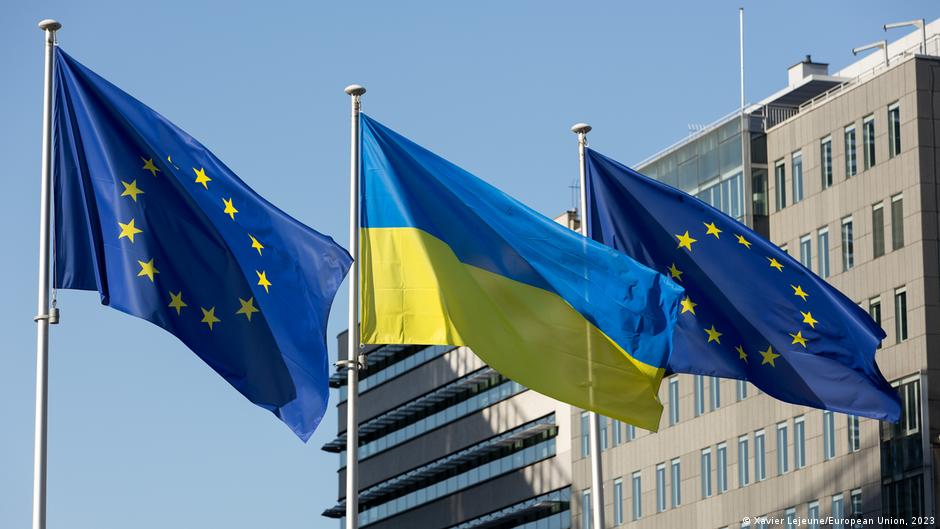
European Union member states have agreed to open negotiating clusters 2 and 3 in accession talks with Ukraine and Moldova, marking a significant procedural advance for both candidate countries and a politically important signal about the bloc’s enlargement strategy. Irish Minister for European Affairs Thomas Byrne announced the agreement on X on Monday, October 12, saying that all EU states had backed the move.
The clusters cover the “Internal Market” and “Competitiveness and Inclusive Growth,” two areas that sit at the core of the EU economic model. Their opening does not amount to imminent membership, nor does it guarantee a fixed timetable. But it does move Ukraine and Moldova deeper into the technical phase of accession, where candidate countries must demonstrate that their institutions, regulations and enforcement capacity can absorb the rules of the single market and the wider EU policy framework.
“After ‘Montenegro Monday’ there will also be a ‘Super Tuesday’ for Albania, Moldova and Ukraine,” Byrne wrote, adding that EU states had agreed to open clusters 2 and 3 for Ukraine and Moldova.
Byrne also said the EU had agreed to close chapters 17, 18 and 19 for Albania and chapter 20 for Montenegro, underlining that the decision on Ukraine and Moldova forms part of a wider enlargement cycle rather than a bilateral gesture. For Brussels, this matters: enlargement is being managed as a rules-based process across multiple candidates, even as Russia’s war against Ukraine has given the eastern track a sharper geopolitical urgency.
Why the two clusters matter economically
The internal market cluster is among the most consequential parts of accession because it determines how far a candidate country can align with the legal and commercial architecture that allows goods, services, capital and people to move within the EU. For Ukraine and Moldova, this means detailed scrutiny of competition rules, standards, public procurement, financial services, consumer protection and the legal infrastructure needed for cross-border economic integration.
The competitiveness and inclusive growth cluster is equally important from a structural perspective. It concerns the capacity of an economy to modernize while spreading gains across society. In practical terms, it touches policy areas that influence productivity, business conditions, education, employment, social policy, industrial development and the ability to withstand external shocks. For economies under severe pressure, and especially for Ukraine during wartime, this cluster links accession to the deeper question of how reconstruction, labor markets and fiscal policy will be organized over the long term.
The EU accession process is arranged into six broad thematic clusters covering legislation and public policy. The six are “Fundamentals,” “Internal Market,” “Competitiveness and Inclusive Growth,” “Green Agenda and Sustainable Connectivity,” “Resources, Agriculture and Cohesion,” and “External Relations.” During negotiations, the EU assesses whether a candidate country is ready to apply EU rules and standards across these areas.
Ukraine’s first negotiating cluster, “Fundamentals,” was opened on June 15. That initial cluster is typically central because it covers the political, legal and administrative foundations of accession. Moving into the internal market and competitiveness clusters now widens the scope of scrutiny from institutional basics toward the operational machinery of economic convergence.
Hungary, education law and the politics of consent
The agreement followed a domestic legislative step in Ukraine aimed at addressing concerns important to Hungary. Earlier on October 12, the Verkhovna Rada approved, in two readings and as a whole, amendments to the law on education concerning the rights of national minorities. The measure was needed to secure Hungary’s consent for opening the second and third negotiating clusters in Ukraine’s EU accession process.
Later that evening, Ukrainian lawmaker Yaroslav Zheleznyak reported on Telegram that President Volodymyr Zelensky had signed the adopted law. The sequence illustrates a recurring feature of EU enlargement: although negotiations are often presented as technocratic alignment with EU norms, each step can depend on national political bargaining among existing member states.
For Ukraine, the education-law changes show how accession can influence domestic policy even before membership. Candidate countries often adjust legislation to unlock the next stage of talks, and those adjustments can carry broader political significance. In this case, minority-rights provisions became connected to the opening of economic clusters that will shape Ukraine’s future regulatory and investment environment.
Reform under wartime constraints
On October 5, EU Enlargement Commissioner Marta Kos said at a press conference after a meeting of the Moldova-EU Association that the EU could open two accession clusters for Ukraine and Moldova during an intergovernmental conference on the margins of the EU General Affairs Council scheduled for October 13 in Luxembourg.
Kos said Ukraine and Moldova were carrying out systemic reforms “in very difficult conditions” and were among the four countries leading accession negotiations. She also noted that the European Commission would publish a detailed assessment of reform progress across all areas in candidate countries on October 28 in its annual enlargement report.
Her comments placed the enlargement decision in a broader economic frame. Ukraine is simultaneously fighting for survival and pursuing EU accession, a dual burden with few historical parallels in the bloc’s expansion history. Kos urged observers not to forget that Ukraine must implement reforms partly to obtain additional funding for the budget and the needs of the army.
This link between reform and financing is central to the economic meaning of the accession process. For Ukraine, legal alignment with the EU is not only a diplomatic milestone; it is also connected to budget support, investor confidence, administrative capacity and the future architecture of reconstruction. For Moldova, the same process offers a pathway toward institutional anchoring in the EU market, although under different security and fiscal conditions.
Historically, EU enlargement has often functioned as a mechanism for economic transformation before formal membership. Candidate countries adapt regulations, strengthen institutions and reshape markets long before accession treaties are signed. The opening of clusters 2 and 3 therefore matters because it pushes Ukraine and Moldova into areas where the costs and benefits of convergence become more concrete: firms must prepare for EU standards, governments must build enforcement capacity, and social systems must adapt to competitive pressures.
The decision also carries consequences for the EU itself. Bringing Ukraine and Moldova closer to the single market raises long-term questions about agriculture, labor mobility, cohesion funding, industrial policy and the fiscal capacity of the union. Those questions will not be resolved by opening clusters, but the move brings them nearer. Enlargement is no longer only a promise of future integration; it is becoming a live economic policy process with direct implications for budgets, markets and governance across Europe.



