Finland Urges EU Tourist Visa Ban for Russians as War Reshapes Mobility Policy
Elina Valtonen’s call turns visa access into a broader economic and political test of Europe’s sanctions architecture.
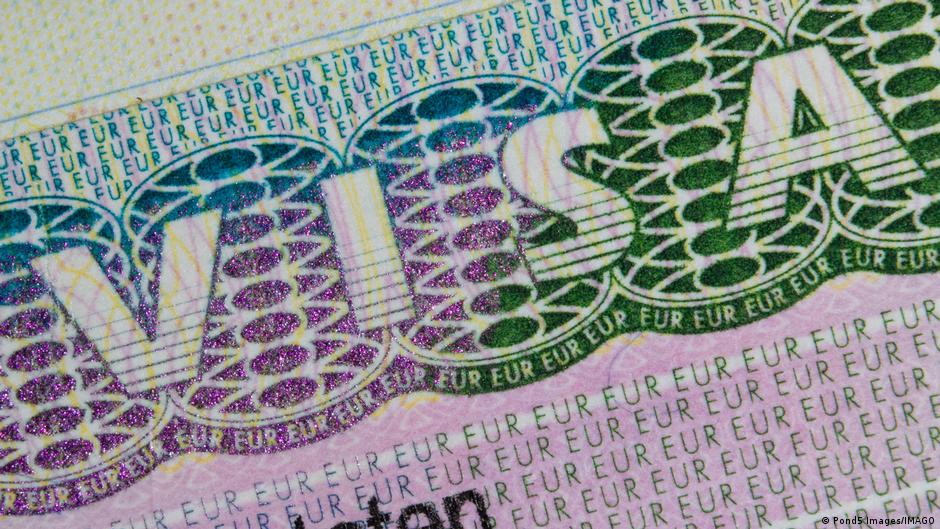
Finland’s foreign minister, Elina Valtonen, has called on European Union countries to stop issuing tourist visas to Russian citizens while Moscow continues its war of aggression against Ukraine, sharpening a debate that has moved well beyond border control and into the economic architecture of sanctions, mobility and political accountability.
Valtonen said on X on Monday, October 12, that she had invited other EU member states to join her appeal to the European Commission on the issue. Her argument was framed not as a technical visa matter, but as a question of whether Russian citizens should retain ordinary access to European leisure, services and freedoms while Ukraine remains under attack.
“It is wrong that Russians can travel to Europe to enjoy the lifestyle and freedoms here while their country bombs Ukrainians’ homes,” Valtonen said.
Finland has already acted nationally. Valtonen noted that Helsinki banned the issuance of visas to Russians for non-essential travel in 2022, after Russia’s full-scale invasion of Ukraine. In her view, that national restriction should now be elevated to a common EU position. “The same must finally happen at EU level,” she said.
From Border Policy to Economic Pressure
The proposal reflects a broader shift in Europe’s sanctions thinking. Early restrictions against Russia focused heavily on finance, energy, technology exports and elite assets. Visa policy, by contrast, has often sat uneasily between moral pressure and practical governance. It affects mobility, consumption and access to European services, but it also raises questions about collective responsibility, humanitarian exceptions and the EU’s own legal standards.
For countries bordering Russia, including Finland, Estonia and other Baltic and Nordic states, the issue is especially immediate. Tourist travel is not just symbolic; it channels spending into European economies, allows repeated cross-border movement and preserves a form of social normality for citizens of a state waging war against a European neighbour. Valtonen’s position suggests that allowing such travel risks weakening the political signal of sanctions: that aggression carries consequences not only for the state, but for the privileges attached to normal international integration.
Valtonen also called for a ban on issuing Schengen visas to people close to Russian President Vladimir Putin, restrictions on visas for Russian athletes, and effective enforcement of existing visa bans on Russian participants in the war against Ukraine. She stressed that EU countries should act together, pointing to the central problem in European sanctions policy: fragmented national measures can create loopholes when borders and visa regimes remain interconnected.
The Schengen Area, by design, turns one country’s visa decision into access across much of Europe. That makes unilateral restrictions politically useful but structurally incomplete. If one member state tightens entry while another continues issuing multi-entry visas, the economic and political impact of the restriction is diluted. Valtonen’s appeal is therefore also an argument about the single market’s external perimeter: common freedoms require common enforcement.
A Wider Northern European Push
Valtonen’s remarks follow similar pressure from other European officials. In September, EU foreign policy chief Kaja Kallas said the bloc should tighten restrictive measures against the Kremlin in response to Moscow’s “hybrid attacks,” including by reducing the number of tourist visas. Estonia has separately advocated a visa ban for former Russian participants in the war against Ukraine, a measure later supported by other Baltic and Nordic countries.
In June, a group of EU countries issued a joint call to stop issuing tourist visas to Russians. According to a letter signed by those countries, Russians received 470,000 visas in 2025 to visit 29 countries in the Schengen Area. Many of those visas allowed multiple entries, AFP noted. That figure is economically and politically significant because it shows that, despite years of sanctions, personal travel channels have remained substantial.
The historical parallel is not exact, but the logic recalls earlier moments when access to Western markets and institutions became part of geopolitical pressure. During the Cold War, movement across political blocs was both an economic privilege and an ideological signal. Today’s EU visa debate operates in a different legal and institutional order, but it carries a similar question: whether normal mobility can continue when the underlying political relationship has been fundamentally broken by war.
For Europe, the economic consequences are mixed. A tighter visa regime would reduce some tourism-related spending in countries that still receive Russian visitors, particularly in retail, hospitality and transport. Yet those losses are likely to be weighed against the broader strategic objective of increasing the cost of Russia’s isolation. The deeper economic issue is not the immediate value of tourist receipts, but whether Europe can align everyday market access with its sanctions goals.
There are also enforcement costs. A common EU approach would require clearer criteria for essential and non-essential travel, more coordination among consulates, and stronger monitoring of categories such as athletes, politically connected individuals and former combatants. The more targeted the policy becomes, the more administrative capacity it demands. But a broad tourist visa suspension, while simpler to communicate, would still need exceptions and legal safeguards.
The debate is now moving onto the EU agenda. According to data published on the Austrian parliament’s website, the Council of the EU is scheduled to discuss visa policy toward Russia on October 14. That discussion will test whether the bloc can turn a series of national and regional initiatives into a unified rule.
Valtonen’s proposal is therefore not only about whether Russians should be able to holiday in Europe. It is about whether the EU’s sanctions regime can close the gap between high-level economic restrictions and the everyday privileges of access to European space. As the war continues, visa policy is becoming another front in the contest over how far economic normality with Russia can persist.



