Four Canadian Soldiers Killed in Wainwright Base Wildfire
The deadly training disaster in Alberta exposes the economic costs of operational risk, climate hazards and institutional decision-making.
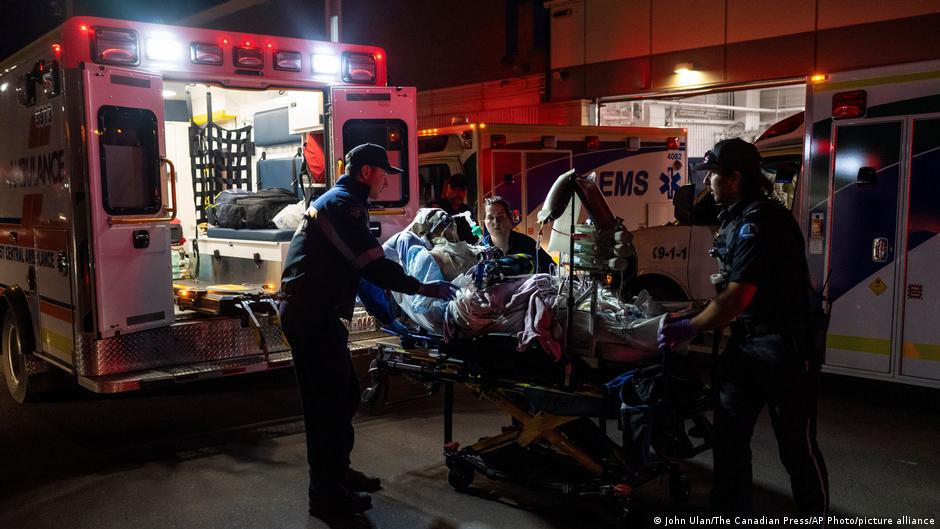
At least four Canadian Army personnel were killed and dozens were injured after a wildfire swept through a military exercise at Canadian Forces Base Wainwright in Alberta, Prime Minister Mark Carney said on Sunday, October 18. The disaster, among the gravest peacetime incidents involving Canada’s armed forces on domestic soil, raises urgent questions about command decisions, risk assessment and the growing economic burden created when major institutions operate in increasingly hazardous environments.
Authorities said 19 people injured in the fire were in critical condition, while about 20 others suffered less severe injuries. The casualties followed an extraordinarily rapid advance of flames across the prairie. According to military generals, the fire covered one kilometre in just 36 seconds after strong winds intensified its spread toward the soldiers.
“It is with profound sorrow that I must confirm that, as of now, four service members have died, and their families have been notified,” Carney said at a news conference in Ottawa. “Dozens of others have suffered serious injuries. This is one of the worst tragedies the Canadian Armed Forces have faced on Canadian soil in peacetime.”
A Command Decision With Wider Consequences
The wildfire began during the afternoon of October 18, but military commanders decided not to halt the exercise. That sequence will place the decision-making process at the centre of the institutional response. Investigators will need to establish what information was available, how rapidly conditions changed and whether existing safety protocols adequately accounted for the possibility that wind could transform a nearby fire into an immediate threat.
For an economic publication, the significance extends beyond the direct human toll, which remains paramount. Large public institutions constantly balance readiness, continuity and safety. Military training is intended to prepare personnel for dangerous and unpredictable conditions, but continuing an exercise also carries risks whose costs may be borne by service members, their families, the healthcare system and the public budget. When risk controls fail, the financial consequences can include emergency treatment, long-term rehabilitation, compensation, investigations, operational disruption and the replacement of lost personnel and capabilities.
The event illustrates a basic problem in the economics of institutional risk: the perceived cost of interrupting an activity is immediate and visible, while the potential cost of a low-probability disaster can appear remote until conditions deteriorate. That imbalance can encourage organizations to continue operations even when uncertainty is increasing. Once a crisis develops, however, the eventual costs can greatly exceed those associated with a precautionary pause.
Climate Exposure Becomes a Readiness Issue
The speed of the Wainwright fire underscores the difficulty of managing operations in open prairie under strong winds. It also highlights how environmental hazards can affect military readiness, infrastructure planning and public expenditure. Bases and training grounds are fixed assets: they cannot be easily moved whenever local conditions become dangerous. Their use therefore depends on forecasting, evacuation capacity, fire management and command systems capable of responding before a threat becomes uncontrollable.
That challenge is structural. Governments generally finance military facilities and emergency systems over long time horizons, while extreme conditions can expose weaknesses within minutes. The reported pace of the flames—one kilometre in 36 seconds—suggests that conventional assumptions about warning time may require scrutiny. If reviews conclude that procedures or equipment were inadequate, the response could require additional investment in monitoring, communications, protective infrastructure and revised training schedules.
Such spending would not simply represent a reaction to one accident. It would reflect a broader reassessment of how environmental danger is priced into government operations. The relevant question is no longer only whether an exercise can proceed under prevailing conditions, but whether institutions have properly valued the possibility of abrupt and nonlinear change.
The Economics of Accountability
Canada now faces two parallel tasks: caring for the injured and determining why the exercise continued after the wildfire began. The first demands immediate medical and family support. The second requires an investigation credible enough to identify whether the tragedy resulted from unforeseeable circumstances, inadequate procedures, failures in implementation or some combination of factors.
Historical experience across complex organizations shows why such reviews matter economically as well as institutionally. Accountability can alter incentives, procurement priorities and the way commanders evaluate operational interruptions. A narrowly framed inquiry may identify individual errors, while a broader examination can reveal whether organizational targets, training pressures or outdated risk models influenced decisions.
The deaths at Wainwright will inevitably be measured first in human terms. Yet the incident may also become a test of whether Canada’s defence establishment can translate tragedy into structural reform. The central economic lesson is stark: resilience requires investment before danger becomes visible, and the cost of preparedness must be compared not with an ordinary day of operations, but with the consequences of a rare failure that develops at extraordinary speed.