ICAO warning on conflict-zone flights adds pressure to aviation risk controls
Ukraine’s alert over the safety of Russian airspace has prompted a broader ICAO call for tougher state action to shield civilian aviation from conflict-related threats.
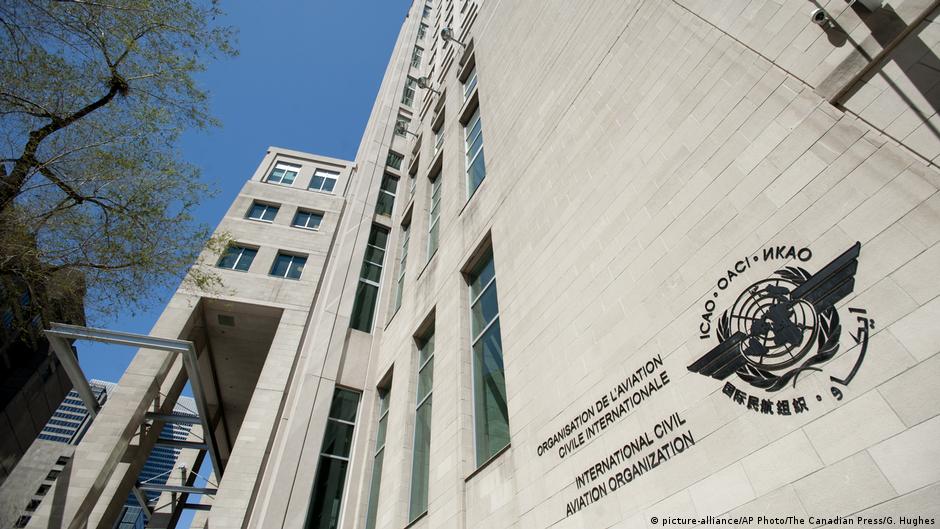
The International Civil Aviation Organization has called on governments to strengthen protections for civilian aircraft flying near conflict zones, issuing a renewed warning about the dangers posed by modern warfare to commercial aviation. The statement, published on Wednesday, September 2, came after Ukraine formally notified the UN aviation body that Russia’s airspace had become unsafe because of intensified military activity.
ICAO did not name either Russia or Ukraine in its appeal. Instead, it framed the issue as part of a wider global deterioration in the risk environment for civil aviation. The organization cited the growing threat of weapons being used against civilian aircraft and the heightened danger that such planes could be deliberately attacked or caught in crossfire. Among the technologies it identified as particularly hazardous were drones, long-range weapons systems, air defense systems and radio-frequency interference devices capable of disrupting navigation.
For aviation economics, the significance of the statement extends beyond immediate flight safety. When a body representing 193 member states, effectively almost the entire world, urges firmer commitments, it is also signaling that the cost structure of international aviation is becoming more tightly linked to military risk. Conflict is no longer only a geopolitical variable for airlines to monitor at the margins. It is increasingly a core operating constraint, affecting route planning, insurance, overflight patterns, aircraft utilization and the regulatory burden placed on both carriers and states.
From security concern to structural cost driver
ICAO’s appeal was explicit about what states should do. Member countries, it said, need to exchange threat information quickly whenever particular activity creates risks for civilian aircraft, strengthen risk-assessment mechanisms and timely decision-making, and improve coordination between military and civilian authorities to prevent civilian planes from being mistakenly identified as military targets.
“Member states must promptly exchange information on threats ... strengthen risk assessment mechanisms and timely decision-making, and improve coordination between military and civilian authorities.”
That language points to a longstanding institutional problem in global aviation: the mismatch between the speed of military escalation and the slower, fragmented processes through which civil aviation risk is assessed and communicated. Airlines, insurers and regulators have repeatedly confronted the same dilemma over the past decade. Airspace can remain formally open even as the practical risk profile shifts sharply, leaving carriers to make judgment calls with incomplete information and uneven state guidance.
Ukraine’s intervention was framed as an attempt to avoid exactly that outcome. Foreign Minister Andrii Sybiha said Kyiv had officially informed ICAO that Russian airspace was unsafe because of what he described as increased military activity. He urged all parties to avoid it. According to Sybiha, Russia is consciously ignoring existing threats caused by its aggression against Ukraine, a pattern he said had already led to several incidents in recent years. He said the notice to ICAO was intended to prevent unintended incidents.
The Ukrainian warning followed remarks on September 1 by President Volodymyr Zelenskyy, who said airspace over Russia would gradually close because of Ukrainian drones that, in his words, Russian authorities do not properly report. Zelenskyy said Russian skies were becoming completely unsafe and added that Ukraine did not want innocent people to die, which was why it was warning partners.
Those comments drew a sharp response from Moscow. Russian President Vladimir Putin described Zelenskyy’s words as an application for state terrorism. Speaking during the night of September 2 after the Shanghai Cooperation Organisation summit in Bishkek, Putin said that if such tragedies occurred, Russia would know how to respond and that no one should doubt it.
Later on September 2, Russia’s aviation authority, Rosaviatsia, said that together with other state bodies it was implementing additional measures for the safe use of Russian airspace and for increasing the protection of transport infrastructure on the ground. The agency said Russian air transport and its ground infrastructure were continuing normal operations, receiving and dispatching flights including those of foreign airlines.
Economically, this sequence matters because it captures how fast aviation risk can migrate from a military theater into civilian balance sheets. Airlines do not need a formal closure of airspace to incur losses. Even warnings, notices and rhetorical escalation can alter scheduling, raise fuel burn through rerouting, increase crew-time complexity and push insurers toward repricing. Airports and air navigation providers also face indirect consequences as traffic flows shift away from perceived danger zones. For countries that depend on overflight revenues, any sustained deterioration in confidence can have fiscal implications as well.
There are historical parallels. Past crises have shown that civilian aviation can become exposed not only when combat is intense, but also when institutional communication fails to keep up with changing battlefield technology. What is new in the present case is the breadth of the threat set. Drones, long-range strike systems, air defenses and electronic interference compress the margin for error. They widen the geography of danger and make it harder to distinguish between frontline areas and seemingly distant air corridors.
That in turn increases pressure on ICAO’s member states to move from reactive warnings to more standardized prevention. The organization’s statement suggests that the global system still relies too heavily on fragmented national judgments at a time when conflict spillovers are becoming more technically complex and more international in consequence. If that persists, the likely result is a gradual repricing of operational certainty across commercial aviation.
For now, ICAO’s message is not a mandate to close any specific airspace. It is a warning that the framework governing civil aviation safety over conflict zones must harden. Ukraine’s notification brought immediate attention to Russian airspace, but the broader economic implication is global: in an era of proliferating military technologies, aviation safety is becoming inseparable from the cost and governance of geopolitical risk.