Norway Seizes Russian Research Vessel in Naftogaz Debt Enforcement Push
The detention of the Professor Molchanov at Svalbard extends Kyiv’s campaign to enforce arbitration awards against Russian assets abroad.
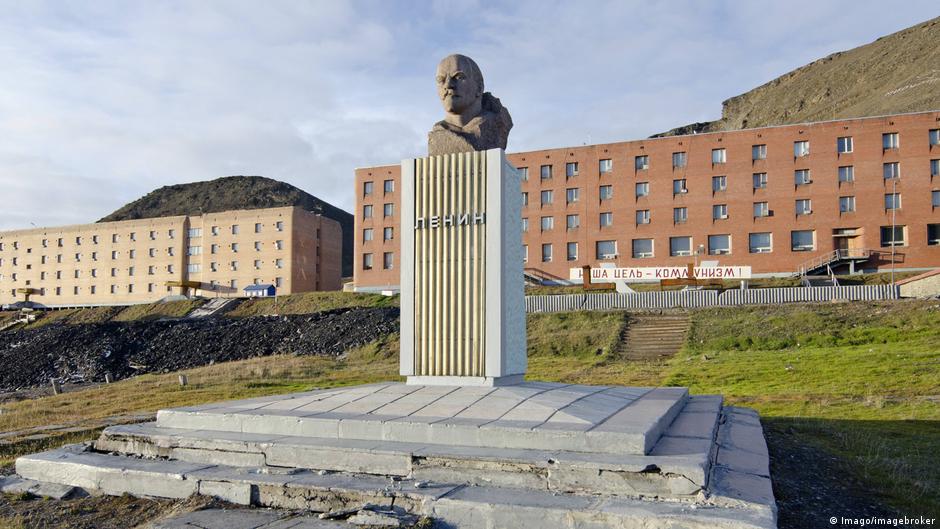
Norwegian authorities have arrested the Russian research vessel Professor Molchanov in the port of Barentsburg on the Svalbard archipelago, in a move that underscores how Ukraine’s long-running legal dispute with Russia is increasingly spilling into the realm of cross-border asset enforcement. The seizure was carried out by the governor of Svalbard following a court ruling, and it came at the request of the Naftogaz group, which is seeking to recover what it says Russia owes after the loss of assets in Crimea.
According to a notice published on Wednesday, September 2, by the governor’s office, the action followed a decision by the Nord-Troms district court dated August 31. The court authorized the arrest of the vessel after an application by Naftogaz Ukraine. The ship, described in the source material as a Soviet and Russian scientific research vessel, was in Barentsburg at the time.
“This legal proceeding and the ruling issued are part of the company’s efforts to recover funds expropriated by Russia in 2014,” the governor’s press service said.
Naftogaz also confirmed on its website that the Russian vessel had been arrested as part of the effort to satisfy Russia’s debt to the company. Under the current order, the Professor Molchanov is to remain in Barentsburg until the governor or the Nord-Troms district court decides otherwise.
The governor’s office said care would be provided for crew members and passengers, with assistance from Arktikugol, the Russian coal mining company that has maintained a presence on Svalbard since 1931. According to the company’s website, Arktikugol is the main Russian organization on the archipelago and operates under the authority of Russia’s Ministry for the Development of the Far East and the Arctic.
From arbitration ruling to asset seizure
The arrest of the vessel is the latest chapter in a dispute that began a decade ago. Naftogaz initiated arbitration proceedings against Russia in 2016 over the loss of assets in Crimea. In February 2019, a court in The Hague ruled in Naftogaz’s favor, finding that Russia had violated its obligations under the bilateral agreement with Ukraine on the protection of investments and had unlawfully expropriated the company’s investments. The court assessed the seized assets at $5 billion, equivalent in the source report to 4.3 billion euros.
Russia’s Justice Ministry responded at the time by saying it would not recognize the ruling from The Hague and would take all necessary measures to ensure the representation and protection of Russia’s interests. That refusal set the stage for what is now a broader enforcement strategy: if Moscow would not comply voluntarily, Naftogaz could seek recognition and compulsory enforcement in countries where Russian assets are located.
That position rests on the 1958 New York Convention on the Recognition and Enforcement of Foreign Arbitral Awards, which Ukrainian officials and the company have cited as the basis for pursuing Russian property abroad. The arrest in Svalbard therefore matters not only as an isolated legal event, but as evidence of the practical mechanics of international economic pressure. Arbitration awards, often dismissed as symbolic when issued against unwilling states, can become materially consequential when creditors identify assets in jurisdictions prepared to act.
For economists and legal analysts, the significance lies in the gradual conversion of legal claims into financial friction. A vessel arrest does not by itself settle a multi-billion-dollar award, but it can raise the operational costs of maintaining overseas assets, complicate logistics, and increase uncertainty for state-linked entities. Over time, that changes the incentives surrounding settlement, asset placement and the use of international transport infrastructure.
The case also fits a longer historical pattern in which sovereign disputes migrate from diplomatic channels into commercial courts and port authorities. In earlier eras, enforcement against state property was rare and politically sensitive. Today, however, the globalization of shipping, finance and asset registration creates more points of contact between state-backed entities and foreign legal systems. Each such point becomes a potential enforcement node.
That broader shift is visible in another case cited in the source material. In early June 2026, the district court in the Swedish city of Ystad ruled that the dry cargo ship Caffa, detained by Swedish authorities in March in the Baltic Sea on suspicion of belonging to Russia’s so-called shadow fleet, would be transferred to Ukraine. Ukrainian Prosecutor General Ruslan Kravchenko described that ruling as the first case in which a foreign court, acting on a Ukrainian request, approved the arrest of a vessel connected to the export of Ukrainian products from occupied territories.
Ukrainian authorities allege that the Caffa transported grain in the summer of 2025 from occupied Sevastopol to the Syrian port of Tartus. According to Kravchenko, the activity was concealed through a scheme involving false registration. Together with the Svalbard vessel arrest, the Swedish case suggests that Ukraine is pursuing a dual track: one focused on compensation for expropriated corporate assets, the other on disrupting maritime networks linked to occupied territories and contested trade flows.
For Russia, the economic consequences may be less about the immediate value of any single ship than about the cumulative effect of legal vulnerability abroad. State agencies and affiliated companies may face higher transaction costs, additional compliance burdens, and narrower room to maneuver in ports and courts outside Russia. For European jurisdictions, these actions demonstrate a willingness to operationalize judicial decisions rather than leave them on paper.
The seizure of the Professor Molchanov therefore illustrates more than a dispute over one vessel in a remote Arctic settlement. It reflects a structural development in the economic conflict surrounding Russia and Ukraine: legal awards are being translated into targeted enforcement, and maritime assets have become one of the most visible theaters for that process. Whether this results in significant financial recovery for Naftogaz remains uncertain, but the underlying message is clearer: unresolved arbitration liabilities can follow state-linked property across borders and into ports that sit far from the original site of the dispute.