Trump Says Putin Is More Interested Than Zelensky in Ukraine Peace Deal
The U.S. president framed reported violations of an energy truce as a mutual problem, shifting pressure toward Kyiv as Ukraine seeks American leverage on Moscow.
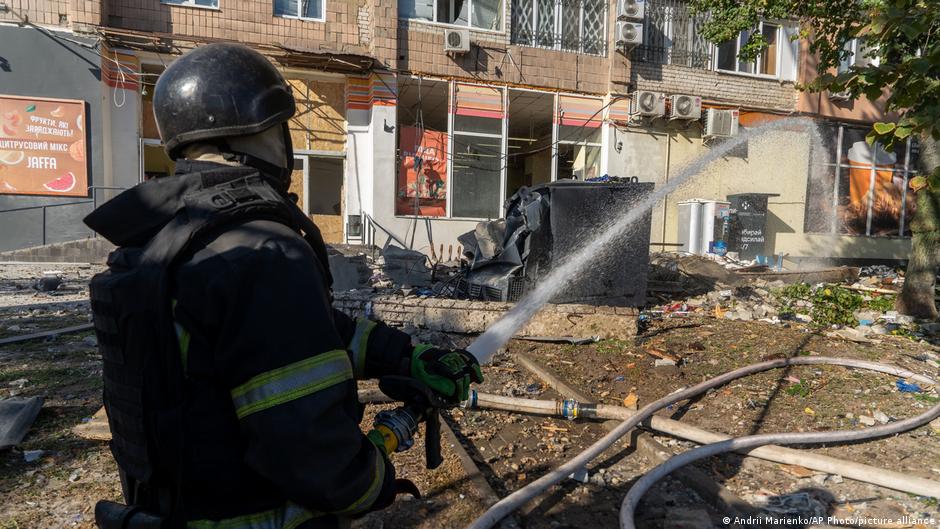
President Donald Trump said Russian President Vladimir Putin is more interested than Ukrainian President Vladimir Zelensky in reaching a peace agreement over Ukraine, even as he was pressed by reporters about Russia’s reported violation of an energy ceasefire in the war.
Speaking to journalists late Monday night into Tuesday, October 13, Trump was asked what evidence he saw that Putin was prepared to compromise while Russia continued to attack Ukraine. The U.S. president replied that he believed the sides would ultimately come to an agreement and added that, in his view, Putin wanted a deal more than Zelensky did.
“I really think Putin is more interested than Zelensky in making a deal,” Trump said, according to the account of his remarks.
The statement marks a significant political and diplomatic signal. Rather than focusing primarily on Moscow’s battlefield conduct or on Russia’s compliance with a proposed pause in strikes on energy infrastructure, Trump presented the central obstacle as a question of negotiating will. That framing matters because ceasefires in infrastructure warfare are not only military arrangements; they are also economic instruments, affecting electricity supply, heating, industrial output and public finances.
Energy Infrastructure as an Economic Front
The immediate issue was the energy truce that Trump himself had announced. Asked about Putin having violated it, Trump said the situation first needed to be studied because, as he put it, violations had occurred on both sides. When pressed on how he intended to ensure that the Russian president complied with the energy ceasefire, Trump said he believed Putin wanted an agreement and that Zelensky needed to be persuaded to move toward one.
Ukraine’s position, as described by Zelensky, is the reverse. The Ukrainian president has called on the United States to influence Russia so that Moscow begins observing the ceasefire regime in the energy sector. Speaking at the Warsaw Security Forum, he said Kyiv was waiting to see what concrete steps the Americans were prepared to take.
Zelensky said Ukraine had been very surprised on October 11 by social media reports that all attacks on energy facilities in Russia’s war against Ukraine would stop immediately. Yet directly after that statement was published, Russia struck a thermal power plant in Kharkiv, causing additional damage to Ukraine’s energy system, he said.
In a Telegram post on the evening of October 12, Zelensky wrote that Ukraine supported an energy ceasefire and was ready to guarantee it, as announced by the U.S. president. He said Russia had to take corresponding steps, but that Kyiv was not currently recording Russian implementation of the conditions announced by Trump. Zelensky added that much depended on the U.S. position if de-escalation was to work, and that pressure on Russia was necessary. He said Ukraine was continuing talks with the American side at all levels.
The Economics of a Limited Ceasefire
An energy ceasefire is narrower than a full military ceasefire, but its consequences can be broad. In Ukraine, attacks on power stations and related infrastructure have direct macroeconomic effects: they raise repair costs, strain public budgets, disrupt manufacturing, weaken municipal services and increase the vulnerability of households during colder months. Every additional strike on generation or grid capacity can carry consequences beyond the physical damage itself, because energy reliability is a foundation for transport, health care, communications and private investment.
That is why the dispute over compliance is not merely rhetorical. If the United States treats alleged violations as symmetrical before evidence is publicly weighed, the diplomatic pressure applied to each side may change. Moscow could read such language as reducing the immediate cost of continued attacks, while Kyiv could view it as a sign that Washington expects Ukraine to make political concessions even when its infrastructure remains under fire.
There is a historical pattern here. Limited ceasefires in prolonged conflicts often begin with sector-specific arrangements: pauses around humanitarian corridors, grain exports, prisoner exchanges or infrastructure. Such deals can build trust, but they can also become arenas for competing narratives. Each side accuses the other of violations, outside guarantors decide how hard to enforce compliance and the economic benefits depend on whether the pause is credible enough for utilities, firms and households to plan around it.
For Ukraine, the credibility of an energy truce would be measured in fewer strikes, more predictable repairs and reduced pressure on the power system. For Russia, the same mechanism could become a bargaining chip in wider negotiations. Trump’s remarks therefore place the United States in a pivotal position: not only as a potential mediator of a military arrangement, but as an arbiter whose interpretation of violations may influence economic resilience on the ground.
Pressure, Incentives and Negotiating Leverage
The contrast between Trump’s and Zelensky’s accounts also points to a deeper question about leverage. Zelensky is asking Washington to pressure Russia into compliance. Trump, by contrast, suggested that Putin wants a deal and that Zelensky is the leader who must be persuaded. Those are not simply different readings of personal intent; they imply different policy tools.
If Putin is assumed to be seeking an agreement, the U.S. approach may emphasize inducements, sequencing and pressure on Kyiv to accept terms. If Russia is seen as violating a ceasefire while testing Western resolve, the policy response would more naturally center on enforcement, sanctions pressure and security guarantees. The economic stakes are considerable in either scenario because Ukraine’s recovery, energy security and fiscal stability depend on whether war damage continues or begins to slow.
Trump did not provide a detailed mechanism for enforcing the energy ceasefire, saying the situation first had to be examined. Zelensky, meanwhile, has made clear that Ukraine supports the announced halt in attacks on energy sites but does not see Russia fulfilling the conditions. That leaves the proposed truce in a fragile position: politically useful as a symbol of possible de-escalation, but economically meaningful only if observed in practice.
The episode illustrates the broader challenge facing any peace effort over Ukraine. A settlement cannot be judged solely by declarations of willingness. It will depend on verifiable conduct, the allocation of pressure and the ability of outside powers to turn diplomatic language into constraints on the battlefield. For an economy under sustained wartime stress, the difference between a declared ceasefire and an enforced one is not semantic. It is measured in power supply, reconstruction costs and the capacity of the state to keep functioning while negotiations continue.



