US Lawmakers Move to Ban Russian Oil After Trump Diesel Deal
A bipartisan bill in the House would seek to block Russian oil purchases, exposing a new rift over energy security and economic leverage.
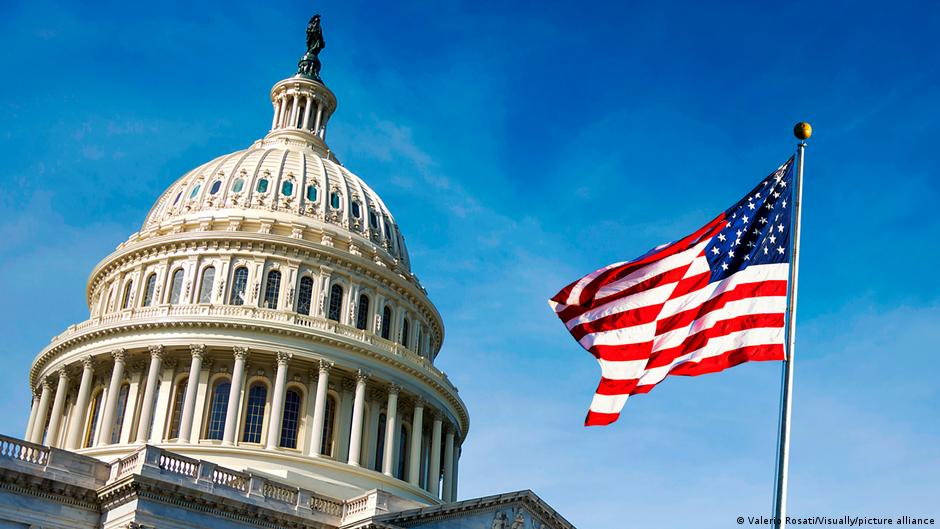
A bipartisan group in the U.S. House of Representatives is preparing legislation aimed at banning purchases of Russian oil, opening a new front in Washington’s debate over energy trade, sanctions policy and the economic costs of strategic dependence. The proposal was announced on Saturday, October 10, by Representative Brian Fitzpatrick, a Pennsylvania Republican, who said the measure would target “any purchases of Russian oil.”
Fitzpatrick said the bill would be called the Ronald Reagan Peace Through Strength Act, a title that deliberately invokes the Cold War-era doctrine of combining economic pressure, military deterrence and ideological resolve. The reference is not incidental. In the current dispute, lawmakers are framing energy imports not merely as a commodity question, but as a test of whether the United States is willing to use market access as an instrument of geopolitical pressure.
The planned bill comes after President Donald Trump said on October 9 that he had held “very successful” talks with Russian President Vladimir Putin. According to Trump, those talks produced an agreement on supplies of Russian diesel fuel to the United States and to the global market. Putin later formally confirmed the telephone conversation and the understandings reached during it.
“The Russian side confirmed its readiness to supply oil and petroleum products to the American and global markets,” Putin said in a statement, adding that he was confident this would have a positive effect on the global economy.
That formulation highlights the central economic tension now confronting U.S. policymakers. Russian energy can be presented as a stabilizing supply source for fuel markets, especially when governments are sensitive to prices for diesel, transport and industrial inputs. But the same flows can also be viewed as a revenue channel for Moscow and a strategic vulnerability for importing states. The House proposal seeks to settle that tension in favor of prohibition.
A Procedural Route Around Leadership
The legislation is expected to be brought forward through a discharge petition, a parliamentary procedure that allows rank-and-file members to force a bill to the House floor even if it is being blocked by a committee or by the speaker. To succeed, such a petition requires at least 218 signatures, an absolute majority of the House.
Fitzpatrick argued that the measure would pass by an overwhelming majority. That claim remains a political forecast rather than a recorded vote, but the use of a discharge petition is itself significant. It suggests supporters expect potential resistance inside the normal legislative chain and want to create a direct test of members’ positions on Russian energy purchases.
Representative Don Bacon, a Nebraska Republican, has already said he will support the bill. Bacon also criticized Trump’s decision to purchase diesel fuel from Russia, making the dispute notable because it is not simply a partisan confrontation between Democrats and Republicans. Instead, it reflects a split inside the Republican Party over whether energy affordability and market supply should outweigh the strategic logic of restricting Russian exports.
For Econpress readers, the immediate policy question is less about one cargo of diesel than about the architecture of economic statecraft. Since energy is both a traded commodity and a fiscal lifeline for major producers, import bans can operate as sanctions, industrial policy and price intervention all at once. The difficulty is that these aims can conflict. A ban may reduce direct financial flows to Russia, but it can also tighten supply, redirect trade routes and raise costs for consumers, refiners and logistics companies.
Energy Security Versus Market Stabilization
Putin’s statement framed Russian oil and petroleum products as beneficial for the global economy. That is a familiar argument from major exporters: when supply enters the market, prices can ease, shortages can be avoided and downstream industries gain breathing room. Diesel is especially sensitive because it powers freight, agriculture, construction and parts of industrial production. Price spikes in diesel markets can travel quickly through supply chains.
The counterargument in Congress is that lower near-term fuel costs may create longer-term strategic costs. Purchases from Russia can weaken the credibility of sanctions policy and complicate efforts to isolate Moscow economically. Even when transactions are justified as stabilizing for world markets, critics see them as undermining the leverage that import restrictions are meant to create.
That dilemma has historical parallels. During the Cold War, Western economies repeatedly weighed commercial access to Soviet energy against security concerns. The Reagan reference in the bill’s name points to an older belief that economic links with adversaries should be judged by their effect on strategic power, not only by price efficiency. In today’s context, the same logic is being applied to oil and refined products, where global markets make complete isolation difficult and substitution can be costly.
If adopted, a ban on Russian oil purchases would have consequences beyond the direct U.S.-Russia trade relationship. It could affect refiners, shipping patterns and the broader market for petroleum products. Suppliers excluded from one destination often seek others, while importers replace lost barrels through alternative sources. The result can be a reshuffling of trade rather than a simple disappearance of supply. Still, even rerouting can impose discounts, transport costs and financing frictions on the targeted exporter.
The proposed legislation also signals a broader congressional appetite to constrain executive flexibility on energy diplomacy. Trump’s reported agreement with Putin placed market stabilization at the center of the discussion. The House initiative places legislative restrictions and strategic discipline at the center instead. That institutional tension matters because energy policy often moves fastest through executive channels, while sanctions and trade bans require durable political consensus to be effective.
For now, the bill’s prospects depend on whether its sponsors can gather the 218 signatures required to advance it through the discharge petition process. Fitzpatrick’s confidence that it would pass overwhelmingly indicates that supporters believe the political center of gravity in the House favors a harder line. Bacon’s early support gives the effort additional Republican backing and sharpens the contrast with Trump’s approach.
The economic stakes are therefore twofold. In the short term, lawmakers are debating whether Russian diesel and oil products should be allowed into U.S. and global supply channels as a stabilizing force. In the longer term, they are deciding whether energy interdependence with Russia is compatible with the United States’ broader strategic posture. The proposed Ronald Reagan Peace Through Strength Act turns that question into a legislative test.



