U.S. Senate Advances Graham Sanctions Bill Targeting Russia and Iran Amid Strategic Economic Shifts
The Senate backs a bill empowering the U.S. president to impose steep tariffs on Russia and allies, marking a significant escalation in economic pressure.
On July 28, 2020, the U.S. Senate took a decisive step forward in escalating economic sanctions against Russia and Iran by approving further consideration of the so-called "Graham Sanctions" bill. This legislative move, supported overwhelmingly by a bipartisan majority of 86 senators, aims to grant the President of the United States broad authority to impose punitive tariffs and trade restrictions targeting Russia’s economy and its global energy partners.
Context and Provisions of the Graham Sanctions Bill
The bill, named after the late Senator Lindsey Graham, who was a key architect of the measure, seeks to deepen economic pressure on Russia by allowing the U.S. president to levy tariffs of up to 500% on Russian imports. Additionally, it authorizes a 100% tariff on imports from countries that purchase Russian oil, uranium, or natural gas or assist Russia in evading existing sanctions. These sweeping powers would be in place for five years, signaling a long-term strategic posture by the U.S. government to economically isolate Russia.
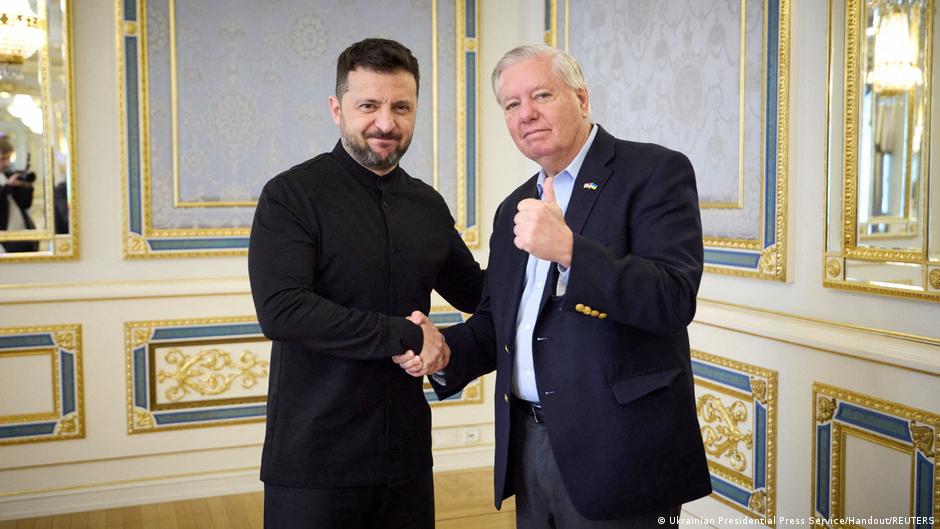
“It was an honor to be present during the vote count — 86 senators supported the bill. This is the first step toward realizing Lindsey’s plans and certainly a step toward peace,” Ukrainian President Volodymyr Zelensky remarked from the Senate floor, where he was physically present during the procedural vote. His attendance underscores the geopolitical stakes tied to these economic measures, as Ukraine continues to seek international backing amid ongoing conflicts.
The bill’s passage reflects a rare moment of bipartisan consensus in a polarized U.S. political environment, with both Republican and Democratic senators rallying behind a unified strategy to counter Russian economic influence. This comes after Senator Graham’s recent passing, with many lawmakers honoring his legacy by advancing his policy priorities.
Economic and Geopolitical Implications
“This legislation represents an unprecedented use of economic tools to not only punish Russia but to recalibrate global energy trade dynamics significantly.”
The proposed sanctions represent a structural shift in U.S. economic policy by extending punitive tariffs beyond direct Russian imports to include secondary sanctions on third-party nations engaged in energy trade with Russia. This approach aims to disrupt Russia’s main revenue streams from energy exports, which are crucial to its fiscal stability.
Historically, economic sanctions targeting energy exports have shown mixed efficacy; however, the scale and duration of these tariffs suggest a strategic intent to impose sustained economic attrition. For Russia, the immediate effect could be heightened inflationary pressures and disruption of export-dependent industries. For global markets, these measures risk complicating supply chains and may prompt shifts in energy alliances, particularly among European and Asian importers of Russian commodities.
The bill’s timing coincides with increasing global tensions and a reevaluation of energy security paradigms, particularly in light of the conflict in Ukraine. By enabling punitive tariffs on countries assisting Russia's energy sector, the U.S. seeks to leverage its economic influence to fracture Russia’s international support networks.
Legislative Outlook and Political Nuances
Although the Senate’s procedural vote is a significant milestone, the bill must still pass a final vote in the Senate and then be approved by the House of Representatives before becoming law. Given that the House is currently in recess until September, full implementation is not expected until later this year.
Former President Donald Trump had previously withheld support for the bill, citing concerns over the scope of presidential authority to both tighten and ease sanctions. However, following Senator Graham’s death and subsequent revisions to the bill by a bipartisan Senate group, Trump signaled a change in position.
This evolution highlights the intricate balance lawmakers navigate between empowering executive action and maintaining congressional oversight on foreign economic policy. The bill’s passage would mark a significant institutional commitment to economic tools as primary instruments in U.S. foreign policy toward Russia and Iran.
Conclusion
The Senate’s advancement of the Graham Sanctions bill reflects a strategic escalation in America’s economic posture against Russia and its allies. The legislation’s provisions to impose substantial tariffs on Russian imports and penalize third-party energy partners indicate a concerted effort to structurally weaken Russia’s economic base over the medium term. The geopolitical ramifications extend beyond financial punishment, potentially reshaping global energy markets and alliances.
As the bill moves toward final approval, its implementation will be a litmus test for the efficacy of economic sanctions as a tool of geopolitical strategy in the 21st century.