U.S. Strike on Cargo Ship Raises Economic Stakes in Gulf Blockade
The disabling of a Panama-flagged vessel underscores how military pressure around Iran is feeding into trade risk, fuel prices and U.S. politics.
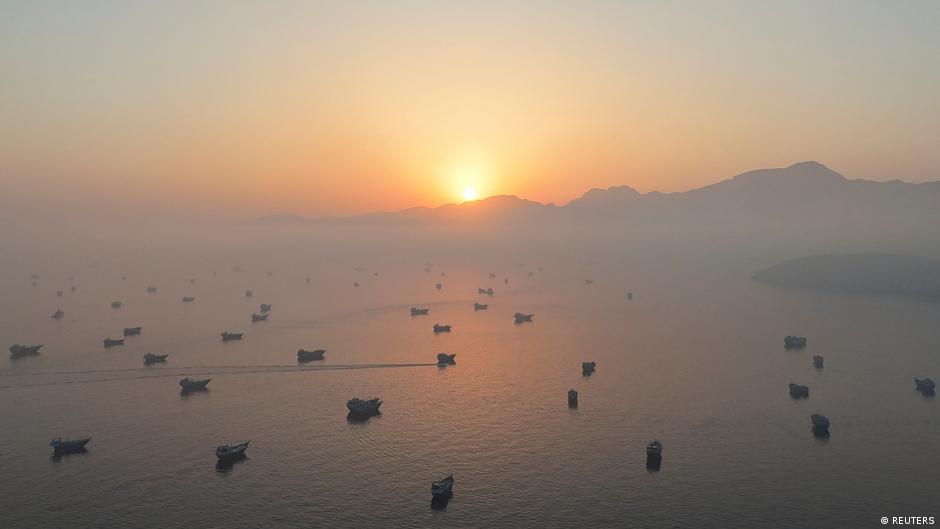
A U.S. Air Force fighter jet disabled a commercial cargo vessel in the Gulf of Oman on October 10 after its crew allegedly ignored repeated warnings and attempted to breach an active maritime blockade against Iran, according to U.S. Central Command. CENTCOM said the aircraft used a precision munition to strike the stern of the M/V Ocean Molica, also known as the Arika Sun, a Panama-flagged vessel that had previously departed an Iranian port.
The command said the strike fully disabled the ship's propulsion system and that no crew members were injured. The statement, released by CENTCOM on X, framed the operation as an enforcement action under a blockade that the United States says applies to vessels entering or leaving Iranian ports.
CENTCOM said crews should heed blockade warnings, a message that now carries direct commercial and financial consequences for shipping operators in the region.
The incident adds a new layer of risk to one of the world's most economically sensitive maritime corridors. The Gulf of Oman and the nearby Strait of Hormuz sit at the junction of military strategy, oil flows and global insurance pricing. Even when cargoes are not energy-related, the disruption of commercial shipping in this area can rapidly affect freight rates, war-risk premiums and expectations in fuel markets.
Blockade Enforcement Becomes an Economic Instrument
CENTCOM said U.S. forces resumed the blockade on July 14 against all vessels traveling to or from Iranian ports. In the three months since then, four commercial vessels have been disabled and 135 vessels have been forced to turn around and change course, according to the command. Over the same period, U.S. forces destroyed 10 tankers linked to what was described as the shadow network of Iran's Islamic Revolutionary Guard Corps.
Those figures point to a campaign that is not limited to symbolic deterrence. A blockade, when enforced repeatedly against commercial shipping, can function as an economic weapon as much as a military one. Its immediate purpose is to restrict movement connected to Iran, but its wider effects are transmitted through the systems that make global trade possible: vessel routing, maritime insurance, port access, compliance screening and financing.
For shipping companies, the economic calculation is stark. A vessel moving through the Gulf region now faces not only the normal operational hazards of congestion and security risk, but also the possibility of interdiction, forced diversion or disabling if U.S. forces determine that it is violating blockade terms. Even without casualties, the loss of propulsion on a commercial vessel can generate substantial costs through salvage, repair, delay, contractual disputes and higher future premiums.
The use of a precision munition against the Ocean Molica's stern also signals a particular kind of coercive escalation: destructive enough to stop the vessel, but calibrated, according to the U.S. account, to avoid crew casualties. That distinction matters economically because it suggests a policy aimed at immobilizing transport capacity while limiting the political cost of human losses. For markets, however, the relevant fact is that commercial hulls are now part of the enforcement environment.
Hormuz Risk and the Fuel Price Channel
The Gulf tensions are not confined to the Ocean Molica. The United Kingdom Maritime Trade Operations organization reported that a tanker was again fired upon in the Strait of Hormuz. According to the vessel's captain, the ship was hit on its port side by an unknown projectile, causing a fire. UKMTO said the crew was safe.
The Strait of Hormuz has long been treated by energy markets as a critical vulnerability. The latest report of a tanker being struck reinforces the perception that the channel remains exposed to military and quasi-military disruption. The source article states that fuel prices have risen significantly in recent weeks against the backdrop of the war with Iran, increasing pressure on Republicans roughly one month before the U.S. congressional midterm elections, with recent polls showing a decline in their popularity among voters.
That political link is important. Energy prices are one of the fastest ways for foreign conflict to become a domestic economic problem. Fuel costs move through household budgets, business logistics, agricultural input costs and inflation expectations. When prices rise close to an election, the economic impact becomes inseparable from political accountability, particularly for the party facing voter dissatisfaction.
For governments, the dilemma is familiar from earlier Gulf crises: maintaining pressure on Iran may be seen as a security necessity, but every additional disruption in the region risks tightening fuel markets and amplifying public concern over prices. The economic burden does not remain localized. It spreads through shipping insurance, commodity hedging, retail fuel prices and the political narrative around cost-of-living pressures.
G7 Pressure and the Wider Trade Context
The maritime confrontation also follows a broader diplomatic line. On October 2, G7 leaders condemned Iran's continuing attacks on neighboring countries and actions they said violated international trade, energy security and the global economy. The group called for the immediate and full restoration of the rights and principles of navigation in the Strait of Hormuz and said it intended to strengthen collective efforts toward that goal.
That language places the current U.S. enforcement actions within a wider economic-security framework. The concern is not only the safety of individual vessels, but the credibility of rules that allow global commerce to function across contested waterways. If ships, insurers and cargo owners begin to price the region as a zone of persistent escalation, the costs can outlast any single incident.
Historically, the Gulf has shown how quickly maritime insecurity can become a macroeconomic variable. Tanker attacks, blockades and threats to chokepoints tend to produce effects beyond the physical damage inflicted. They alter expectations. Traders adjust risk assumptions, insurers recalculate exposure, shipping firms reroute or delay voyages, and governments face pressure to demonstrate that sea lanes remain open.
The disabling of the Ocean Molica therefore matters less as an isolated strike than as evidence of a continuing enforcement regime. CENTCOM's account suggests that the United States is prepared to impose direct operational costs on vessels it says are violating the blockade. UKMTO's report of a tanker fire in the Strait of Hormuz shows that commercial shipping faces danger from more than one direction.
For the global economy, the structural consequence is a gradual reclassification of Gulf transit from routine commercial movement to security-sensitive activity requiring higher risk tolerance and deeper contingency planning. For energy-importing economies, that means vulnerability to price shocks. For shipping operators, it means higher compliance burdens and operational uncertainty. For U.S. politics, it means the economic consequences of the war with Iran are becoming harder to separate from the electoral calendar.



