Abbas Delays Palestinian Elections as Governance Questions Deepen
The postponement of national voting until September 2027 extends a political vacuum with direct implications for Gaza’s reconstruction and Palestinian institutions.
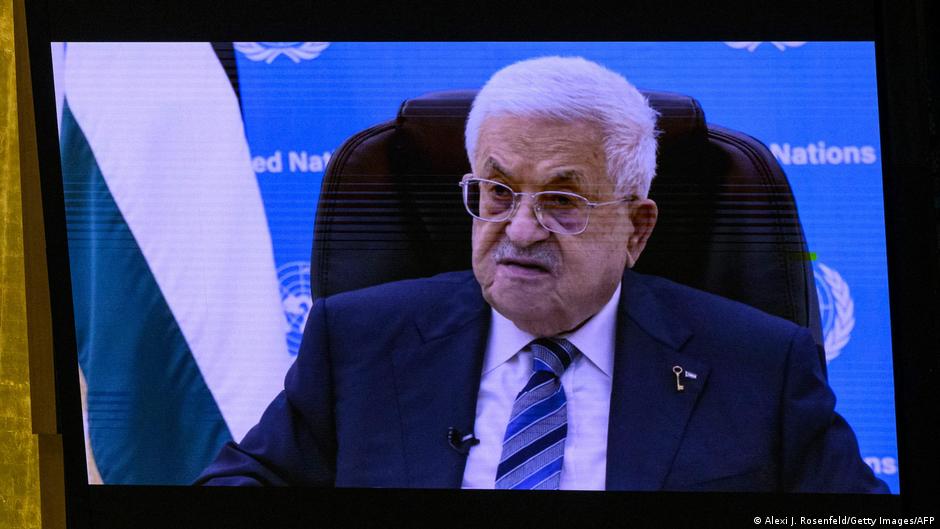
Palestinian national elections have been postponed from late November to September 11, 2027, according to WAFA, delaying what would be the first territory-wide vote in more than two decades. The elections are intended to choose both a parliament and a president, a combination that would test the legitimacy of the Palestinian political system after years of institutional stasis, war and territorial fragmentation.
Mahmoud Abbas, the 90-year-old head of the Palestinian National Authority, issued the decree moving the parliamentary vote, with presidential elections now scheduled for the same day. The decision affects the West Bank, East Jerusalem and the Gaza Strip, three arenas whose political, security and economic conditions have diverged sharply since the last national elections.
WAFA cited Israeli military restrictions, the expansion of Jewish settlements, attacks by armed settlers and limits on freedom of movement as reasons for the postponement. In the case of Gaza, the agency also pointed to instability and the delayed deployment of international security forces. Together, those factors amount to a practical argument that elections cannot be organized under present conditions across all Palestinian territories.
Israel rejected that explanation. Foreign Minister Gideon Saar accused Abbas of misleading the international community and making false claims that Israel had created obstacles to voting. Saar said Abbas was trying to avoid responsibility and accountability.
Israel’s foreign minister said Abbas was attempting to evade responsibility and accountability, rejecting claims that Israel had obstructed the electoral process.
Criticism of the delay also came from within Fatah, the Palestinian national liberation movement to which Abbas belongs. That internal dissent matters because the postponement is not only a dispute over logistics. It also underscores a deeper question: whether Palestinian institutions can renew their mandate at the very moment when they are being asked to play a larger role in postwar governance.
An election delay with economic consequences
For an economics-focused readership, the election postponement is significant because political legitimacy is not an abstract variable in the Palestinian territories. It affects fiscal capacity, donor confidence, reconstruction planning, the credibility of public administration and the ability to coordinate security, taxation and basic services. A government whose mandate is contested may still function day to day, but it faces higher transaction costs in every negotiation, whether with foreign donors, Israel, local factions or international guarantors.
The Palestinian National Authority has long operated in a constrained environment, dependent on external financing, vulnerable to movement restrictions and exposed to political fragmentation between the West Bank and Gaza. Delaying elections until 2027 extends that uncertainty. For households and firms, political uncertainty can translate into delayed investment, weaker job creation and a higher perceived risk around reconstruction projects or cross-border commerce.
The timing is especially important because Gaza’s postwar administration remains unresolved. In October 2025, Israel and Hamas agreed to a ceasefire under a peace plan developed by the administration of U.S. President Donald Trump. The United States, Turkey, Qatar and Egypt acted as guarantors of the arrangements between Israel and Hamas. During the first phase, Hamas fighters returned all remaining living Israeli hostages in exchange for the release of Palestinian prisoners from Israeli prisons.
In mid-January, the White House said the second phase of Trump’s plan to end hostilities in Gaza had begun. Under that phase, a National Committee is expected to take over administration of the region until the Palestinian National Authority is ready to assume that role. The postponement of elections therefore lands directly inside a larger governance transition. The PNA is being positioned as a future administrator in Gaza, while its own electoral mandate remains unresolved until at least September 2027.
Historical parallels and institutional fatigue
The planned vote would be the first nationwide Palestinian election in more than twenty years. That long gap has created what economists and political analysts often describe as institutional fatigue: formal structures remain in place, but the mechanisms for renewal, accountability and competition weaken over time. In such systems, leadership continuity may provide administrative predictability, but it can also reduce responsiveness and make reform harder.
The postponement also invites comparison with earlier moments when Palestinian political processes were shaped by conflict, external constraints and factional rivalry. Elections in the Palestinian territories have historically carried significance beyond representation. They have served as signals to donors, regional powers and international institutions about who can claim authority to negotiate, govern and allocate resources. When elections are delayed, those signals become weaker.
There was, however, a limited local precedent earlier this year. In April, the first municipal elections in two decades were held in Deir al-Balah in the Gaza Strip. Candidates on most electoral lists were close to Fatah or ran as independents. While municipal voting cannot substitute for national elections, it showed that localized political processes can take place even amid difficult circumstances. That makes the broader postponement more politically sensitive, particularly among critics who see it as a delay in accountability rather than a purely technical necessity.
War, reconstruction and the price of uncertainty
The broader regional context remains central. The situation in the Middle East escalated sharply on October 7, 2023, when Hamas, designated a terrorist organization by the European Union and the United States, launched a large-scale attack on Israel. Militants fired a massive rocket barrage, entered Israeli territory and carried out the deadliest massacre of civilians in the history of the modern Israeli state, killing about 1,200 people.
Militants also seized about 250 hostages and took them to the Gaza Strip. Some were exchanged or released, while others died. Israel responded by declaring war on Hamas. The war that followed devastated Gaza’s economy, infrastructure and administrative capacity, leaving any future governing arrangement dependent on security guarantees, external financing and a politically credible local counterpart.
That is where the election delay becomes structurally important. Reconstruction requires more than funds. It requires institutions able to prioritize projects, manage procurement, distribute aid, restore services and maintain public trust. If the PNA is expected to assume governance responsibilities in Gaza after an interim National Committee, the absence of fresh national elections may complicate its claim to authority.
For donors and regional actors, the postponement creates a difficult trade-off. Pressing for elections under unstable conditions could produce logistical and security failures. Accepting a prolonged delay could entrench the legitimacy deficit that already weakens Palestinian governance. The September 2027 date may offer a calendar, but it does not by itself resolve the structural problem: the Palestinian economy’s recovery is tied to institutions whose political renewal has again been deferred.
In the short term, the practical effects may be diplomatic rather than immediate. The PNA will continue to operate, ceasefire arrangements will remain dependent on their guarantors, and Gaza’s interim administration will be judged by security and service delivery. Over the longer term, however, the postponement could shape the economics of recovery. Without a renewed mandate, every budget, reconstruction plan and administrative transfer risks becoming part of a wider contest over legitimacy.



