ECB Clears UniCredit Path to Gradual Takeover of Germany’s Commerzbank
The approval advances cross-border banking consolidation in Europe despite German concerns over jobs, governance and lending to smaller companies.
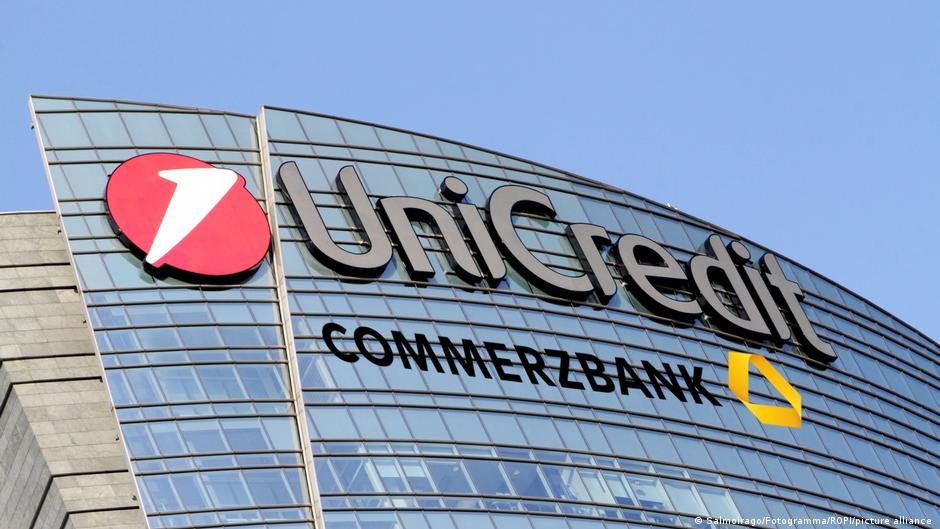
The European Central Bank has approved UniCredit’s acquisition of stakes in Commerzbank, clearing a decisive regulatory obstacle to the Italian lender’s gradual takeover of Germany’s second-most important commercial bank. UniCredit representatives announced the ECB’s decision on Thursday, October 15.
According to the dpa news agency, the authorization allows UniCredit to cross the threshold of a 30% holding in Commerzbank and subsequently increase its participation without further limits. In practical terms, that gives the Italian group a route to absorb the German bank and marks a potentially significant shift in the structure of eurozone finance.
UniCredit said the decision demonstrated confidence in its “strong position in the European banking sector.” The transaction is expected to pass through the remaining supervisory procedures by the end of the current year. By then, UniCredit is expected to control half of the voting rights at Commerzbank’s shareholder council, enabling it to establish control over the institution.
The regulatory decision does more than approve an investment: it opens the way for control of a major German lender to move to a banking group headquartered elsewhere in the eurozone.
A test of Europe’s cross-border banking ambitions
The approval is consistent with the ECB’s repeatedly stated support for bank mergers within the eurozone. The regulator regards consolidation as a means of strengthening the European Union’s single internal market, which remains less integrated in banking than the common currency might suggest.
That structural goal is central to the economic significance of the transaction. European banks operate under a shared monetary framework and common ECB supervision, yet national boundaries still shape ownership, political oversight and the allocation of credit. A UniCredit takeover of Commerzbank would therefore test whether common supervision can translate into genuinely cross-border banking groups, rather than a system still dominated by national institutions.
Historically, banking consolidation has often followed periods of regulatory integration and pressure to improve efficiency. In the eurozone, however, cross-border combinations carry an additional political dimension because banks are not merely financial companies. They provide payment infrastructure, hold household savings and determine which businesses receive credit. Governments consequently tend to treat major lenders as strategically important even when they are publicly traded.
The UniCredit-Commerzbank transaction exposes that tension directly. From the ECB’s perspective, larger cross-border institutions can deepen the single market and potentially allocate capital more efficiently across national borders. From Germany’s perspective, foreign control may bring restructuring decisions that affect domestic employment, corporate lending and the location of executive authority.
Share exchange created a route to control
In May, UniCredit offered Commerzbank shareholders 0.485 UniCredit shares for each Commerzbank share they owned. Through that offer, the Italian bank obtained access to almost half of the German company’s shares. Completion of the exchange nevertheless required ECB permission, making the central bank’s review the pivotal stage of the deal.
The regulator’s approval was not regarded as a surprise. The ECB had repeatedly signaled that it favored mergers among eurozone banks because such transactions could reinforce the EU internal market. Even so, regulatory support does not eliminate the economic and political questions surrounding integration after a takeover.
The scale of UniCredit’s prospective voting power is particularly important. A shareholding below outright majority ownership can still deliver effective control when it is combined with half of the voting rights. That would allow UniCredit to shape Commerzbank’s strategic direction, including decisions about costs, business priorities and its position in the German banking market.
Germany focuses on jobs and Mittelstand lending
Commerzbank’s management and employees, as well as the German authorities, previously opposed UniCredit’s takeover plans. The federal government owns slightly more than 13% of Commerzbank and wants to prevent job losses arising from optimization measures after the acquisition.
Berlin also wants Commerzbank to remain a publicly listed joint-stock company headquartered in Frankfurt am Main. In addition, the authorities are seeking to preserve the bank’s development of services for Germany’s small and medium-sized enterprises.
That priority has consequences beyond the bank itself. Smaller German companies depend on stable banking relationships, and Commerzbank’s role in serving them makes the takeover a question about the future organization of business finance. Cost savings may be attractive to shareholders, but consolidation can also lead to centralized decision-making and changes in branch networks, staffing or lending strategies.
The deal therefore represents a broader choice confronting European policymakers. Banking union encourages capital and ownership to move across borders, while national governments remain accountable for employment and access to credit at home. The ECB’s approval gives institutional momentum to consolidation, but the response in Germany shows that financial integration remains politically contested.
If the remaining supervisory steps are completed as expected, UniCredit will enter the next phase with the capacity to exercise control. The transaction’s lasting importance will depend not only on ownership percentages, but also on whether a larger European banking group can reconcile efficiency and integration with Germany’s demands for jobs, a Frankfurt headquarters and continued support for its small and medium-sized business sector.



