Foreign investment into Germany jumped to 86 billion euros in 2025
A sharp rebound in foreign direct investment masks a changing map of capital flows, with EU money still dominant as US firms pull back and UK investors surge.
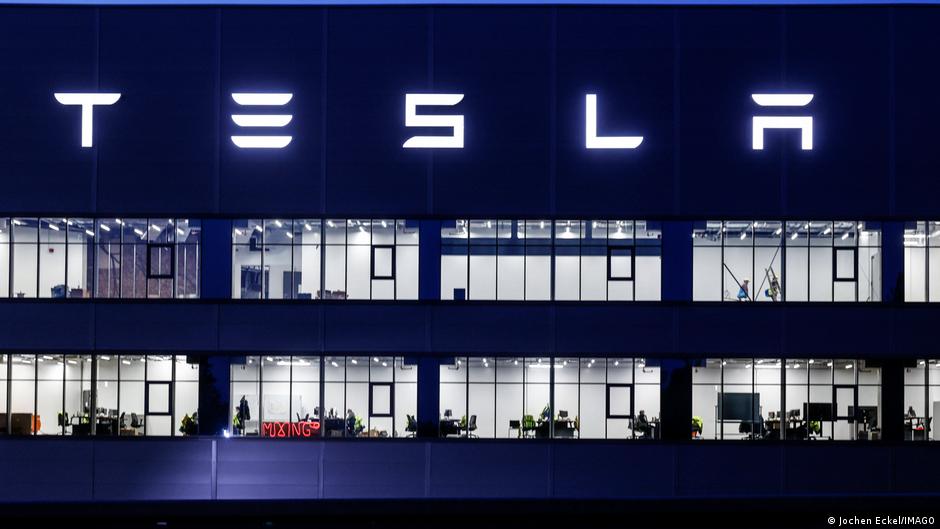
Foreign direct investment into Germany rose sharply in 2025, reaching 86 billion euros, according to figures published by the German Economic Institute (IW) in Cologne on Monday, August 31. The annual total was 50% higher than the previous year, marking a strong recovery after an unusually weak 2024 and offering a clearer picture of how the geography of capital flowing into Europe’s largest economy is shifting.
On the surface, the increase suggests renewed international confidence in Germany as an investment destination. But the IW data also point to a more complicated underlying story. The rebound comes after foreign investment into Germany fell by 32% in 2024, meaning the 2025 rise looks especially pronounced against a depressed base. Even so, the institute said the 2025 result still stands 11% above the median level recorded over the 2015-2024 period, indicating that the upswing cannot be explained by base effects alone.
“Direct investment flows differ from year to year. Their total can change because of individual large transactions,” IW experts said, noting that figures are often revised after the fact, either upward or downward.
That caution matters for economists and policymakers alike. Foreign direct investment is often treated as a gauge of long-term business confidence because, unlike short-term portfolio flows, it usually reflects corporate decisions to acquire assets, expand production, or build a stronger operational presence. Yet headline annual totals can be distorted by a small number of large deals. In Germany’s case, the latest data point to both cyclical recovery and structural rebalancing rather than a simple, broad-based surge.
Capital sources are changing
The most notable shift in the 2025 figures concerns where the money is coming from. American companies sharply reduced their investment in Germany, while British firms increased theirs dramatically. According to IW, investment by US enterprises fell by 44% to 11.8 billion euros. As a result, the US share of total foreign investment in Germany dropped from 36% to 14%.
By contrast, investment from UK companies rose by 284% to 26 billion euros, equivalent to 31% of all foreign investment in Germany in 2025. That change is large enough to alter the balance of foreign corporate influence in a single year and suggests that Germany’s role within broader European and transatlantic business strategies may be evolving.
IW also reported higher investment volumes from China, Chile and Saudi Arabia. Even so, those countries still play only a minor role in the overall foreign investment picture. Their presence is growing, but from a comparatively small base, and they remain far less significant than the main European sources of capital.
The largest share of foreign investment in Germany still comes from other European Union member states. In 2025, that total slipped by 2.7% from the previous year to 43 billion euros. Despite the decline, it still accounted for half of all foreign capital entering the country. That is a reminder that Germany’s economic integration within the EU remains the central anchor of its external investment profile.
Why the rebound matters
For an economics-focused readership, the significance of the 2025 rebound lies less in the single-year percentage increase than in what it says about Germany’s position in the regional and global economy. Germany has long occupied a dual role: it is both a domestic industrial base and a continental hub embedded in EU supply chains, regulatory frameworks and corporate networks. The fact that half of all foreign capital still comes from other EU countries reinforces that structural pattern.
Historically, periods of weaker inflows into Germany have often prompted debate about whether high energy costs, regulatory complexity, slower growth and industrial transition are eroding the country’s attractiveness. The 2024 drop of 32% fed that narrative. The 2025 recovery does not settle the question, but it complicates it. A rebound to 86 billion euros suggests Germany remains capable of attracting substantial long-term capital even after a weak year.
At the same time, the composition of that capital matters. A steep fall in US investment alongside a surge from the UK may indicate that foreign businesses are reassessing where Germany fits within their European strategies. For US firms, reduced investment may reflect caution, changed priorities, or the absence of the large transactions that can reshape annual totals. For British firms, the increase may point to a stronger push into continental Europe through Germany, whether for market access, industrial partnerships or financial positioning.
That makes the 2025 data important beyond the headline number. Investment origin is not just a bookkeeping detail; it can shape ownership structures, corporate influence, supply-chain direction and the types of sectors receiving capital. If EU and UK money becomes relatively more important while US participation fades, the long-term consequences could extend to governance patterns, merger activity and the strategic orientation of German industry.
Signal or volatility?
IW’s warning about volatility is therefore crucial. Direct investment data are inherently uneven, and one or two major transactions can dominate the annual figure. Revisions are also common. That means the 2025 number should not be read as evidence of a simple linear recovery. But neither should it be dismissed as statistical noise. The fact that the annual total is above the 2015-2024 median gives the rebound more weight than a mere comparison with the weak 2024 base would suggest.
For Germany, the broader economic implication is that the country continues to attract foreign capital at scale, but under changing conditions. The center of gravity remains European. The US role has diminished sharply in the latest figures. The UK has emerged as a much larger contributor. Smaller players such as China, Chile and Saudi Arabia are increasing their presence, though still from the margins.
In that sense, the 2025 investment data capture two realities at once: resilience in Germany’s ability to draw foreign capital, and a reordering of who is providing it. For policymakers, businesses and economists, the next question is whether this is the beginning of a longer-term restructuring or another example of how volatile annual direct investment flows can be.