Kyiv Power and Water Disrupted as Russian Strike Targets Energy Infrastructure
Damage in the Kyiv and Volyn regions highlights the systemic economic risks facing Ukraine’s interconnected urban utilities.
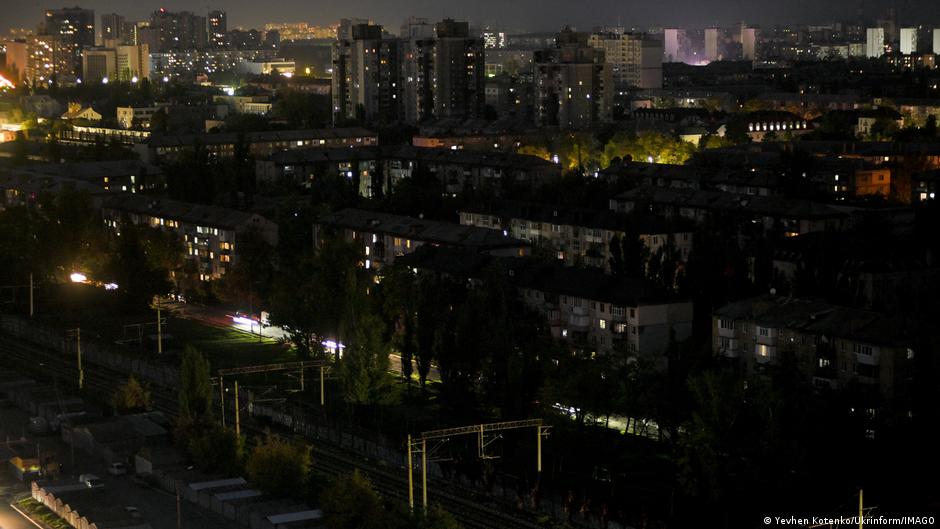
A Russian military strike on energy infrastructure in the Kyiv region caused electricity outages in parts of the Ukrainian capital and surrounding areas on Thursday evening, October 15, while damage to power lines also disrupted essential services in the western Volyn region.
Ukraine’s Energy Ministry and Kyiv Mayor Vitali Klitschko reported that electricity had been cut in several districts following the attack. The ministry said repair crews would begin restoring supplies as soon as security conditions permitted.
“As soon as security conditions allow, crews will immediately begin restoring electricity supplies. Energy workers are doing everything possible to restore power as quickly as possible,” the ministry said.
Klitschko said damage to energy facilities in the Kyiv region had also reduced water pressure in some parts of the capital. The simultaneous deterioration of electricity and water services illustrates how damage to one part of an urban infrastructure network can spread rapidly across other systems.
Interdependent infrastructure raises the economic cost
Electricity outages are not confined to lighting and household appliances. Water pumping, sewage treatment, telecommunications, public transport, heating systems and many commercial operations depend on stable power. When electricity supplies fail, the economic consequences can therefore extend well beyond the damaged facility and persist even after generation or transmission capacity is partly restored.
Reduced water pressure in Kyiv is an immediate example of that interdependence. Large cities require electricity to move water through pumping stations and maintain pressure across distribution networks. Disruptions can force households, businesses and public institutions to rely on reserves or emergency arrangements, while utilities must coordinate repairs across several systems rather than addressing a single isolated failure.
The attack also creates indirect costs. Repair crews cannot safely begin work until security conditions permit, extending the duration of outages and delaying the return of normal commercial activity. Repeated interruptions can increase maintenance requirements, reduce productivity and oblige both public authorities and private companies to invest in backup power and other forms of resilience.
That pattern resembles the broader economic effect historically associated with attacks on networked infrastructure: the physical damage may be geographically limited, but the loss of service spreads through connections between energy, water, transport and communications. The result is a multiplier effect in which each damaged component imposes costs on several sectors at once.
Volyn disruptions show the reach of secondary damage
Russia also attacked the Volyn region on the evening of October 15. Roman Romaniuk, head of the regional military administration, said debris from intercepted drones damaged power transmission lines, causing electricity and water-supply disruptions in the regional capital, Lutsk.
Romaniuk said three jet-powered drones entered Volyn’s airspace during the evening air-raid alerts and were shot down by Ukrainian air defenses. The resulting damage demonstrates that successful interception does not necessarily eliminate the economic risk: falling debris can still strike transmission infrastructure and interrupt services.
The incidents in Kyiv and Lutsk also show that pressure on the energy system is not limited to a single region. Disruptions in both the capital area and western Ukraine complicate the allocation of repair personnel, replacement equipment and emergency capacity. Even when each outage is temporary, geographically dispersed incidents can place cumulative strain on utilities and public budgets.
Reported plan points to a broader systemic threat
The New York Times has reported, citing an intercepted Russian attack plan presented by Ukraine to European officials in early autumn, that Russia prepared a campaign intended to disable the country’s energy system and cut Kyiv, Kharkiv and Odesa off from electricity, water and heating supplies.
According to the newspaper’s assessment, implementing the plan would require about 70 ballistic missiles, 720 long-range drones and 150 guided bombs. The report said such a campaign could deprive Kyiv, Kharkiv and Odesa of roughly 90% of their electricity capacity, reduce heat supplies by 90% and cause severe disruption to water and sewerage systems.
Those figures describe a potential scenario rather than the measured consequences of Thursday’s attacks. Nevertheless, the outages reported in Kyiv and Lutsk provide a smaller-scale demonstration of the transmission channels through which a sustained campaign could affect urban economies: damage to energy assets leads to power cuts, which then impair water distribution and other essential services.
The newspaper’s sources said Russia could seek to exploit shortages in Ukraine’s air-defense resources, particularly interceptor missiles for Patriot systems. That constraint has an economic dimension as well as a military one. Limited defensive capacity forces choices over which facilities and urban areas receive protection, while every successful strike can require costly repairs and emergency measures.
For Ukraine, the structural challenge is therefore not merely replacing damaged equipment. It is maintaining enough redundancy, repair capacity and air defense to prevent local failures from becoming prolonged regional shortages. The October 15 disruptions underscore how the resilience of the wider economy increasingly depends on the ability of electricity, water and heating networks to continue operating under repeated attack.



