Russia to Shut Goethe-Institut Branches as Berlin Tightens Sanctions
Moscow says it will close the German cultural institute’s three Russia branches after Berlin moved to end the Russian House agreement in a wider sanctions response.
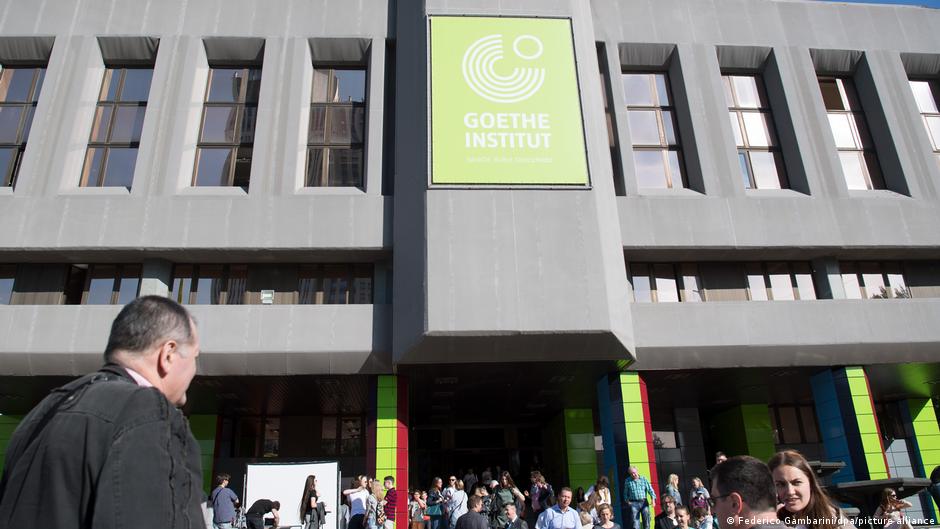
Russia will close the three branches of Germany’s Goethe-Institut in the country after Berlin decided to terminate its agreement with Moscow governing the Russian House in Berlin, Russian Foreign Minister Sergei Lavrov said on Thursday, September 3, at the Eastern Economic Forum in Vladivostok. The statement adds a cultural dimension to a broader escalation in German-Russian tensions that now extends beyond sanctions and consular measures into the architecture of soft power and long-term economic relations.
Lavrov said Germany’s decision to end the agreement on the Russian House meant Germany was effectively ending its cultural presence in the Russian Federation. He framed Moscow’s response as reciprocal. According to Lavrov, Germany has Goethe-Institut branches “in Moscow, in St. Petersburg, and in Yekaterinburg,” and “of course, they will be closed, after our cultural center was kicked out from there. Otherwise we would not respect ourselves.” Data from the Goethe-Institut itself indicates that its third branch in Russia is in Novosibirsk, not Yekaterinburg.
The Russian minister said German authorities had “consciously” taken a step that “clearly means the cessation of their cultural presence in the Russian Federation,” which had remained despite what he called the “Ukrainian vicissitudes” in Russia’s relations with the West. Deutsche Welle said it had approached the Goethe-Institut’s leadership for comment.
The remarks came a day after German authorities announced tighter sanctions against Russia, assigning responsibility to Moscow for a drone incident at Leipzig airport in August. German Interior Minister Alexander Dobrindt said the decision followed an examination of the drones’ settings and certain components that had also been used in other hybrid incidents.
As part of the response, the German government ordered the closure by September 18 of the last Russian consulate general in the country, located in Bonn, and said it would terminate the agreement covering the activities of the Russian House in Berlin, according to German Foreign Minister Johann Wadephul. The same agreement also regulated the operation of the Goethe-Institut in Russia. Berlin also said it would tighten checks on Russian citizens entering the country and intensify measures against Russia’s so-called shadow fleet.
Cultural ties become part of the sanctions economy
While the immediate significance of the dispute is diplomatic, the longer economic implications lie in what it signals about the continued dismantling of the institutional channels that once underpinned Europe’s relationship with Russia. Cultural institutes are not merely symbolic outposts. They help sustain language training, academic exchange, professional networks and business familiarity, all of which lower the costs of cross-border economic engagement over time.
In that sense, the threatened closure of Goethe-Institut branches in Russia is part of a larger process in which sanctions, security disputes and retaliatory restrictions are eroding the connective tissue that supports trade and investment even when formal commercial links remain intact. When those channels disappear, the result is not only a diplomatic freeze but a structural rise in friction across education, labor mobility, research cooperation and corporate market access.
“Of course, they will be closed, after our cultural center was kicked out from there,” Lavrov said in Vladivostok.
For Germany, the move against the Russian House agreement appears designed to show that hybrid security incidents can trigger consequences beyond the traditional sanctions toolkit. For Russia, the announced closure of Goethe-Institut branches turns the response into a mirror measure, reinforcing a pattern that has defined relations in recent years: once one side treats cultural or civic institutions as extensions of state presence, the other side tends to do the same.
That dynamic matters economically because it narrows the zone of low-politics engagement that can survive periods of geopolitical confrontation. Historically, such institutions often outlasted diplomatic crises and preserved at least some basis for future normalization. Their loss suggests that both sides are accepting a longer horizon of estrangement, with fewer buffers against complete institutional separation.
The development also reflects how the logic of sanctions has evolved. Initial rounds of Western measures against Russia focused on finance, technology, energy and strategic goods. Over time, however, the conflict has moved into transportation links, consular access, mobility rules and now cultural agreements. Each additional layer makes any eventual restoration of normal ties more administratively and politically costly.
For Russia, the practical economic hit from closing Goethe-Institut branches is unlikely to be large in narrow financial terms. But the broader cost is more diffuse. Germany has historically been one of the most important European reference points for industrial standards, technical education and business culture. Restricting that presence further reduces exposure to German institutional influence at a time when Russia has already been redirecting trade and strategic attention toward non-Western partners.
For Germany, the immediate economic burden is also limited, but the political message is stronger than the balance-sheet effect. Berlin is signaling that security incidents attributed to Moscow can reshape the terms not only of commerce but of societal engagement. That reinforces a wider European trend in which Russia policy is increasingly handled through the lens of resilience, risk management and internal security rather than interdependence.
The closure of the last Russian consulate general in Germany, in Bonn, underlines the same shift. Consulates support visas, legal documentation and business services that facilitate movement between markets. Reducing those functions further raises transaction costs for companies, students and families, even before one considers tighter entry controls for Russian citizens. In practical terms, the cumulative effect is to make cross-border interaction slower, more uncertain and less attractive.
The reference to stronger action against Russia’s shadow fleet places the cultural dispute inside an even wider sanctions frame. That fleet is associated with the export logistics that help Russia sustain oil revenues despite Western restrictions. By pairing maritime enforcement with consular and cultural measures, Germany is showing that pressure on Russia will be applied across security, transport and institutional domains at once.
The result is a deeper decoupling logic. Not a total severance, but a steady removal of platforms that once made cooperation easier to restart after political crises. If Lavrov’s announcement is carried out, the closure of Goethe-Institut branches in Moscow, St. Petersburg and Novosibirsk would mark another step in that direction: a dispute triggered by a drone incident and sanctions policy, but one whose longer legacy may be to harden the economic and social partition now taking shape between Russia and Europe.