US Senate Rejects Resolution to End Hostilities with Iran Amid Constitutional War Powers Debate
For the fourth time in a year, the Senate declines to limit the president’s war-making authority without congressional approval.
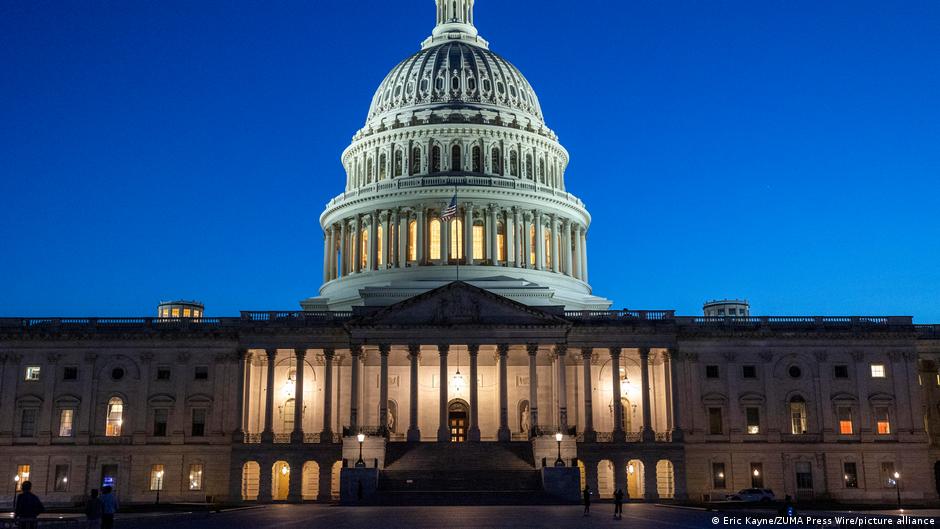
The United States Senate recently voted against a resolution that aimed to compel the Trump administration to cease military actions against Iran and withdraw American troops from the conflict zone unless Congress formally authorized further use of force. This marks the fourth instance since early 2026 where the Senate has declined to check the president's unilateral war powers, highlighting persistent tensions over constitutional authority and executive military engagement.
Congressional Authority and the War Powers Act: A Historical and Legal Context
The resolution, sponsored by Democratic senators, secured 47 votes in favor but was opposed by 52 senators, a margin influenced significantly by Republican control of the upper chamber. Democrats contend that the ongoing military campaign against Iran lacks sufficient legal justification and violates the principle that only Congress may declare or authorize war. They have pledged to continue introducing similar measures until the conflict concludes.
This legislative struggle centers on the War Powers Resolution of 1973, which was enacted to rebalance war-declaring powers between the executive and legislative branches following the Vietnam War. The law stipulates that the president must obtain congressional authorization within 60 days of initiating military hostilities, or else withdraw forces, although it allows for one 30-day extension. The current deadline for congressional approval lapses at the end of April 2026, underscoring the urgency of this debate.
“The Senate’s repeated refusal to constrain the president’s war-making authority signals a broader institutional reluctance to assert constitutional checks in matters of foreign military engagement,” said a legislative analyst.
Despite these legal frameworks, the Senate has in practice deferred to the executive branch, reflecting a longstanding pattern of congressional acquiescence to presidential military initiatives. This dynamic raises critical questions about the balance of power in U.S. foreign policy decision-making and the implications for democratic accountability.
Broader Economic and Geopolitical Implications
The military confrontation with Iran holds substantial economic consequences, both domestically and internationally. Prolonged conflict risks destabilizing global oil markets, given Iran’s strategic position in energy supply chains, which could exacerbate inflationary pressures and disrupt trade flows. Domestically, sustained military engagement without congressional sanction may undermine investor confidence and fuel political uncertainty, potentially impacting economic growth.
Moreover, the constitutional ambiguity surrounding war powers complicates the United States’ strategic posture. A president able to unilaterally initiate or continue hostilities can act swiftly in crisis but may also provoke unintended escalation without legislative oversight. Conversely, requiring explicit congressional approval could delay responses in rapidly evolving scenarios, revealing a structural dilemma in American governance.
As Congress awaits a more detailed de-escalation plan from the Trump administration, the debate underscores the enduring struggle to reconcile effective foreign policy with constitutional principles. The outcome may set precedents affecting not only U.S.-Iran relations but also the broader international order and the role of legislative oversight in military affairs.