U.S. Senators Urge Trump to Drop Russian Diesel Deal With Putin
A bipartisan group says renewed Russian diesel flows would do little for U.S. fuel prices while giving Moscow fresh revenue for war.
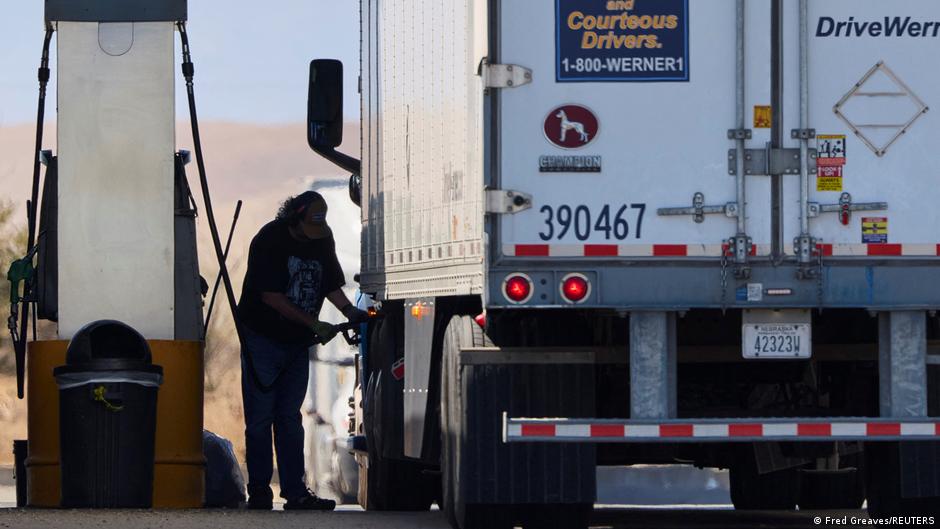
A bipartisan group of 12 U.S. senators is pressing President Donald Trump to abandon a proposed diesel agreement with Russian President Vladimir Putin, arguing that the economic benefits for American consumers would be negligible while the strategic gains for the Kremlin could be substantial.
In a letter sent on Tuesday, October 13, a group organized around Democratic Senator Richard Blumenthal urged Trump to reverse course on the arrangement, under which Russian diesel supplies would return to American and global markets. The appeal, a copy of which Blumenthal posted on X, frames the question not as a narrow fuel-market intervention but as a test of whether sanctions pressure on Moscow will be sustained as the war in Ukraine continues.
The senators write that Congress and the American people support ending the war in Ukraine, which they say has taken hundreds of thousands of lives over four and a half years. But they insist that any peace must come on just terms, not through measures that ease financial pressure on Russia while Ukrainian civilians remain under attack.
“This deal is a gift to our adversary and a betrayal of our allies; it must be cancelled,” the senators said in the letter.
Fuel Prices and Sanctions Pressure
The central economic claim in the letter is that American households, already strained by elevated fuel costs, are unlikely to see meaningful relief from the reintroduction of Russian diesel onto the world market. Diesel is a globally traded product, and additional cargoes can affect margins and regional balances, but the senators argue that the scale and structure of the proposed flows would not translate into a material consumer benefit in the United States.
That argument is important because energy diplomacy has often been justified through the language of price relief. Governments facing voter pressure over fuel costs have historically looked to supply-side measures, from reserve releases to waivers, exemptions and temporary licensing arrangements. But the senators’ position is that the distribution of gains matters: even if extra diesel supply softened some market pressures, the revenue would accrue to Russian exporters and, by extension, to a state financing a major war.
According to the letter, lifting U.S. sanctions on Russian diesel exports would “only provide Putin with additional funds to finance his war machine” and enable Russia to continue what the senators describe as brutal attacks on Ukrainian civilians. The economic objection is therefore tied directly to the sanctions architecture built around Russia since its full-scale invasion of Ukraine. Sanctions are not only punitive measures; they are intended to alter the financing constraints under which the Russian state and its companies operate.
The senators call on Trump to intensify economic pressure on Russia and on countries they describe as central to enabling Moscow’s war, especially China. They specifically urge him to use powers provided under Lindsey Graham’s sanctions law targeting Russia and Iran. Copies of the appeal were sent to Secretary of State Marco Rubio and Treasury Secretary Scott Bessent, underscoring that the issue spans foreign policy, sanctions enforcement and energy-market management.
A Bipartisan Warning
The letter was signed by six Democratic senators and six Republicans, giving the appeal a bipartisan character at a time when Ukraine policy and energy costs both carry domestic political weight. In addition to Blumenthal, the Democratic signatories are Jeanne Shaheen, Richard Durbin, Sheldon Whitehouse, Jack Reed and Christopher Coons. The Republican signatories are Mitch McConnell, Thom Tillis, Susan Collins, Alan Stuart Armstrong, Lisa Murkowski and John Cornyn.
That cross-party alignment reflects a broader structural tension in U.S. economic policy toward Russia. Sanctions regimes can be weakened not only by formal repeal but also by licensing exceptions, waivers and commodity-specific carve-outs. Once exemptions are granted for a strategic product such as diesel, the precedent can matter almost as much as the shipment volumes themselves. Market participants may read the move as a signal that enforcement is becoming more flexible, while allies may question the durability of the coalition restraining Russian export revenue.
The controversy follows Trump’s October 9 statement on Truth Social that he had held an “extremely successful” phone call with Putin. According to Trump, the two leaders agreed on supplies of Russian diesel fuel “to the American and world market.” He said Russian companies would immediately ship more than 300,000 tons, followed by another 500,000 tons in November, 1 million tons “immediately after that,” apparently in December, and later another 3 million tons depending on refinery conditions. The time frame for the final quantity was not specified.
The U.S. Treasury subsequently issued a general license suspending American sanctions on Russian diesel fuel until April 2027. Russian television program Vesti reported on October 12 that the first shipment of Russian diesel had departed St. Petersburg for the U.S. East Coast and that the vessel was expected to arrive within 48 to 72 hours.
For Econpress readers, the significance lies in the collision between short-term commodity management and long-term sanctions credibility. Diesel is not merely a transport fuel; it is embedded in freight, agriculture, construction, military logistics and industrial supply chains. Even modest changes in supply can matter at the margin. But the senators’ argument is that marginal price effects must be weighed against the structural consequence of reopening a revenue channel for Russia while the war continues.
The episode also illustrates a recurring dilemma in sanctions policy: the more integral a sanctioned commodity is to global markets, the greater the temptation to create exceptions in the name of stability. Oil products, unlike some financial instruments or luxury goods, touch household budgets and inflation expectations. That gives them political salience. Yet every exception can dilute the intended pressure on the sanctioned state, particularly when the state relies heavily on commodity earnings.
The senators are therefore seeking to frame the diesel deal as more than a questionable import decision. In their view, it is a transfer of bargaining power to Moscow, a possible weakening of allied solidarity and an economic concession whose benefits to U.S. families are uncertain. Whether the administration reverses the license or proceeds with the shipments will indicate how it balances fuel-market politics against the strategic logic of sanctions.



