Cross-Border Drone Attacks Escalate Casualties in Russia and Ukraine Amid Ongoing Conflict
Recent drone strikes by Ukrainian forces have caused civilian casualties in Russian border regions while Russia continues missile and drone attacks in Ukraine.
The ongoing hostilities between Russia and Ukraine have seen a marked escalation in cross-border drone attacks, resulting in civilian casualties on both sides and highlighting the evolving nature of warfare in the conflict's border regions.
Drone Strikes Impact Russian Border Regions
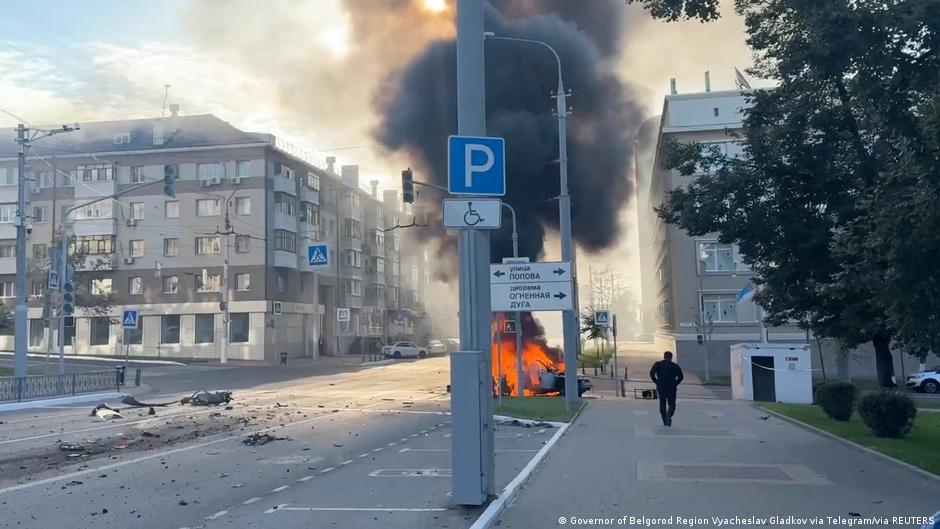
On the night of July 27, multiple drone attacks launched by Ukrainian forces targeted the Russian Belgorod region, causing significant damage and casualties. According to regional authorities, 12 civilians were injured, including two children. The strikes ignited fires in several apartments and vehicles, prompting emergency responses and temporary suspension of utilities in affected multi-story buildings. The mayor of Belgorod, Valentin Demidov, confirmed the attacks and noted that some residents were relocated to temporary accommodation centers due to unsafe living conditions.
Simultaneously, the Rostov region experienced shelling resulting in two fatalities—a married couple—and five additional injuries in Rostov-on-Don. These incidents underscore the vulnerability of Russian population centers near the border to Ukraine’s tactical use of unmanned aerial vehicles in response to the broader military campaign.
Reciprocal Attacks Highlight Strategic and Structural Shifts
Russia has also intensified its offensive operations using drones and missiles targeting multiple Ukrainian oblasts, including Dnipropetrovsk, Sumy, Chernihiv, Zaporizhzhia, Kharkiv, and Kherson. The Ukrainian Air Forces reported these extensive strikes in official communications, indicating a broader geographical scope and sustained pressure.
"The use of drones by both sides represents a significant evolution in the conflict, with asymmetric tactics impacting civilian populations and infrastructure," said a defense analyst specializing in Eastern European security.
The escalation signals a shift towards increased reliance on unmanned aerial systems in contested border zones, reflecting broader trends in modern warfare where drones serve as cost-effective, versatile tools for reconnaissance, targeted strikes, and psychological impact. This dynamic complicates traditional defense postures and raises questions about civilian protection frameworks in hybrid conflicts.
Historically, cross-border artillery and missile exchanges have been a feature of the Russia-Ukraine conflict since 2014; however, the deployment of drones marks a significant technological and tactical adaptation. The capacity to inflict damage deep within adversary territory without risking manned aircraft or ground forces alters strategic calculations, potentially prolonging hostilities and increasing civilian harm.
From an economic perspective, the destruction of residential infrastructure and disruption of utilities imposes immediate humanitarian costs and longer-term economic burdens on regional administrations. Emergency relocations, repair efforts, and healthcare provision strain local budgets already challenged by the broader economic consequences of the conflict and sanctions.
Moreover, the persistence of drone warfare along the border exacerbates uncertainty for businesses, agriculture, and logistics in these regions, undermining economic stability and investment prospects. The interdependence of regional economies, coupled with the security dilemma posed by ongoing attacks, reinforces the need for conflict resolution mechanisms that address not only military concerns but also socioeconomic resilience.
In conclusion, the recent drone strikes resulting in civilian casualties in Russia’s border regions and reciprocal Russian attacks in Ukraine underscore a deepening and technologically evolving conflict. The pattern reflects broader structural shifts in warfare with significant humanitarian, economic, and geopolitical implications for both nations and the wider region.