Drone Strike on Russia’s Arctic Gas Hub Signals a Wider Economic Risk
The reported attack on Yamal-Nenets brings the war closer to infrastructure that anchors Russian gas output and state revenue.
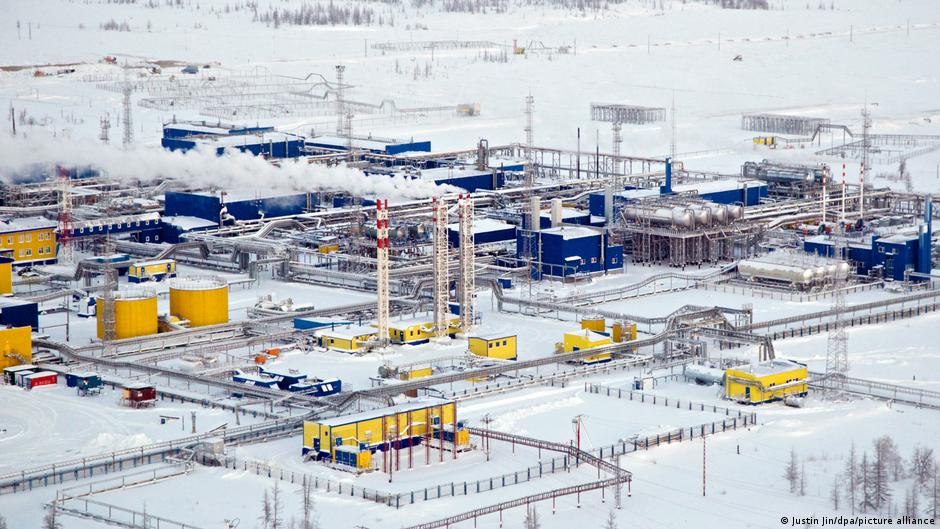
Ukrainian drones have attacked the Yamal-Nenets Autonomous District for the first time, according to regional authorities, marking a significant geographic expansion of strikes against Russian territory and bringing the war closer to one of the country’s most important energy-producing regions. A fire broke out at an industrial facility in Novy Urengoy, a city at the center of Russia’s gas infrastructure. The region accounts for the bulk of the country’s natural gas production.
Dmitry Artyukhov, the governor of Yamal-Nenets, said on Wednesday, September 9, that Ukrainian unmanned aerial vehicles had targeted the region and that a fire followed at one industrial site in Novy Urengoy. Official data cited by the authorities said there were no deaths or injuries. Artyukhov said the attack had been repelled, but that debris from a downed drone fell on the premises of an enterprise and caused the blaze. He added that the scale and nature of the damage were still being assessed.
Regional authorities said there were no casualties, while the extent of damage to the industrial facility was still being determined.
Artem Zhoga, the presidential envoy to Russia’s Ural Federal District, said the target was a fuel and energy complex facility in Yamal. According to him, staff at the enterprise had been evacuated in advance. Russian officials did not specify which facility was attacked.
Several media outlets and analytical projects that monitor strikes inside Russia reported that the target may have been a condensate preparation plant in Novy Urengoy, part of Gazprom’s gas infrastructure. The facility is regarded as one of the key sites for processing gas condensate in the region. Novy Urengoy is located roughly 2,800 kilometers in a straight line from the Russian-Ukrainian border. If reports that the drones were launched from Ukrainian territory are confirmed, the strike could represent the longest known Ukrainian attack on Russian territory since the start of the full-scale war.
Why Yamal Matters to Russia’s Energy System
The Yamal-Nenets Autonomous District is a structural pillar of the Russian economy rather than a peripheral energy province. Estimates cited in the source indicate that the region accounts for about 80% of Russian natural gas production. That concentration gives Yamal a role comparable to an economic chokepoint: even limited disruption, or the perception that such disruption is possible, can carry consequences beyond the immediate physical damage.
The Novy Urengoy facility processes gas condensate from the Urengoy, Yamburg and other fields in the region. Its design capacity is estimated at about 19.5 million tonnes of feedstock per year. Gas condensate infrastructure occupies a less visible place in public debate than export pipelines or liquefied natural gas terminals, but it is essential to the broader hydrocarbon chain. It supports the preparation, handling and movement of valuable liquids associated with gas production, linking upstream fields to transport and processing systems.
For decades, Russia’s Arctic gas regions have been treated as deep rear areas, insulated by distance, harsh geography and the scale of the country itself. The reported strike challenges that assumption. In earlier phases of the war, attacks inside Russia were more commonly associated with border regions, military sites, oil refineries or logistics assets closer to Ukraine. A strike in Yamal-Nenets, if confirmed in the terms described by regional officials and outside monitors, would shift the perceived map of vulnerability toward infrastructure that underpins Russia’s long-term fiscal and energy capacity.
Economic Consequences Beyond Immediate Damage
The direct economic effect will depend on the damage assessment, which authorities have not yet released. But the broader significance lies in risk repricing. Energy infrastructure is capital-intensive, geographically dispersed and difficult to fully secure. When a major production region faces a first reported drone attack, operators and authorities must consider not only repairs, but also air defense allocation, insurance assumptions, worker safety protocols, contingency planning and potential redundancy investments.
That matters for Russia because natural gas is deeply embedded in the state’s economic model. Gas production supports domestic industry, export earnings, regional budgets and the financial position of major state-linked companies. While oil has often dominated discussions of wartime sanctions and revenue, gas remains a strategic sector, especially in regions such as Yamal where production scale is exceptionally high.
The historical parallel is not exact, but energy wars often turn on infrastructure as much as output. In past conflicts, the ability to threaten refineries, terminals, pipelines or processing plants has forced states to divert resources from expansion and efficiency toward protection and repair. The economics of such pressure can be asymmetric. A drone strike does not need to shut down a system to impose costs; it can force a wider security response, create uncertainty around operations and signal that distance no longer guarantees protection.
For Ukraine, long-range drone operations have increasingly served both military and economic purposes, targeting assets that sustain Russia’s war capacity and revenue base. For Russia, the Yamal incident points to a more complex defense problem. Protecting frontline facilities, refineries in western regions and military airfields is already resource-intensive. Extending robust protection to Arctic industrial nodes would raise the burden further, especially across a territory as vast as Russia’s.
The attack also comes against the backdrop of Russia’s changing gas export position since the full-scale invasion of Ukraine. With traditional European pipeline markets reduced, the strategic weight of internal production regions has not disappeared; it has shifted. Yamal’s output remains central to domestic supply, alternative export strategies and the long-term credibility of Russia as an energy power. Any sign that core facilities can be reached by drones adds a new layer to economic planning for the sector.
At this stage, the confirmed facts remain limited: authorities reported an attack, a fire at an industrial facility, no casualties and an ongoing assessment of damage. The specific facility has not been officially named. Yet even within those limits, the incident is economically important. It suggests that the geography of the war may now include the Arctic gas base that has long supported Russia’s energy balance, industrial policy and public finances.