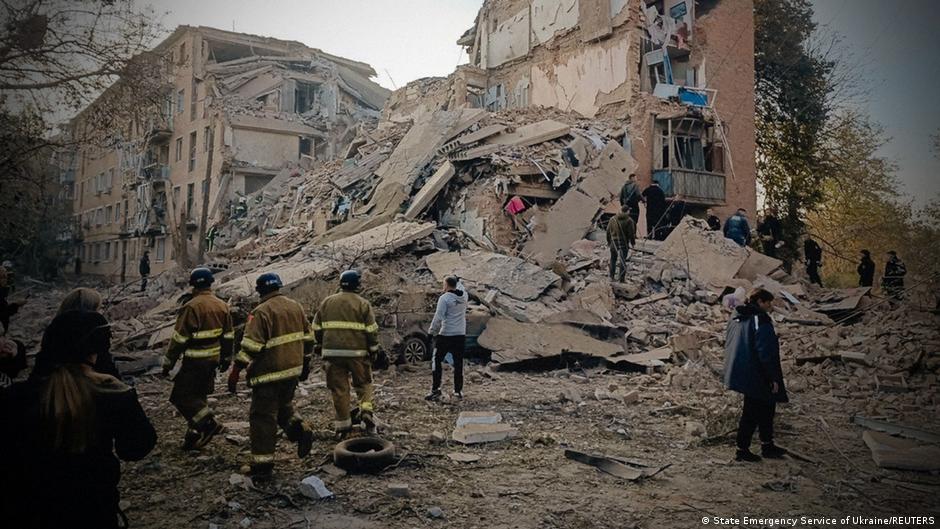
Fire Reported at Ryazan Plant Hosting Yandex Data Center, Astra Says
The incident links Russia’s machine-tool base, cloud infrastructure and sanctions pressure in a single industrial site.
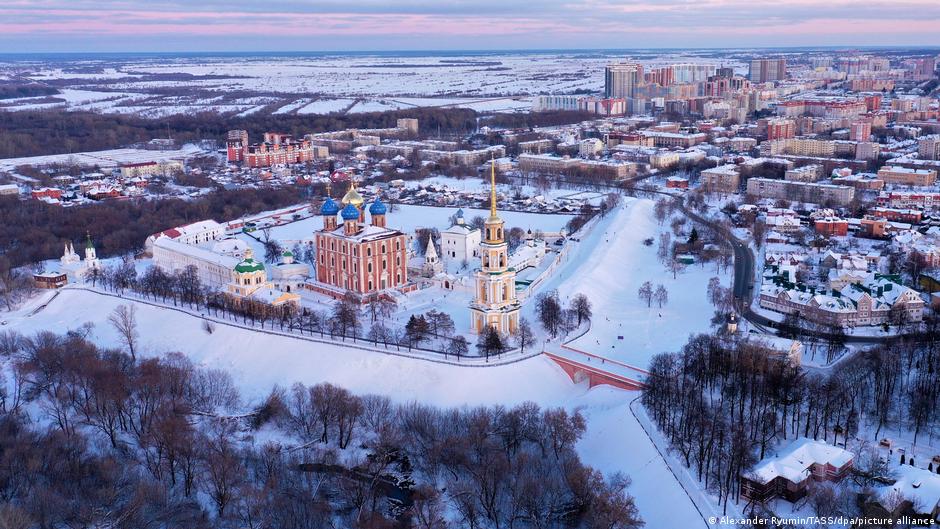
A fire broke out in Sasovo, in Russia’s Ryazan region, on the territory of the Sasta plant, where a Yandex DC data center is located, according to the Russian-language outlet Astra. The enterprise produces computer numerical control, or CNC, metalworking machines, placing the incident at the intersection of Russia’s industrial base, digital infrastructure and wartime economic vulnerability.
Astra reported overnight on Thursday, October 8, that the fire had started on the grounds of the Sasta machine-tool plant, citing its own OSINT analysis. The outlet said the site also hosts the data center of LLC Yandex DC. In its Telegram post, Astra noted that employees of the data center had themselves shown its equipment the previous month and directly stated that it was located in Sasovo, Ryazan region.
The immediate economic significance of the episode lies less in the fire itself, about which the source report provided no detailed damage assessment, than in the type of site involved. Sasta is described as a producer of CNC metalworking machines, a category of equipment that sits deep inside the production chain of modern industry. Such machines are not finished weapons, aircraft or vehicles. They are capital goods: the tools used to make the precise metal parts and assemblies on which defense, aerospace, transport and heavy industry depend.
“The significance of Sasta for Russia’s military-industrial complex lies not in the production of finished weapons, but in supporting the production base,” Astra wrote.
Capital Goods and Strategic Exposure
Machine tools have historically been a measure of industrial sovereignty. From the Cold War to the current sanctions era, the ability to build, maintain and replace advanced manufacturing equipment has shaped the resilience of defense economies. CNC systems are especially important because they combine precision engineering, software-driven control and repeatable industrial output. In an economy under sanctions, domestic capacity in this sector becomes more valuable, while also becoming more exposed.
According to Astra, Sasta’s equipment is used in the defense, aerospace, transport and heavy industrial sectors. That positioning helps explain why the plant has attracted international restrictions. The outlet recalled that Sasta is under sanctions from Canada, Switzerland, the European Union, the United Kingdom, Australia, New Zealand and Japan. These measures reflect a broader strategy pursued by Western governments: limiting Russia’s access to technologies and production inputs that may sustain its military-industrial capacity.
For economists, the case illustrates the layered nature of industrial risk in wartime. A single facility may no longer represent only one sector. A plant producing machine tools can also host data infrastructure; an industrial campus may combine manufacturing assets, cloud services and power systems. That clustering can create efficiencies in normal times, but it can also concentrate operational risk. If power, fire safety, network access or logistics are disrupted, the consequences may travel across sectors that appear separate on paper.
Astra later drew attention to a message about power supply disruptions affecting a separate availability zone of the Yandex Cloud platform. The report did not establish a causal link between the fire and the cloud disruption. According to the source article, however, the Yandex Cloud team said roughly 40 minutes after the disruptions appeared that the situation had stabilized. Even a short interruption is economically relevant because cloud availability has become a basic input for businesses, media, public services and software platforms.
Data Centers as Economic Infrastructure
The mention of Yandex DC is important because data centers are no longer peripheral facilities. They are part of the operating layer of the modern economy. Cloud platforms provide storage, computation, routing and service availability for thousands of downstream users. When a data center or an availability zone experiences instability, the effects can move quickly from the physical world into digital markets: failed transactions, inaccessible services, delayed communications and reputational costs for platform providers.
This is why the fire report resonates beyond local industrial news. It comes after a period in which telecommunications and data infrastructure have been explicitly discussed in the context of the war in Ukraine. The source article notes that on September 25, Russian armed forces began striking infrastructure belonging to the Ukrainian telecommunications operator Cosmonova, including a data center. As a result, Kyiv experienced interruptions in internet and television service.
On October 3, Ukrainian President Volodymyr Zelensky commented on strikes against Ukrainian data centers. “They are hitting data centers. All of this concerns people. This is definitely not some kind of military infrastructure. How can one hit data centers, mobile communications?” he said, according to the source text. He added that communications are used not only in Ukraine but also in Moscow.
The parallel is economically stark. Data centers are dual-use in the broadest sense: they support civilian life, commercial services, administrative systems and, in some cases, state and security functions. That duality makes them increasingly central to conflict economies, but also complicates the boundary between military and civilian infrastructure. As both digital services and industrial production become more networked, disruption to one node can have consequences that are difficult to contain.
The Sasovo incident, as reported by Astra, therefore highlights three structural pressures on Russia’s wartime economy. First, sanctions have elevated the strategic value of domestic machine-tool production while restricting external alternatives. Second, digital infrastructure such as Yandex Cloud has become an essential business utility, making even limited service interruptions visible. Third, the physical co-location of industrial and data assets can turn local incidents into broader questions about resilience, redundancy and national economic security.
At this stage, the available source account does not provide confirmed information on the scale of the fire, the extent of damage at Sasta, or whether the Yandex Cloud power issue was connected to the incident. What it does show is how closely Russia’s industrial and digital infrastructures now sit within the same risk environment. In a sanctions-constrained, war-shaped economy, the vulnerability of capital equipment, electricity supply and data services is no longer a technical footnote. It is part of the economic balance sheet.