Germany Alters Lithuania Tank Route Amid Escalation and Logistics Risks
The Bundeswehr will move tanks by rail rather than drive them across Poland, highlighting the economic and strategic weight of military mobility.
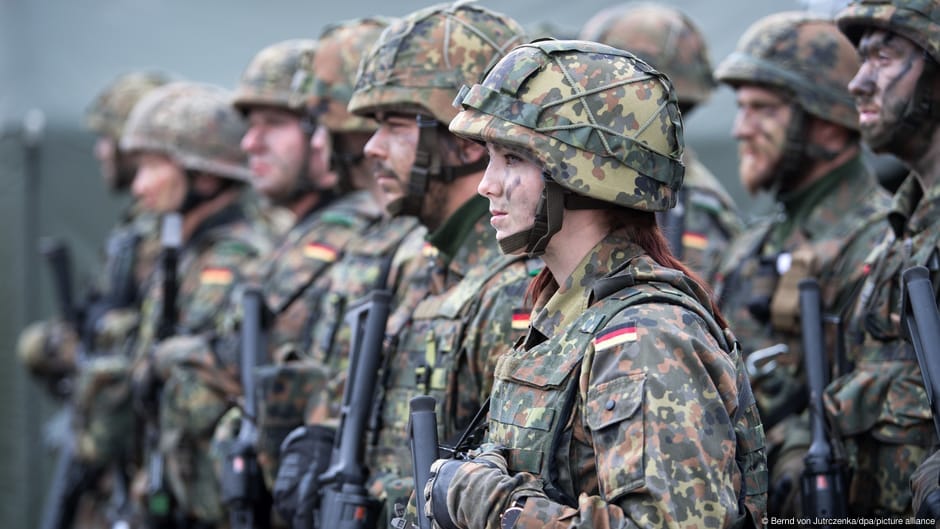
Germany’s armed forces have changed how they will transfer tanks to Lithuania for the Grand Eagle 26 exercise, opting for rail transport instead of driving the vehicles through Poland, according to the German tabloid Bild. The reported decision reflects not only concern about escalation and political messaging toward Russia, but also the growing importance of transport infrastructure in Europe’s defense economy.
Bild reported during the night of Sunday, November 22, citing sources in the security services, that the Bundeswehr would send the tanks by rail. The newspaper’s sources said the change was intended to avoid provoking Russia as German military equipment moved toward the Baltic region.
“Images of German tanks moving toward the Baltics near the border with Belarus would be a propaganda gift for Putin,” the sources told Bild.
Germany’s Defense Ministry offered a more operational explanation. Responding to journalists, it said that changing the mode of transport was not unusual and needed to be practiced because such flexibility would also have to be available in the event of a real threat.
Military mobility becomes an economic constraint
The distinction between moving tanks by road and moving them by rail may appear technical, but it carries broader economic consequences. Large military deployments depend on rail capacity, loading terminals, bridges, roads, maintenance facilities and cross-border coordination. These assets are shared with civilian freight and passenger networks, making defense planning inseparable from decisions about public infrastructure and industrial capacity.
Rail transport can reduce the visibility of long military convoys on public roads and limit the strain imposed by heavy tracked vehicles. It also concentrates the logistical task around specialized wagons, terminals and timetables. That creates a different set of bottlenecks: sufficient rolling stock must be available, routes must support heavy loads, and military movements must be coordinated with commercial rail traffic.
The Defense Ministry’s emphasis on practicing different transport methods points to resilience as the central issue. A credible deployment system cannot depend on a single corridor or mode of travel. If roads, bridges or rail lines become unavailable during a crisis, armed forces must be able to redirect personnel and equipment quickly. Maintaining that redundancy requires investment before an emergency, with costs extending beyond defense budgets into transport policy and regional development.
Scale exposes Europe’s infrastructure challenge
The reported scale of the exercises illustrates the demands placed on the network. Reuters previously reported that the Bundeswehr had moved more than 2,000 troops through Poland, together with about 50 tracked vehicles and 650 wheeled vehicles. Bild gave different figures, reporting approximately 1,800 military personnel and more than 750 pieces of equipment involved in Grand Eagle 26.
At the same time, the Bundeswehr’s 45th Armored Brigade is conducting the Freedom Shield 26 II exercise. More than 6,000 personnel are participating in the two maneuvers in Lithuania in total. Even without combat conditions, moving forces of that size requires fuel, transport services, accommodation, maintenance and secure communications, generating demand across both military and civilian supply chains.
For Lithuania and Poland, repeated deployments can bring spending and infrastructure improvements, but they can also create opportunity costs. Rail slots allocated to military cargo are unavailable to commercial operators at the same time, while roads and terminals may require reinforcement to support heavy equipment. The economic question is therefore not simply how much governments spend on defense, but whether transport systems can absorb military demand without weakening ordinary trade and mobility.
Historical symbolism shapes present-day logistics
The reported concern over images of German tanks crossing Poland also shows how historical memory continues to influence military communication. A movement that planners may regard as a routine exercise can acquire a different meaning when viewed through the history of Central and Eastern Europe or through Russian state messaging. The choice of rail does not remove that symbolism, but it changes the public visibility of the deployment.
This creates a persistent tension. NATO members seek to demonstrate that they can reinforce the Baltic region, yet highly visible movements may be portrayed as evidence of aggressive intent. Reducing the visual impact can lower immediate political friction, but deterrence also relies on adversaries believing that forces can be moved at scale. Logistics consequently serves two audiences: military planners measuring readiness and political observers interpreting intent.
The Bundeswehr’s revised plan highlights a structural shift in European security policy. Defense readiness increasingly depends on assets that were often treated primarily as commercial infrastructure. Railways, roads and border procedures now have strategic value alongside their economic function. The long-term consequence is likely to be closer integration between defense planning and infrastructure investment, with governments facing pressure to fund capacity that remains useful in peacetime but can be redirected during a crisis.
In that sense, the route chosen for a group of German tanks is more than a scheduling decision. It is a test of whether Europe can combine deterrence, economic continuity and escalation management without allowing any one objective to undermine the others.