Pentagon Curbs Canada Defense Ties as Economic Frictions Deepen
The restrictions preserve NATO, NORAD and intelligence links but add strategic uncertainty to an increasingly strained bilateral relationship.
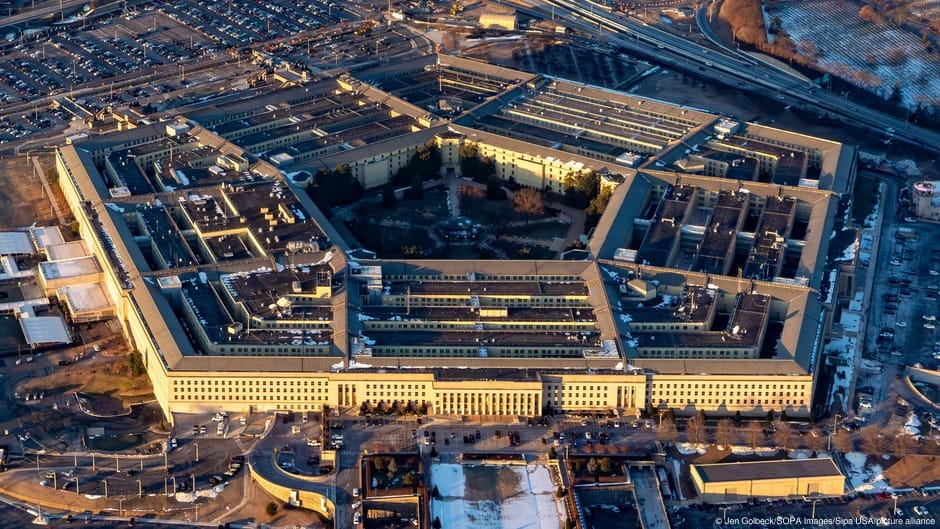
US Defense Secretary Pete Hegseth has imposed new restrictions on defense cooperation with Canada, adding a security dimension to mounting economic and political tensions between the neighboring countries. The Washington Post reported the move on Saturday, November 21, citing officials familiar with a classified internal memorandum.
The directive was circulated during the previous week, according to the newspaper’s sources, although the publication was unable to review the document. The precise activities covered by the restrictions therefore remain unclear. One official said Canada would perceive the measure as a “slap in the face,” while the lack of detail was expected to raise questions about how interactions between the two countries’ armed forces would be limited in practice.
Hegseth spokesman Sean Parnell said the US Defense Department was taking steps to ensure that its engagement with Canada advanced specific American defense objectives and ultimately strengthened the bilateral defense relationship. He said the Pentagon was prioritizing opportunities for cooperation that reinforced the defense of both countries and the wider hemisphere while supporting Canada’s ability to meet its NATO commitments.
“The Pentagon is prioritizing opportunities for bilateral cooperation that strengthen the defense of our nations and the entire hemisphere.”
Parnell added that the directive would not affect intelligence sharing or cooperation between Washington and Ottawa through NATO or the bilateral North American Aerospace Defense Command, known as NORAD. The White House referred the newspaper’s questions to the Pentagon, while the Canadian Embassy in Washington did not respond to a request for comment.
Security integration meets economic pressure
The exemptions are economically and strategically important. By preserving intelligence exchanges, NATO coordination and NORAD, Washington appears to be insulating the core architecture of continental defense from the new limits. That distinction suggests a targeted recalibration rather than a wholesale break. Even so, restrictions outside those protected channels could create uncertainty for military planning, procurement relationships and companies operating across the integrated North American defense market.
Defense cooperation between neighboring economies can produce benefits that extend beyond military readiness. Shared planning reduces duplication, supports specialization and gives suppliers access to a larger effective market. When political restrictions narrow that cooperation, the potential costs include slower decisions, additional compliance burdens and less predictable investment conditions. The effect will ultimately depend on which programs, meetings or exchanges fall within the classified directive.
The episode also illustrates a recurring tension in closely integrated economic relationships: governments may seek to apply pressure in selected sectors while preserving institutions considered too valuable to disrupt. Historically, alliances have often survived commercial disputes because their central security mechanisms were protected from retaliation. The Pentagon’s assurances about NATO, intelligence sharing and NORAD follow that logic, but the ambiguity surrounding other bilateral activities could still weaken confidence at the margins.
Trade disputes broaden into strategic policy
The defense restrictions follow earlier US measures directed at Canada’s economic relationships and procurement policies. In mid-September 2026, President Donald Trump said he was prepared to halt trade with the European Union if its partnership with Canada continued to expand. He was responding to a journalist’s question about European Commission President Ursula von der Leyen’s plans to make Canada the EU’s “first associate member.”
Speaking at a campaign event in North Carolina, Trump described the proposal as “ridiculous.” He said that if European authorities proceeded and he regarded the decision as even slightly unfriendly, he would impose very high tariffs or stop trading with Europe. Trump added that benign intentions would be acceptable, but malign intentions could lead Washington to levy steep tariffs on European goods.
At the same time, the White House announced that Trump had signed a memorandum barring Canadian goods from participation in federal government procurement. According to the official release, Washington adopted the measure in response to Canada’s allegedly unjustified creation of new barriers for US companies seeking access to its public procurement market.
Taken together, the procurement ban, tariff threats and defense restrictions show how disputes can migrate across policy domains. Public purchasing rules affect market access directly, tariffs can reshape trade flows, and limits on defense engagement may influence longer-term industrial expectations. Although the Pentagon says the latest directive is intended to strengthen defense outcomes, its arrival amid broader economic confrontation increases the risk that businesses will interpret bilateral policy as less stable.
For Canada, diversification toward Europe could reduce dependence on the US market over time, but it may also invite stronger pressure from Washington. For the United States, restricting Canadian access can serve as leverage, yet prolonged uncertainty could complicate supply networks and encourage Ottawa to deepen alternative partnerships. The preservation of NATO and NORAD cooperation places a boundary around the dispute for now. The unanswered economic question is whether that boundary will remain durable as trade, procurement and strategic policy become increasingly intertwined.