Kremlev Says Donald Trump Jr. Repaid Wedding-Event Costs
The reported reimbursement narrows one ethics question while leaving broader scrutiny of private political finance unresolved.
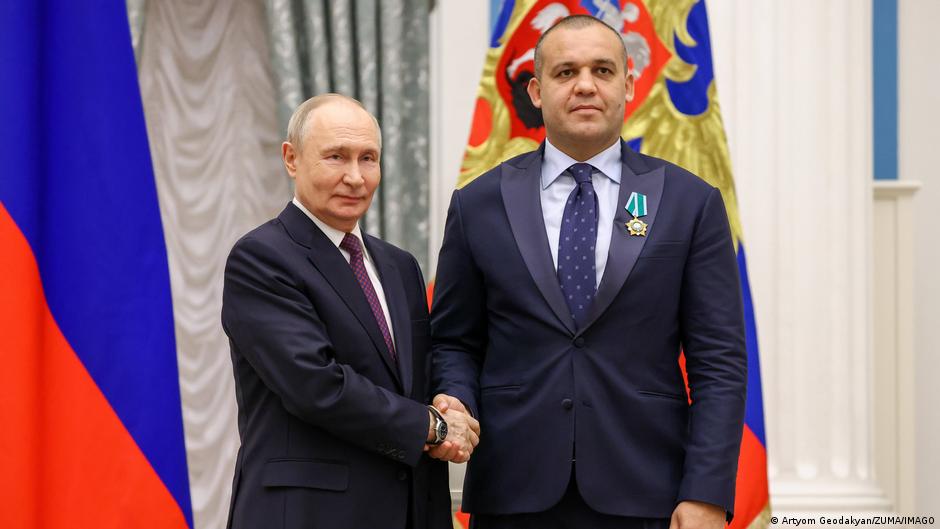
Russian businessman Umar Kremlev said Donald Trump Jr. has repaid money that Kremlev spent on organizing part of the younger Trump’s wedding-related celebrations, adding a new turn to a controversy that has moved from social-page curiosity into the economics of political influence.
Kremlev, who heads the International Boxing Association and is described as close to Vladimir Putin, made the statement on Tuesday, October 6, at a press conference in Istanbul. His comments followed earlier confirmation from U.S. President Donald Trump that his son had returned the money.
The episode centers on reports that part of the costs connected to Trump Jr.’s festivities in the Bahamas were paid by Kremlev. On September 14, ProPublica published an investigation saying that Kremlev had covered some expenses for events linked to the wedding of Donald Trump Jr. The question then became not only whether money had changed hands, but how such spending should be understood when it involves the family of a sitting president and a foreign businessman close to Russian authorities.
“As far as I understand, he repaid him the debt,” Trump told reporters on September 18.
For markets and institutions, the amount of money involved is less important than the structure implied by the transaction. Informal financing of elite private events can become politically significant when family relationships overlap with access to state power. Even when a payment is later reimbursed, the original arrangement can raise questions about expectations, reciprocity and the soft channels through which influence may be cultivated.
A Private Event With Public Consequences
Kremlev told reporters that Trump Jr. had returned the money, but he also suggested he did not understand why repayment was necessary. According to the Russian state news agency TASS, Kremlev said that he and Trump Jr. had attended a common event and that he was not at the wedding itself. “As for whether he returned the expenses or not, yes, he returned them,” Kremlev said.
He then framed the matter as ordinary social hospitality rather than a special favor. Kremlev said it had been a shared event and “not a special gift,” comparing the situation to inviting guests to a country house and not later billing them. He also said he had friendly relations with Donald Trump Jr. and had “never asked him or anyone else” to help him.
That argument places the transaction in the familiar language of private friendship. Yet the economic and political concern lies precisely in the blurred line between personal generosity and access-based advantage. In modern political economies, value is often transferred through networks rather than direct contracts. Invitations, hosted events and covered expenses can operate as reputation-building investments, especially when they involve families close to executive power.
President Trump addressed the matter on September 18, saying he understood that Trump Jr. had repaid the debt. He also characterized such arrangements as normal, saying it was acceptable when a friend pays for a wedding celebration. Trump further said he saw no problem with a businessman close to Russian authorities helping finance celebrations involving his son.
Earlier, Trump had told Axios that he had no idea who Umar was, had never heard of him, and that the businessman had not paid for the wedding of Don and Bettina, which Trump said took place in an entirely different location and on a different day from the party in question. Axios quoted him as saying that the event was an “after-party” held in their honor, that there was “nothing wrong” with it, and that he did not attend.
The Political Economy of Access
The facts described so far point to a narrow repayment but a wider governance problem. A reimbursement can reduce the immediate financial benefit to the recipient, but it does not erase the reputational benefit to the payer or the access signal embedded in the original event. For officials, investors and foreign actors, the relevant question is often not whether a benefit was legally decisive, but whether elite proximity creates an informal marketplace around power.
Historically, political systems have struggled with the same pattern in different forms: gifts to royal courts, favors to ministers, hospitality extended to relatives of officials, or business opportunities offered near centers of authority. The modern version is more difficult to regulate because it often appears socially normal. A party, a trip, a speaking engagement or a family event can carry economic significance without resembling a conventional transaction.
That is why congressional oversight may matter beyond this specific case. Axios reported that a senior Democrat on the House Oversight Committee could investigate reports that Kremlev paid for celebrations involving Trump Jr. Representative Robert Garcia of California sent a letter to White House chief of staff Susie Wiles, saying Democrats on the committee were examining “numerous ways” in which the Trump family had sought to enrich itself by using proximity to the president.
Axios also reported that if Democrats win control of the House of Representatives in the November 3 midterm elections, Garcia is likely to become the chief congressional investigator. The outlet said the inquiry offered a clear indication of the direction he would take in that role.
For Econpress readers, the structural issue is the monetization of proximity. Democratic systems depend not only on formal rules, but on confidence that state access is not being indirectly priced through family networks or social spending. The Trump Jr.-Kremlev episode may turn on a private reimbursement, but the controversy illustrates a broader economic vulnerability: when political capital can be converted into private hospitality, public trust becomes the scarce asset at risk.