Protests Demand Reinstatement of Mykhailo Fedorov as Ukraine’s Defense Minister Amid Governance Concerns
Widespread demonstrations in Kyiv and other Ukrainian cities call for reforms and criticize recent presidential appointments in defense and veterans affairs.
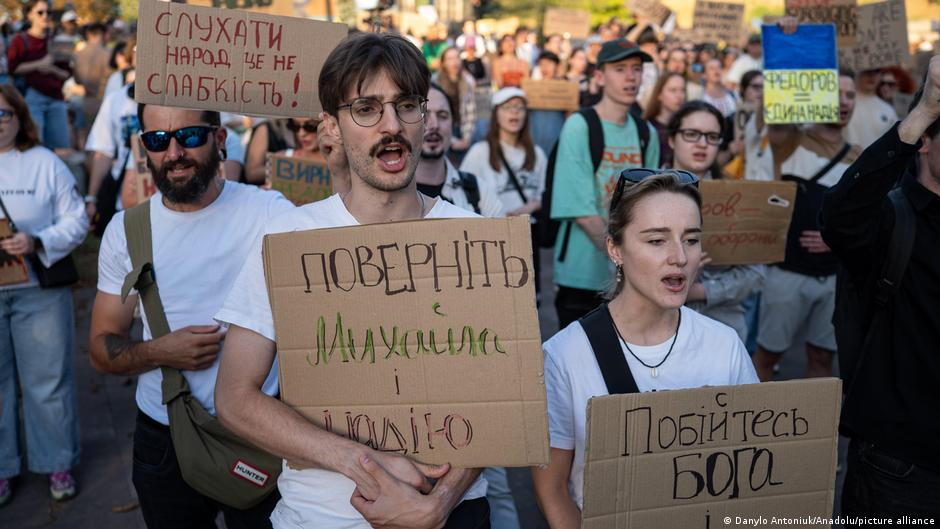
On August 16, mass protests erupted once again in Kyiv and multiple Ukrainian cities demanding the reinstatement of Mykhailo Fedorov as the head of the Ministry of Defense. Marking the 32nd consecutive day of demonstrations, the protestors voiced deep dissatisfaction with recent government personnel decisions under President Volodymyr Zelensky.
Persistent Public Demand for Defense Sector Reform
Hundreds gathered at Kyiv’s central Freedom Arch—a landmark formerly known as the Arch of Friendship of Peoples until May 2022—and proceeded along major streets such as Khreshchatyk, Alley of the Heavenly Hundred Heroes, and Olhinska Street before culminating in a rally at Ivan Franko Square near the presidential office. The protest march stretched over several hundred meters, indicating significant participation across age groups with a noticeable predominance of youth.
Participants chanted slogans like "Fedorov!", "Umerov is a devil!", "Veterans, not Kim!", and "Europe, away from the Soviet past!"—expressing frustration not only with the current defense minister vacancy but also with President Zelensky’s recent appointments. These include Rustem Umerov, a former defense minister, now heading the Foreign Intelligence Service, and Vitaliy Kim, ex-head of the Mykolaiv Regional Military Administration, appointed as Minister for Veterans Affairs.
"The protestors demand a continuation of reforms initiated under Mykhailo Fedorov and urge the authorities to engage in genuine dialogue with society," stated veteran Dmitry Kozyatinsky, a key protest organizer, highlighting an ongoing leadership vacuum in defense and foreign affairs ministries.
Similar protests were reported in cities including Lviv, Dnipro, Lutsk, Rivne, Poltava, Odesa, Vinnytsia, Khmelnytskyi, and Chernivtsi, illustrating a nationwide call for accountability and reform. In Kyiv, protest organizers formally delivered a petition to a representative of the presidential office outlining their demands for sustained reforms and transparent governance.
Contextualizing Ukraine’s Internal Political Dynamics and Economic Governance
The protests reflect broader structural challenges within Ukraine’s political economy amid ongoing conflict and reform pressures. The defense sector, a critical area for national security and economic stability, has experienced frequent leadership changes that risk undermining institutional continuity. Mykhailo Fedorov’s tenure was associated with reform initiatives aimed at modernizing defense administration and strengthening military readiness, crucial for both economic investment confidence and international support.
The public’s insistence on restoring Fedorov underscores a desire for technocratic stability over politicized appointments. President Zelensky’s recent nominations have been met with skepticism, perceived as politically motivated rather than merit-based, exacerbating concerns about governance efficacy. This tension highlights systemic issues in Ukraine’s state capacity to balance reform implementation with political consolidation.
From an economic perspective, sustained instability in defense leadership could hinder efficient allocation of military budgets and impair reform-driven procurement processes, which are essential for Ukraine’s defense modernization and integration into European defense structures. Moreover, the veterans’ affairs portfolio, now led by Vitaliy Kim, remains contentious due to questions about expertise and representation, impacting social welfare policies and reintegration programs for former combatants.
Historically, Ukraine has grappled with similar governance challenges during periods of transition, where political appointments disrupt reform momentum and economic restructuring. The current protests serve as a reminder that public demand for accountable and transparent leadership remains a critical factor shaping Ukraine’s institutional resilience and economic trajectory.