Russia Declares Human Rights Foundation 'Undesirable' Amid Rising Political Pressure
The Russian Prosecutor General labels the US-based Human Rights Foundation as 'undesirable', citing its critical projects and leadership changes in 2024.
On August 6, 2024, the General Prosecutor's Office of Russia officially designated the American non-governmental organization Human Rights Foundation (HRF) as "undesirable" within Russian territory. Established in 2005, the HRF has long been engaged in promoting and protecting human rights globally. This latest move marks a significant escalation in Russia’s ongoing restrictions on foreign organizations perceived as politically sensitive.
Context and Reasons Behind the Designation
The Russian authorities justified the decision primarily by highlighting the HRF's recent launch of the "Tyranny Tracker" project. This interactive map categorizes countries based on their adherence to democratic values. Russia is labeled there as a fully authoritarian state, a characterization that evidently contributed to the government's move to suppress the organization’s activities.
"The Human Rights Foundation spreads information discrediting the Russian army and supports other organizations already declared 'undesirable' in Russia," stated the Prosecutor General's office.
This reasoning reflects a broader pattern of the Russian government’s increasing intolerance toward foreign NGOs and civil society actors that challenge its official narrative or question its domestic and international policies.
Implications for Russia’s Civil Society and Foreign Relations
The designation of HRF as "undesirable" is not an isolated incident but part of a sustained strategy to limit the influence of foreign-funded organizations within Russia. Since the early 2010s, Russia has enacted laws restricting NGO activities, often labeling them as "foreign agents" or "undesirable organizations," effectively curbing their operations and stigmatizing their work.
The HRF’s focus on human rights and democratic advocacy makes it particularly vulnerable in this environment. The project "Tyranny Tracker" directly challenges Russia’s political system by publicly classifying it among authoritarian regimes, thereby confronting the Kremlin’s portrayal of itself as a sovereign and legitimate power.
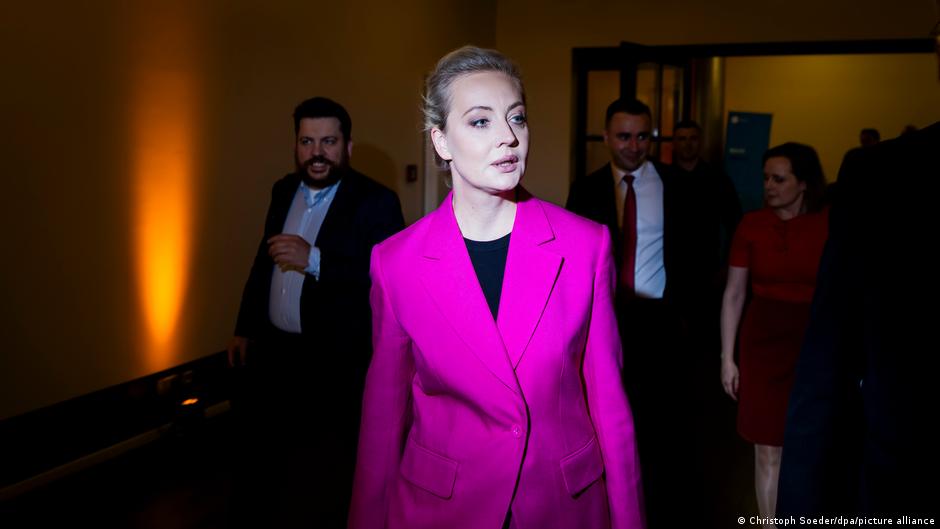
Moreover, the leadership shift in 2024, with Yulia Navalnaya — a prominent figure linked to opposition circles — taking over as HRF's chairperson, can be seen as further politically sensitive. She succeeded Garry Kasparov, the former world chess champion and outspoken critic of the Kremlin, signaling a continuity of the foundation’s critical stance toward Russia’s governance.
Historical Parallels and Structural Consequences
This development echoes historical patterns of authoritarian regimes restricting civil society to consolidate power and limit dissent. Similar tactics were observed in the Soviet era and continue in many contemporary autocracies, where labeling foreign NGOs as "undesirable" serves both to delegitimize opposition and to justify legal repression.
Economically, these restrictions can have wider structural consequences, deterring international cooperation and investment due to increased political risks and a contracting civic space. The shrinking of channels for independent monitoring and criticism undermines transparency and accountability, which are essential for a healthy economic environment.
In the longer term, isolating Russia from global human rights networks may deepen its political and economic isolation, reinforcing authoritarian governance at the expense of reform and integration with international systems.
As Russia doubles down on its approach, the designation of the Human Rights Foundation as "undesirable" serves as a stark indicator of the country's trajectory towards further closing its political space, with significant implications for its civil society and economic structures.