Russian Strikes Hit Ukrainian Logistics, Housing and Power Infrastructure
Attacks on Kyiv, Odesa and Mykolaiv regions underscored how repeated wartime disruption is weighing on logistics, utilities and local economies.
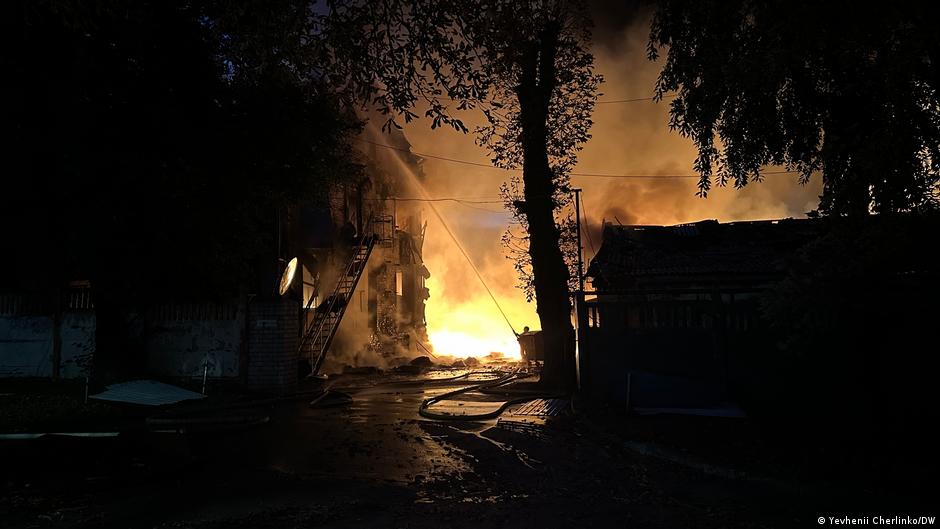
Russian forces attacked the Kyiv and Odesa regions, as well as the city of Mykolaiv, on the evening of September 12 and during the night of September 13, according to local Ukrainian authorities. The reported targets and damage point to a familiar pattern in the war’s economic geography: pressure not only on military positions, but also on the infrastructure that allows households, firms and public services to function under sustained uncertainty.
In the Odesa region, two people were injured after a drone attack hit a branch of Nova Poshta, the private delivery company that has become an important part of Ukraine’s wartime logistics system. Oleg Kiper, head of the regional military administration, said the building facade, glazing and a cargo vehicle were damaged. Ukraine’s State Emergency Service also reported the incident.
“The facade of the building, glazing and a cargo vehicle were damaged,” Kiper said.
The damage in Odesa did not stop there. Serhiy Lysak, head of the city military administration, said a multi-storey residential building in Odesa was also damaged. It was the second strike on an apartment building in the city within a single day, according to the report. While such incidents are first and foremost a matter of civilian safety, they also carry lasting economic consequences: damaged housing stock, higher repair needs, pressure on municipal budgets and uncertainty for residents whose ability to work, relocate or remain in place is affected by repeated attacks.
Logistics as an Economic Front
The strike on a Nova Poshta branch is significant because logistics networks are among the hidden foundations of economic resilience. Delivery firms, warehouses, cargo vehicles and sorting points keep retail trade, small businesses, humanitarian deliveries and personal consumption moving. In wartime, these networks often substitute for disrupted public systems and help connect regions where normal supply chains have been fragmented.
Damage to a single branch or vehicle may appear limited in isolation, but the wider economic issue is cumulative disruption. Repeated attacks force companies to spend more on repairs, security, routing flexibility and redundancy. Those costs can ripple outward through prices, delivery times and business confidence. For small firms, which often depend on fast shipment of goods and components, even localized disruption can become a working-capital problem if inventory is delayed or premises are damaged.
The historical parallel is not exact, but the economic logic is familiar from earlier conflicts in which transport, warehouses, ports, power systems and residential districts became part of the pressure on a society’s productive capacity. The aim, in structural terms, is not limited to immediate destruction. It can also be to raise the cost of normality: to make each transaction, repair, commute or delivery more expensive and less predictable.
In the Kyiv region, local authorities reported damage in two districts. According to the Kyiv regional military administration, warehouse premises were damaged in the Boryspil district on the evening of September 12, and a fire broke out. In the Brovary district, a warehouse and a private house were damaged. No information about deaths or injuries had been received, according to the reported statements.
Kyiv Mayor Vitali Klitschko also reported the operation of air defense systems and urged residents to remain in shelters. The Kyiv regional military administration’s Telegram channel reported air alerts in different parts of the region during the night. These alerts themselves have an economic cost, even when casualties are avoided: they interrupt shifts, transport, schooling, household routines and the planning horizon on which businesses depend.
Energy Disruption and Local Output
Mykolaiv faced a separate but economically connected form of disruption. After an evening attack on the city’s energy infrastructure, several districts of the regional center were partially without power, according to Heorhiy Reshetylov, head of the local regional military administration. He wrote on Telegram that energy workers would begin restoring electricity supply as soon as the security situation allowed work to start. Reshetylov later reported the all-clear, and then a renewed air alert.
Power outages have direct and indirect effects. Directly, they interrupt household electricity supply and can halt business activity. Indirectly, they alter expectations. Firms must assume that energy may be unavailable, that repair crews may face danger, and that production schedules may be repeatedly broken. In sectors from food retail to light manufacturing, the inability to rely on electricity raises operating costs and reduces output even when facilities themselves are not destroyed.
For regional economies, the repeated targeting or disruption of energy infrastructure can create a drag that outlasts the attack itself. Repair crews, emergency services and municipal authorities must divert labor and resources toward restoration. Businesses must decide whether to invest, pause operations or relocate activity. Households face not only immediate inconvenience but also uncertainty over heating, communications and basic services if power interruptions recur.
The events reported across Odesa, Kyiv region and Mykolaiv therefore form a single economic picture. Warehouses, delivery depots, cargo vehicles, apartment blocks and power infrastructure are different assets, but they sit within the same system of civilian economic life. When they are damaged, the consequences extend beyond the replacement cost of walls, windows or equipment.
Ukraine’s wartime economy has repeatedly adapted to shocks through decentralized logistics, emergency repair work, air-defense responses and local administrative coordination. Yet adaptation is not cost-free. Each new incident absorbs public funds, private capital, labor time and managerial attention. Over time, the aggregate effect is to make economic activity more expensive, more cautious and more dependent on backup systems.
The latest reported attacks came without confirmed deaths in the Kyiv region and with two injuries reported in the Odesa region. But for an economy under war conditions, the absence of mass casualties in a given set of strikes does not mean the absence of damage. The structural consequence lies in the steady erosion of predictability, the repeated impairment of infrastructure and the pressure placed on civilian systems that must continue operating despite recurring threats.