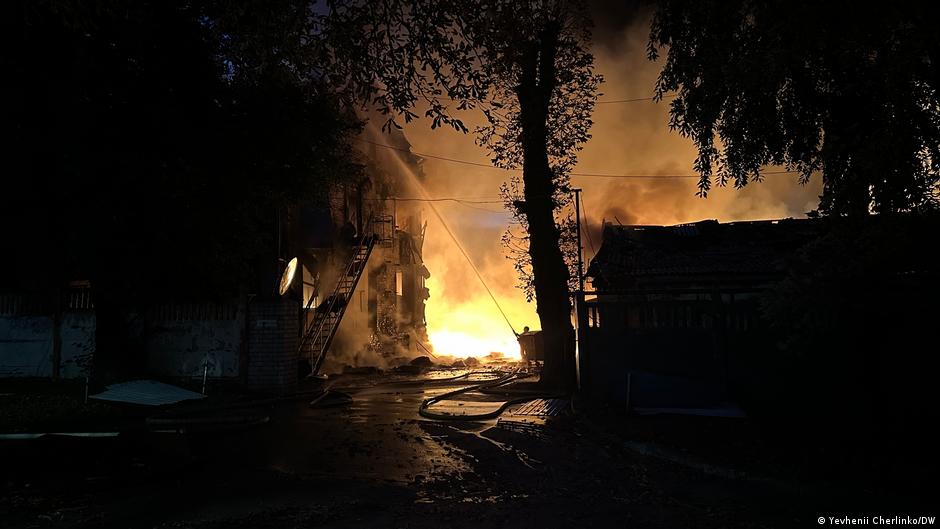
Zaporizhstal Damage Deemed Critical After Third Russian Missile Strike
The shutdown of one of Ukraine’s largest steel plants exposes the country’s industrial base to deeper production, fiscal and regional labor-market shocks.
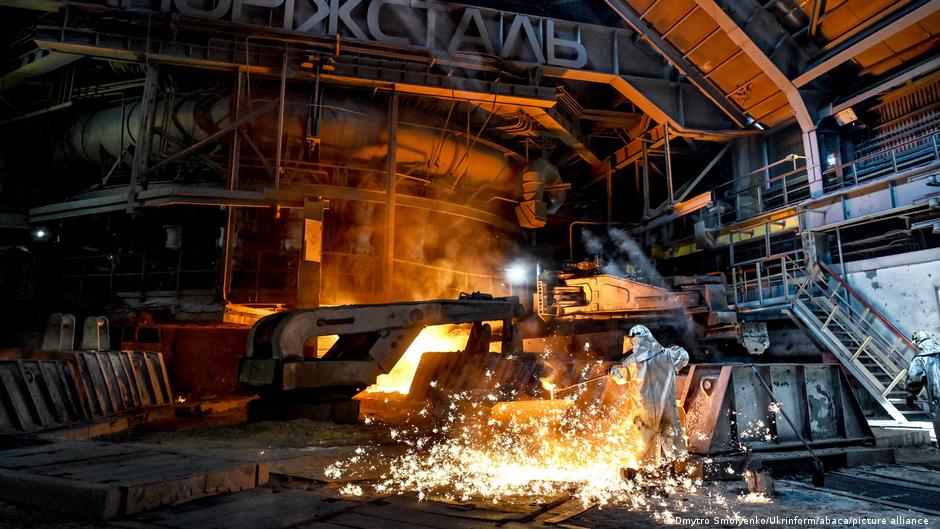
Preliminary assessments indicate that damage to Zaporizhstal, one of Ukraine’s largest metallurgical plants, has reached a critical level after a third Russian missile strike in a month. The plant, located in the Ukrainian city of Zaporizhzhia, had already fully halted operations after the first attack on August 11, and each subsequent strike has compounded the destruction of production assets, energy systems and logistics infrastructure.
The latest attack took place overnight into Saturday, September 12, when, according to the company, four ballistic missiles hit the plant’s production site. At least four employees were present at the facility at the time and were injured; three required hospitalization. The company said equipment in the blast-furnace and open-hearth shops was damaged, along with the plant’s power system and logistics infrastructure.
“The scale of destruction grows with every strike. It is still impossible to assess it finally, but preliminarily we classify the damage as critical,” said Oleksandr Myronenko, chief operating officer of Metinvest Group, which owns Zaporizhstal.
The company said emergency and assessment work is continuing at the site as specialists examine damaged facilities to determine the nature and full extent of the destruction. For Ukraine’s industrial economy, however, the implications are already larger than the physical damage to a single complex. Zaporizhstal is not merely a factory; it is a major node in a chain that links mining, coking coal, power supply, rail logistics, port and domestic transport routes, tax receipts and regional employment.
An industrial shock with national scale
The first major missile strike on Zaporizhstal occurred overnight on August 11. Eight employees were killed and another 26 were injured. Damage to equipment was severe enough for the metallurgical complex to stop operations completely, while other production sites began working at reduced capacity. The second major attack followed on August 27. Zaporizhstal said five missiles hit the plant at that time. No one was killed or injured in that strike, but the blast-furnace shop, energy and transport infrastructure, and open areas of the plant were damaged.
After the August 27 attack, Myronenko described the restart timetable as theoretical rather than practical, saying that another strike came just as crews had cleared rubble from the previous impact. That sequence matters economically. Heavy industry is capital-intensive and system-dependent: furnaces, energy supply, transport infrastructure and safety systems have to function together. Damage to any one segment can keep the whole operation offline, while repeated attacks raise the cost and complexity of repair.
The production figures illustrate why the shutdown is a macroeconomic issue, not only a regional one. According to Zaporizhstal, the plant produced almost 3.568 million tons of pig iron and 3.212 tons of steel in 2025. Industry association Ukrmetallurgprom calculated that all Ukrainian enterprises produced 7.884 million tons of pig iron and 7.409 million tons of steel that year. On that basis, the Zaporizhzhia plant accounted for more than 45% of all pig iron produced in the country and more than 42% of all Ukrainian steel.
Those shares point to a concentrated industrial risk. When a single plant represents such a large portion of national metallurgical output, the loss of capacity can ripple through export flows, domestic supply, supplier contracts and public finances. Steel and pig iron production also support upstream and downstream activity: raw-material extraction, rail freight, maintenance services, machinery repair, electricity consumption and local procurement. A halt at Zaporizhstal therefore compresses demand across a wider industrial ecosystem.
Employment and fiscal consequences
The regional labor-market dimension is equally significant. In May 2026, Zaporizhstal topped the list of the largest employers in Zaporizhzhia region, according to the company’s press service, citing the annual ranking by Opendatabot, a service that provides access to Ukrainian state data on individuals and legal entities. At that point, more than 8,000 people worked at the enterprise.
For a region under wartime pressure, a large employer of that size anchors more than payroll. It supports household consumption, municipal revenues, professional skills, subcontractors and the social infrastructure around industrial towns. A prolonged stoppage can weaken those links even if formal employment is preserved for a period. The longer production remains suspended, the greater the risk that wages, working hours, supplier income and local service activity come under strain.
Zaporizhstal’s fiscal contribution also gives the disruption a public-finance dimension. In 2025, the plant paid almost 2.7 billion hryvnias, or 52.34 million euros, in taxes to budgets at all levels. During wartime, such payments are not simply accounting entries; they help sustain state, regional and local budgets at a time when expenditure pressures are unusually high. If the plant’s operating base is impaired, tax flows tied to production, payroll and related business activity may also be affected.
Historically, damage to heavy industrial capacity has had consequences that outlast the immediate period of destruction. Metallurgical plants are not easily replaced because they require specialized equipment, stable energy inputs, skilled labor and logistics access. Restarting them is not comparable to reopening a smaller commercial facility after repairs. Even when reconstruction is technically possible, the economic decision depends on security conditions, capital availability, expected demand and the reliability of surrounding infrastructure.
The repeated strikes on Zaporizhstal therefore mark a structural pressure point in Ukraine’s wartime economy. The direct human toll has already been severe, with deaths and injuries in the August 11 attack and additional injuries in September. The industrial toll is now being described by the company as critical. If confirmed by detailed assessments, the damage would deepen the challenge of maintaining metallurgical output, sustaining regional employment and preserving tax revenue from one of the country’s most important industrial assets.
For now, the company is still assessing the damaged objects and clearing the consequences of the latest strike. The full economic cost will depend on how much of the blast-furnace, open-hearth, energy and logistics infrastructure can be restored, how quickly repairs can proceed, and whether the site faces further attacks. What is already clear is that the shutdown of Zaporizhstal has moved from an operational crisis to a test of Ukraine’s industrial resilience under sustained military pressure.