Storm Forces Cancellation of Washington's 250th Independence Day Celebrations Amid Political Tensions
Severe weather disrupts Washington’s Independence Day events marking 250 years, reflecting broader challenges in national commemorations amid political divides.
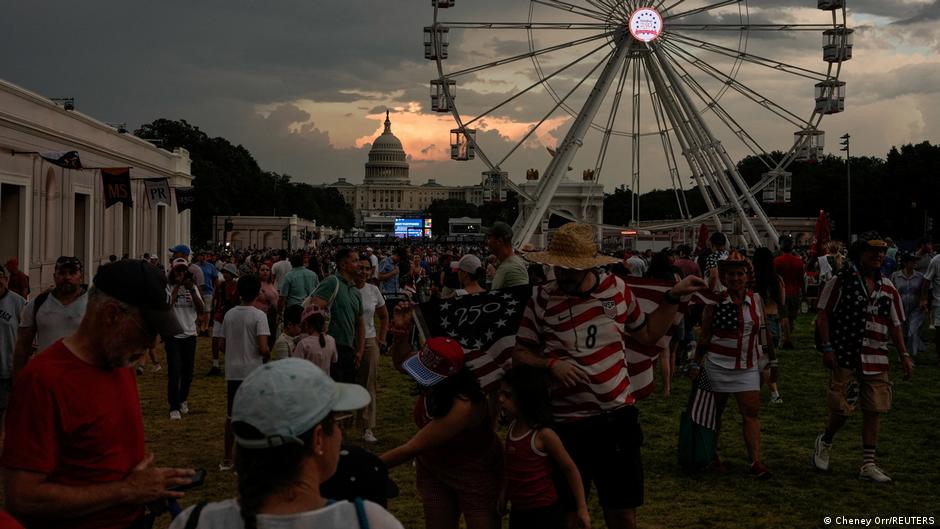
On July 4th, Washington D.C. faced an unexpected disruption to its planned celebrations marking the 250th anniversary of American independence due to an approaching severe thunderstorm. The city authorities were compelled to cancel all major public events, including the much-anticipated speech by then-President Donald Trump. This incident offers a window into the broader structural challenges facing large-scale national commemorations in an era of heightened political polarization and climate volatility.
Weather Disruptions and Political Ramifications
The decision to cancel the Independence Day festivities, announced just hours before President Trump's scheduled address, was driven by safety concerns as a powerful thunderstorm loomed over the National Mall. Local government urged attendees to evacuate the area and seek shelter in nearby museums and federal buildings, underscoring the primacy of public safety over celebratory ambitions.
“Today is a Saturday evening! Let’s have fun, even if we have to stay late,” President Trump wrote on his social media platform Truth Social, urging supporters to remain despite the cancellation.
The temporary confusion and tension at the event site, where some attendees resisted leaving in hopes of witnessing the President’s speech, highlighted the intersection of political fervor and public safety protocols. Police were forced to escort reluctant guests off the grounds, illustrating the challenges authorities face in managing politically charged crowds in volatile situations.
Historical Parallels and Structural Consequences
This unexpected weather-induced cancellation comes on the heels of earlier disruptions, notably the city's decision to call off the traditional Independence Day parade due to extreme heat exceeding 46 degrees Celsius. Such heat waves, increasingly frequent and intense due to climate change, add a new layer of complexity to urban planning for large public events.
From a historical perspective, the United States has often used Independence Day celebrations as a tool for national unity and patriotic reaffirmation. However, recent years have seen these events become arenas for political contestation, reflecting deeper societal fractures. The interruptions in 2020 and 2021, driven by the COVID-19 pandemic, were health-related, but the 2024 disruptions underscore how climate and political volatility now jointly shape the feasibility of large-scale national rituals.
Structurally, these challenges may prompt a reevaluation of how national commemorations are organized and broadcast. Increased reliance on virtual engagement, flexible scheduling, and enhanced safety protocols could become standard. This shift not only responds to environmental unpredictability but also to the fragmented nature of the American public sphere.
Moreover, the incident reveals the symbolic weight such celebrations hold in political discourse. President Trump’s insistence on delivering his speech despite adverse conditions signals the importance of these moments for political messaging and mobilization. The crowd’s reluctance to disperse similarly reflects a heightened politicization of public gatherings.
In sum, the storm that halted Washington’s landmark 250th Independence Day celebrations serves as a microcosm of broader trends: increasing climate risks intersecting with intensified political polarization, challenging the traditional role and format of national commemorations.