Latvian President Warns NATO to Prepare for Potential Escalation with Russia Amidst Defense Challenges
Edgars Rinkēvičs emphasizes NATO’s need for enhanced military capabilities and stronger deterrence against possible Russian aggression.
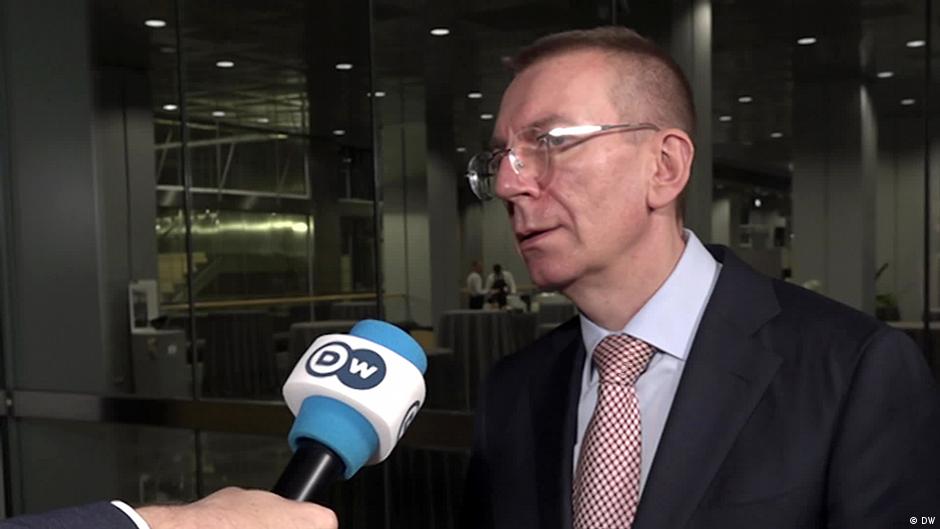
Latvian President Edgars Rinkēvičs has highlighted the growing risks of a direct military confrontation between Russia and NATO, urging the alliance to prepare for an escalation scenario. In a recent interview, Rinkēvičs stressed that current European defense expenditures, despite recent increases, remain insufficient as they do not translate into actual augmentation of military capabilities.
Strategic Imperatives for NATO and Europe's Defense Posture
Speaking ahead of the NATO summit in Ankara, Rinkēvičs underscored the necessity for member states to send a clear and unequivocal message to Moscow: any challenge posed by Russia to NATO will be met with a proportionate and resolute response from the alliance. This statement marks a significant acknowledgment that the conflict in Ukraine may escalate beyond proxy engagements and could potentially draw NATO directly into confrontation.
"If Russia challenges NATO, the alliance's response will be proportional," Rinkēvičs declared, reflecting a strategic stance aimed at deterrence through credible military readiness.
The president also expressed skepticism about achieving peace in Ukraine without active European involvement, emphasizing that the continent's security interests are inextricably linked to the resolution of the conflict. Latvia’s accession to the European Union is cited as aligning with its security priorities, reinforcing the geopolitical integration necessary to withstand external threats.
Despite NATO members agreeing last year to raise defense spending to 5% of GDP, Rinkēvičs highlighted that financial commitments alone do not suffice. According to him, the primary issue affecting many member states is not the funding level but the lack of tangible increases in real military assets—such as advanced weaponry, missiles, and equipment—that can be procured and deployed effectively.
"Money is important, but it is essential to have the weapons, missiles, and equipment that budgets can procure," the Latvian leader emphasized, pointing to structural deficiencies within European defense sectors. This observation aligns with long-standing critiques that Europe’s defense industrial base struggles with modernization and production capacity, impairing the alliance’s collective deterrence capability.
Furthermore, Rinkēvičs reaffirmed the indispensable role of the United States as a defense partner for Europe. He acknowledged American commitment as a cornerstone of transatlantic security, notwithstanding some European political rhetoric questioning U.S. engagement.
On July 3, Rinkēvičs traveled to Berlin to meet with German Chancellor Friedrich Merz, alongside the Estonian Prime Minister and Lithuanian President. The discussions underscored the shared defense concerns of the Baltic states and Germany, with Merz asserting that the security of the Baltic region is integral to Germany's own safety. This meeting, occurring just before the NATO summit, signals deepening coordination among NATO’s northern flank countries.
Economic and Structural Dimensions of NATO’s Defense Dilemma
The Latvian president’s remarks resonate within a broader context of European defense economics. Increasing defense budgets, while politically necessary, do not immediately resolve underlying structural challenges such as fragmented procurement processes, industrial gaps, and technological lag compared to Russia and other global actors. These systemic issues hinder the alliance’s ability to rapidly translate financial inputs into a credible deterrent force capable of responding to evolving threats.
Historically, Europe has faced similar challenges during the Cold War when divergent national priorities and limited integration slowed the buildup of cohesive defense capabilities. The current environment, marked by renewed geopolitical tensions and technological advancements in warfare, demands a more integrated and efficient approach to defense spending and industrial collaboration.
In this light, Rinkēvičs’ call for NATO to prepare for escalation is not merely a military stance but a prompt to address deep economic and structural reforms within the alliance’s defense architecture. The emphasis on real capability growth over mere budgetary targets highlights the urgency for strategic investments in innovation, supply chains, and interoperability among member states.
As NATO’s northern members coordinate closely ahead of the summit, the alliance faces a pivotal moment to reconcile political commitments with operational realities. The balance between deterrence and diplomacy, underpinned by robust defense economics, will shape the trajectory of European security in the years to come.