Trump Commends Zelensky’s Leadership Amid Russia-Ukraine Conflict, Reflecting Shifts in US Policy Stance
Former US President Donald Trump praises Ukrainian President Zelensky’s resilience during ongoing conflict, highlighting evolving US political dynamics and international relations.
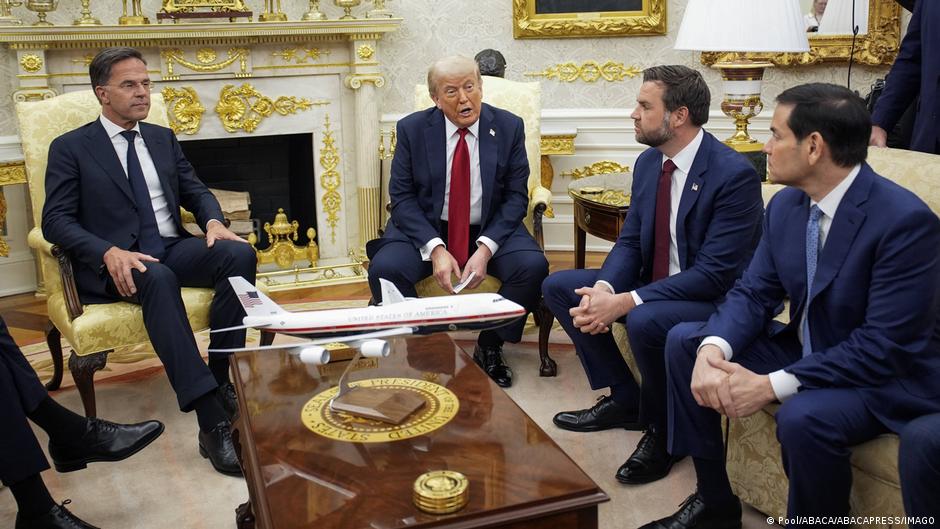
In a noteworthy departure from his previous critical stance, former US President Donald Trump recently commended Ukrainian President Volodymyr Zelensky's leadership in the ongoing Russia-Ukraine conflict. Speaking at a joint press conference in the White House on June 24 alongside NATO Secretary General Mark Rutte, Trump observed that despite heavy casualties on both sides, Zelensky "is holding up well," signaling a subtle shift in the discourse surrounding the conflict.
Contextualizing Trump's Statement Within Broader Geopolitical Dynamics
Trump’s acknowledgment comes after years of a more contentious relationship with Zelensky, during which the former repeatedly criticized the Ukrainian leader and his handling of peace negotiations. This recent praise reflects not only a personal tone change but also mirrors the broader complexities embedded in US foreign policy toward Eastern Europe and Russia.
Historically, US engagement with Ukraine has oscillated between support for sovereignty and cautious diplomacy with Russia. Trump's comments also followed the June 15-17 G7 summit in France, where member nations, including the US, announced intensified sanctions against Moscow in response to its military actions in Ukraine. At that summit, Trump met with both G7 leaders and Zelensky, characterizing the interactions as "very good" and expressing optimism for a peaceful resolution to the conflict.
"I think he’s doing pretty well," Trump said, emphasizing Zelensky’s resilience "despite many casualties on both sides."
Yet, these optimistic remarks stand in stark contrast to previous encounters. For instance, during Zelensky’s Oval Office visit last year, Trump reportedly conveyed skepticism regarding Zelensky’s leverage in peace talks, highlighting the fluctuating support Ukraine has experienced on the global stage.
Additionally, Trump expressed disappointment with European allies, particularly Germany, criticizing their stance towards US and Israeli policies against Iran. He lamented that despite the significant financial and military investment by the US in Germany and other European countries, Washington received limited reciprocal support. This critique underscores enduring tensions within transatlantic relationships that influence broader geopolitical strategies.
Meanwhile, Zelensky himself, in a nationwide address on June 24, emphasized Ukraine's readiness to secure peace if adequate support materializes from the G7 framework. However, he did not elaborate on specific conditions or strategies, leaving observers to speculate on the potential pathways to conflict resolution.
Structural Economic Implications and Historical Parallels
The Russia-Ukraine war has far-reaching economic consequences, disrupting global energy markets, supply chains, and geopolitical alliances. Trump's recent commentary, while political in tone, indirectly touches upon these economic dimensions by reflecting the US’s strategic calculus and its expectations from European partners.
Historically, conflicts in Eastern Europe have repeatedly reshaped economic and political architectures, as witnessed during the Cold War and its aftermath. The current confrontation similarly tests the solidarity and economic resilience of NATO members and allies. Trump's highlighting of substantial US financial commitments to European defense infrastructure further illuminates the underlying economic stakes involved.
Moreover, the ongoing conflict and the responses from major powers may accelerate shifts in global economic alignments, including energy diversification and defense spending priorities. The uncertainty surrounding peace prospects adds layers of complexity to economic forecasting and international cooperation.
In summary, Trump's recent remarks on Zelensky and the Russia-Ukraine war encapsulate evolving political narratives that hold significant implications for the international economic order. The interplay between political leadership, alliance commitments, and economic strategy remains central to understanding the conflict’s broader impact.