Ukraine and Serbia Presidents Meet in Belgrade Amid Complex Economic and Geopolitical Ties
Zelensky’s visit to Serbia marks a significant step towards expanding economic cooperation and addressing regional security concerns.
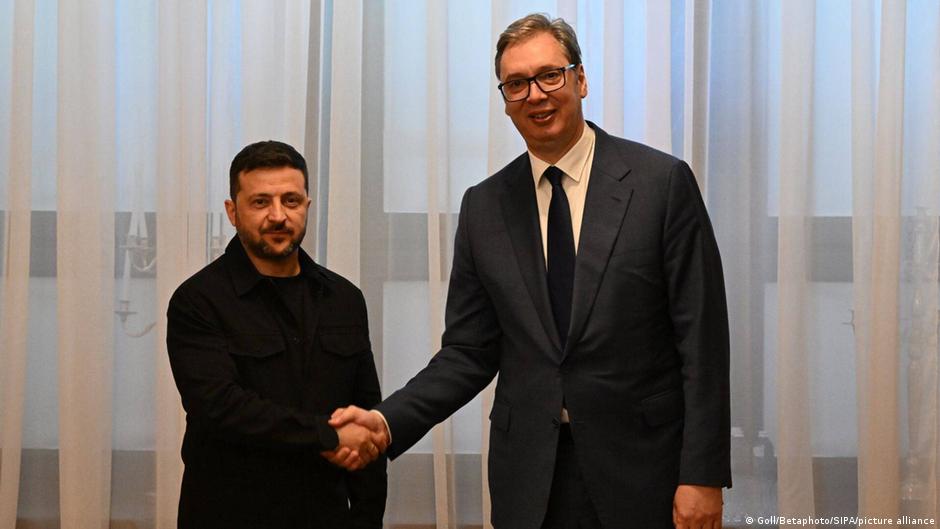
Ukrainian President Volodymyr Zelensky made his first visit to Serbia since the onset of the war in Ukraine, meeting with Serbian President Aleksandar Vučić for a dinner in Belgrade on the evening of August 7, 2025. This preliminary encounter set the stage for formal negotiations scheduled for the following day at the Serbian presidential palace.
Context and Economic Implications of the Visit
The meeting between Zelensky and Vučić is laden with geopolitical and economic significance, reflecting the intricate balance Serbia maintains between its historical ties with Russia and its European integration aspirations. Serbia has remained one of the few European countries to refrain from imposing sanctions on Russia since the outbreak of conflict in Ukraine in 2022. Its close energy ties with Moscow have been a persistent point of contention in its EU accession negotiations, with Brussels expressing concern over Belgrade's 'warm relations' with Russia.
President Vučić highlighted the visit’s potential to enhance bilateral cooperation in areas of mutual interest, explicitly mentioning economic relations, EU integration, and security matters. Energy cooperation is another key topic, reflecting Serbia's dependency on Russian supplies and its strategic position in regional energy transit routes.
"This visit will contribute to further development of relations and strengthen cooperation between Belgrade and Kyiv," Vučić stated via social media.
For Ukraine, the engagement signals an effort to diversify and deepen economic partnerships within Southeast Europe, challenging Russia’s influence in the region. The visit can be interpreted as a strategic attempt by Kyiv to secure new economic corridors and political support amid ongoing conflict.
Historical and Structural Perspectives
The visit must also be viewed against the broader historical backdrop of Serbia's enduring relationship with Russia. Since President Vučić took office in 2017, he has met with Russian President Vladimir Putin multiple times, including attending the 2025 Victory Day Parade in Moscow. These encounters underscore Serbia’s cautious diplomacy, seeking to balance Moscow’s influence with its aspirations towards European integration.
On the other hand, Ukraine and Serbia have maintained a complex relationship shaped by regional dynamics. Since February 2022, the two presidents have met thrice: in Chișinău and Athens in 2023, and in Odessa in 2025 during a summit focused on Ukraine and Southeast Europe. Each meeting has provided a platform to negotiate economic and security cooperation despite broader geopolitical tensions.
Given Serbia's role as a key transit and energy hub in the Balkans, enhanced Ukraine-Serbia cooperation could have structural economic consequences, potentially fostering alternative trade routes and energy partnerships that sidestep Russian dominance. This shift could alter regional economic dependencies and influence Serbia's integration trajectory within the European Union.
Following the official talks on August 8, Zelensky is also scheduled to meet with Djuro Matic, Serbia’s prime minister, signaling a comprehensive approach to deepening government-to-government ties.
Overall, Zelensky’s visit to Belgrade, described by an unnamed high-ranking Ukrainian official as a "slap in the face to the Russians," epitomizes the evolving power dynamics in Eastern Europe. It represents not only a diplomatic gesture but also a strategic maneuver in the economic and geopolitical chessboard of the region.