Ukraine Talks May Return as Economic Costs of War Continue to Mount
A proposed November negotiating round in Abu Dhabi or Switzerland could test whether technical diplomacy can advance toward a leaders’ summit.
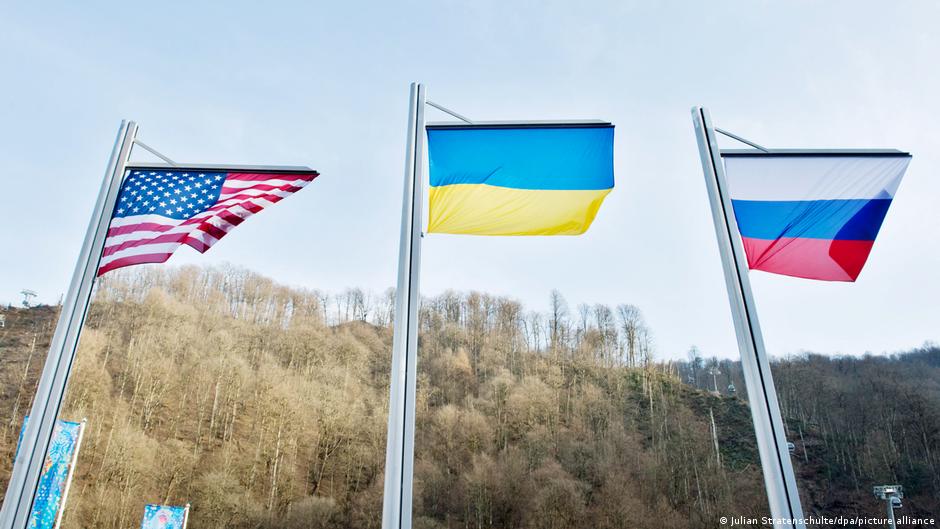
A new round of negotiations involving the United States, Ukraine and Russia could take place within weeks, with Abu Dhabi and Switzerland under consideration as possible venues. The prospective talks would come as the war’s accumulated economic damage increasingly shapes the strategic calculations of governments, even though two previous closed-door rounds produced no breakthrough.
Reuters reported on Friday, October 23, citing government sources who requested anonymity, that delegations from the three countries could meet either in the capital of the United Arab Emirates or in Switzerland. It remains unclear whether Ukrainian and Russian representatives would negotiate directly or communicate through US intermediaries. A Washington representative said the ultimate purpose of the process would be to prepare a summit-level meeting.
Ukrainian President Volodymyr Zelensky said on October 23 that an agreement had been reached to hold a trilateral meeting among Ukrainian, US and Russian negotiating teams. He described the planned discussions as technical but argued that the process must eventually move to the level of national leaders.
“We plan to meet in the first half of November. We are ready to meet on any day—even tomorrow. But everything depends on the Russians,” Zelensky said by video link to the Hudson Institute, a conservative US think tank.
“It is necessary to move from trilateral negotiations at the technical level to a meeting of leaders, because the key issues can only be resolved at that level,” he added.
Diplomacy confronts the economics of a prolonged war
The distinction between technical negotiations and a leaders’ summit is economically significant. Working-level delegations can address the architecture of postwar security, sequencing and implementation, but the largest economic questions are inseparable from political decisions. Ending a major interstate war affects military expenditure, reconstruction requirements, trade routes, investment risk and the long-term allocation of labor and capital. Technical teams may clarify options, yet they cannot independently settle the strategic commitments on which any durable economic normalization would depend.
The Kremlin had shortly before said that trilateral talks would be held in Abu Dhabi in the first half of November. According to Russian presidential spokesman Dmitry Peskov, the discussions would focus on the security of Russia and Ukraine after the war ends. He also said European Union representatives would not participate.
The absence of the EU would narrow the formal negotiating table even though Europe has a substantial economic stake in the outcome. Any postwar settlement would have consequences extending beyond battlefield security, including the conditions under which reconstruction, cross-border commerce and investment might resume. The talks, as currently described, would therefore represent an initial diplomatic mechanism rather than a comprehensive forum for resolving every economic and security consequence of the conflict.
Two days before the reported developments, Russian President Vladimir Putin received US presidential special envoy Steven Witkoff in St Petersburg. Following that meeting, Kremlin aide Yuri Ushakov said Russia was prepared to resume trilateral negotiations with the United States and Ukraine.
Abu Dhabi’s role and the limits of venue diplomacy
Abu Dhabi is not a new location for this process. Ukrainian, Russian and US delegations have already held two rounds of closed negotiations there: the first on January 23-24 and the second on February 4-5. Neither produced a breakthrough toward ending the war in Ukraine.
That record underlines a recurring lesson from earlier peace processes: a neutral or mutually acceptable venue can facilitate contact, but geography cannot substitute for political convergence. The choice between Abu Dhabi and Switzerland may influence the format, discretion and diplomatic atmosphere of the next round. It does not, by itself, resolve disagreements over security arrangements or create the leadership-level authorization needed for major concessions.
The UAE venue would extend an existing channel and provide continuity with the two previous rounds. Switzerland, meanwhile, would offer an alternative setting for the same underlying objective. In either case, the central procedural question remains whether Kyiv and Moscow will speak directly or rely on Washington as an intermediary. Direct talks could shorten communication chains, while mediation could allow each side to preserve political distance.
A summit remains the critical threshold
The proposed November meeting should consequently be viewed as a test of whether the parties can convert renewed contact into a structured path toward a summit. Zelensky’s comments place responsibility for timing on Russia and emphasize Ukraine’s readiness to convene quickly. Moscow’s public statements likewise indicate willingness to restart the trilateral format, while framing postwar security as the principal subject.
For markets and governments, the existence of talks is not equivalent to a settlement. The two unsuccessful Abu Dhabi rounds demonstrate that diplomatic activity can continue without materially changing the war’s trajectory. A more consequential signal would be agreement on the purpose and sequence of a leaders’ meeting, accompanied by a shared understanding of what technical negotiators must prepare.
Until then, the potential talks remain a preliminary step. Their economic importance lies less in their immediate agenda than in whether they can reduce uncertainty surrounding the duration of the conflict. If they fail to advance beyond technical exchanges, the structural costs of war will continue to accumulate. If they establish a credible route to a summit, they could mark the beginning of a longer process toward security stabilization and eventual economic recovery.