Putin Offers US-Mediated Ukraine Talks but Rejects a Front-Line Freeze
Moscow’s insistence on a final settlement rather than a ceasefire leaves territorial demands at the center of the diplomatic impasse.
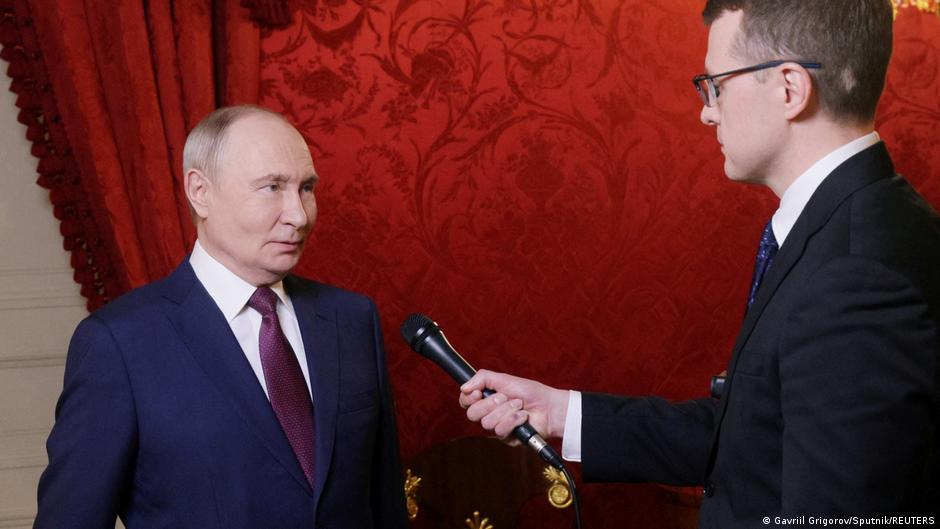
Russian President Vladimir Putin has said Moscow is prepared to resume talks with Kyiv through a US-mediated format, while rejecting Ukraine’s proposal to freeze hostilities along the current front line. The combination points to a familiar economic and diplomatic dilemma: negotiations may restart, but the parties remain divided over whether an initial ceasefire should precede a comprehensive settlement.
In an interview with Pavel Zarubin, a journalist for Russia’s state-owned VGTRK media group, published on Thursday, October 22, Putin said he had agreed during a meeting with US special envoy Steve Witkoff to renew contacts with Kyiv under Washington’s mediation. He described the objective as establishing security arrangements for both Ukraine and Russia after a final peace agreement, rather than following a temporary suspension of combat.
“We are ready to resume these contacts to achieve this goal,” Putin said, arguing that negotiations should produce a final settlement rather than a short pause in hostilities.
Moscow has not disclosed what level of representation it would accept in renewed negotiations. Ukrainian President Volodymyr Zelensky has said he is ready for a trilateral meeting with Putin and US President Donald Trump to discuss ending the war. The Kremlin has repeatedly rejected that format or attached conditions that Kyiv did not regard as a serious basis for a summit, including a suggestion that Zelensky travel to Moscow.
A ceasefire dispute with large economic consequences
The difference between a front-line freeze and a final settlement is more than procedural. A ceasefire could reduce immediate destruction, casualties and pressure on infrastructure, while giving households and businesses a degree of predictability. Yet it would leave unresolved the status of occupied territory, security guarantees and the risk that fighting could resume. A comprehensive agreement would seek to address those questions at once, but the breadth of the dispute makes such an outcome harder to negotiate.
For Ukraine, continued attacks impose direct costs through damaged transport links, commercial property and urban infrastructure. They also sustain wider uncertainty affecting investment, reconstruction planning, labor supply and public finances. For Russia, the continuation of the war preserves the fiscal and industrial demands associated with a prolonged military campaign. The refusal to separate a ceasefire from a final political settlement therefore extends the period in which both economies must operate under wartime constraints.
Delegations previously selected by Putin to meet Ukrainian representatives did not produce measurable progress toward ending the war. Moreover, only hours after Putin’s meeting with Witkoff, Kremlin aide Yuri Ushakov said Russia was “completely dissatisfied” with proposals brought to Moscow by Trump’s negotiators. That response highlights the gap between agreeing to continue diplomatic contacts and accepting the substance of a potential compromise.
Zarubin also asked Putin about Zelensky’s statement that Ukraine was prepared to freeze hostilities along the existing line of contact. Putin rejected the proposition on territorial grounds, saying: “This is not their territory; this is the territory of historical Russia.” His answer indicated that Moscow’s territorial claims remain a central obstacle to a ceasefire based on current battlefield positions.
Territory remains the binding constraint
Trump had also supported the idea of freezing the conflict along the front line running through Donbas in 2025, before meeting Putin in Anchorage. That approach conflicted with Putin’s publicly stated demand that Ukraine surrender the whole of Donbas to Russia without a fight. The competing positions reveal why a freeze can appear economically rational as a means of limiting further damage, while remaining politically unacceptable to Moscow under its declared objectives.
Historically, ceasefires in unresolved territorial conflicts can reduce immediate economic losses without removing the underlying source of instability. They may create space for trade, reconstruction and civilian recovery, but they can also leave investors pricing in renewed conflict. In this case, Putin’s insistence on a final agreement appears designed to avoid an interim arrangement that would preserve Ukrainian control over territory claimed by Russia. Kyiv, meanwhile, would face major sovereignty and security consequences if territorial concessions became a precondition for stopping the fighting.
Putin also asserted that Russia “does not want to fight” Ukraine and placed responsibility for continuing hostilities on Kyiv. He said Moscow remained ready to seek a negotiated resolution and described Russians and Ukrainians as closely related.
“Recent genetic studies show that this is one people—Russians and Ukrainians,” Putin claimed, without explaining how genetics could determine national sovereignty.
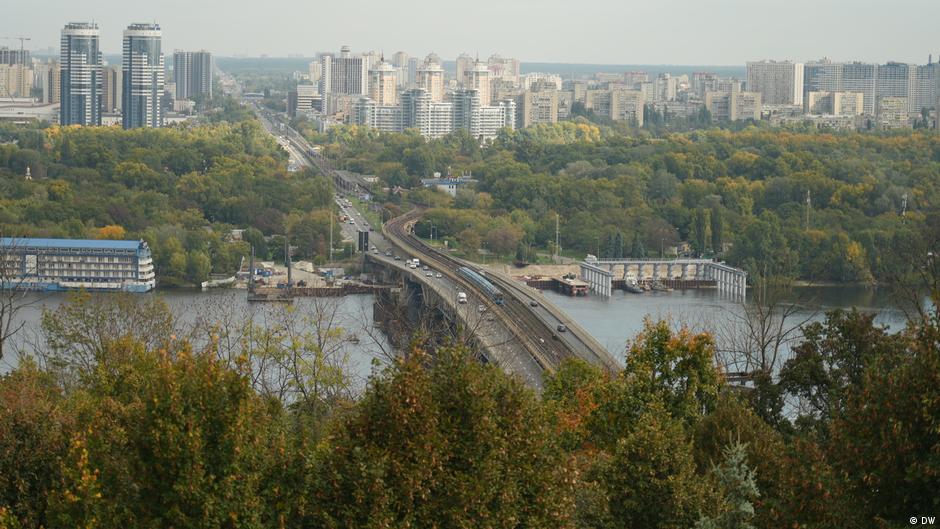
The conciliatory language was not accompanied by a reduction in Russian attacks. On the day the interview was published, Ukrainian authorities reported strikes on civilian sites, including a clothing market in Lozova in the Kharkiv region, Kyiv’s historic center, and roads and bridges in several regions. Two people were killed and 34 wounded in the Russian strike on Lozova.
The contrast between diplomatic messaging and continued attacks is economically significant. Every additional strike can increase eventual reconstruction costs and deepen the loss of productive capacity, even if negotiations later advance. Putin’s remarks therefore signal openness to a process, but not yet to the territorial compromise or immediate cessation of hostilities that would materially reduce the war’s economic burden.