US Significantly Reduces Scale of Military Exercises with South Korea Amid Shifting Strategic Priorities
The Trump administration orders a major cut in joint US-South Korea drills, reflecting evolving regional dynamics and strained alliances.
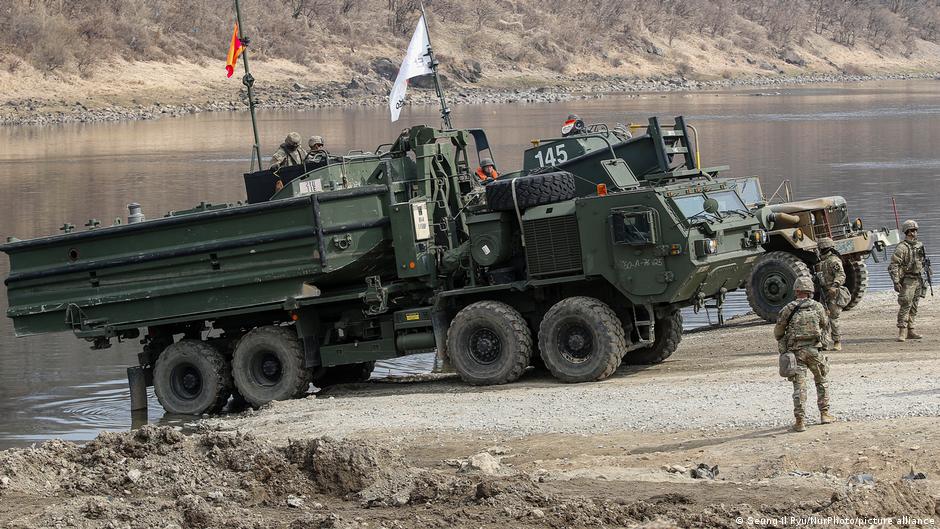
The United States has announced a substantial reduction in the scale of its joint military exercises with South Korea, a decision signaling a potential recalibration of its strategic posture in Northeast Asia. On August 16, President Donald Trump instructed the US Secretary of Defense, Pete Hegseth, to downsize the upcoming Ulchi Freedom Shield exercises, which are traditionally aimed at preparing for potential aggression from North Korea.
Strategic Context and Political Implications
President Trump cited his "very good relationship" with North Korean leader Kim Jong Un as a key factor in his reluctance to continue large-scale military drills that he views as costly and provocative. He emphasized that the financial burden of these exercises largely falls on the United States, framing the joint maneuvers as an unnecessary expense that sends a hostile message to Pyongyang, which, according to Trump, has not posed a threat while he is in office.
"These exercises not only are expensive, mostly paid for by the US as usual, but also send a completely inappropriate and hostile signal to a country that, as long as I am president, has not represented a threat and has behaved respectfully," Trump stated.
Beyond cost considerations, Trump also referenced South Korea's refusal to support the US and Israel in their conflict with Iran, suggesting a reassessment of alliance expectations.
Historical and Structural Economic Dimensions
The US presence in South Korea, currently involving approximately 28,500 troops, has been a cornerstone of Washington's Asia strategy since the Korean War armistice of 1953. The Ulchi Freedom Shield exercises, scheduled for 11 days starting August 17, are designed to enhance South Korean and American readiness against potential North Korean attacks.
However, the absence of a formal peace treaty between North and South Korea perpetuates a state of technical war, with military preparedness deeply embedded into the economic and political structures of the region. The annual cost of these exercises and the US military presence represent significant budgetary commitments, influencing defense spending, local economies near bases, and broader geopolitical alliances.
South Korean President Yoon Suk-yeol, who took office last year, has pursued rapprochement with Pyongyang, proposing peace talks as recently as August 15. Yet, North Korea has not responded to these overtures, maintaining a cautious stance amid the evolving regional security environment.
Economic and Geopolitical Consequences
The reduction in joint exercises could have multiple structural impacts. Economically, decreased military activity may reduce operational costs and local economic stimuli around US bases. Strategically, it may alter deterrence calculations, potentially inviting shifts in North Korea’s risk assessment. It also raises questions about the reliability and future contours of the US-South Korea alliance, especially against the backdrop of emerging US-China competition and the broader Indo-Pacific security architecture.
This move reflects a broader trend of the US reconsidering its international military commitments and the financial burdens borne by American taxpayers, with implications for regional stability and alliance cohesion.