Zelensky’s Plane Delayed by Drone Threat Over Moldova, Norway Says
The incident underscores how the economics of the war increasingly extend beyond Ukraine’s borders into transport, insurance and regional security.
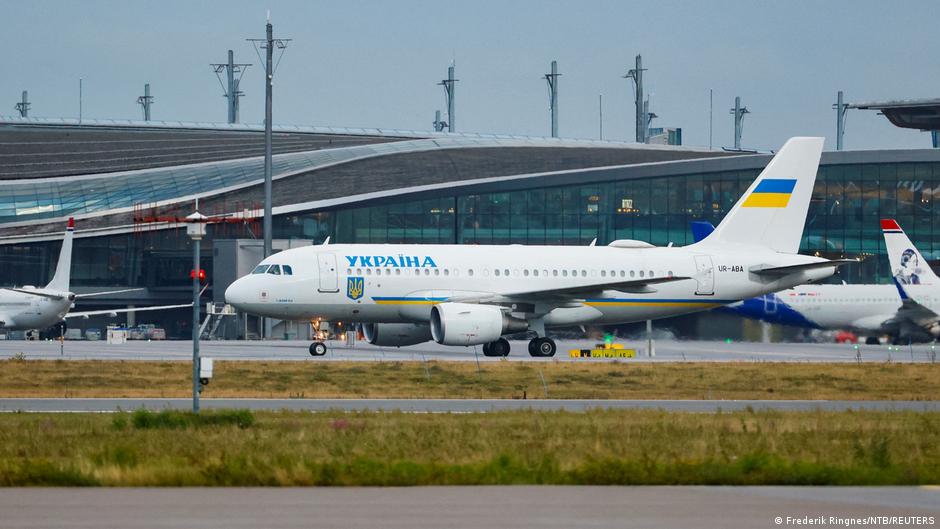
Norwegian Prime Minister Jonas Gahr Store said that Ukrainian President Volodymyr Zelensky’s aircraft narrowly avoided a possible encounter with a drone while departing Moldova for Oslo, an episode that highlights the widening economic and security costs of Russia’s war beyond Ukraine’s own airspace.
Speaking to Norwegian broadcaster NRK on Wednesday, September 9, Store said Zelensky’s plane “almost collided with a drone” when it was due to take off from Moldova. “This is the reality in which he lives,” the Norwegian leader added. Store did not specify where he received the information, and his remarks did not make clear whether the episode was accidental or represented a deliberate attempt to target the Ukrainian president.
Zelensky’s office had not commented on the incident at the time of the report. The Norwegian prime minister’s office later clarified Store’s statement, saying that a drone threat in Moldovan airspace had delayed Zelensky’s aircraft on its way to Oslo. It added that it was not known how close the drones were to the aircraft.
“Yesterday there was a drone threat in the airspace over Moldova, which delayed Zelensky’s plane on its way to Oslo,” the Norwegian prime minister’s office said.
A senior Ukrainian official told DW that while the Ukrainian president’s aircraft was waiting to depart from Chisinau, a Russian jet-powered drone entered Moldovan airspace. Zelensky’s departure was later postponed, and other flights were suspended.
Security Risk Becomes an Economic Variable
The immediate facts of the case remain limited. Neither the Ukrainian presidential office nor the official Norwegian government readout of Zelensky’s later talks with Store mentioned the drone incident. Yet even in its clarified form, the account points to a structural feature of the war that has become increasingly important for neighboring economies: military risk now functions as an economic variable.
Airspace restrictions, flight delays and the suspension of commercial routes are not only matters of diplomatic security. They affect airport operations, insurance premiums, logistics planning, border trade and the perceived risk of investing in countries near the conflict zone. Moldova, a small economy positioned between Ukraine and Romania, has repeatedly faced the challenge of absorbing spillover from the war while trying to maintain transport links and economic stability.
The reported delay of Zelensky’s aircraft took place against the backdrop of a separate drone discovery in Moldova. On September 9, Moldovan police said they had found a fallen drone equipped with a power unit. An explosion occurred when it struck the ground, leaving a large crater. Inside the drone were striking elements in the form of metal balls. No casualties were reported.
The same night, according to the local regional military administration cited in the source report, Russian drones attacked the Starokozache international road crossing point in Ukraine’s Odesa region, near the border with Moldova. NRK noted that the airport from which Zelensky flew to Oslo is roughly two hours by road from that border crossing.
For economies on the edge of the war, such geography matters. Border checkpoints are commercial arteries as well as security facilities. When they are attacked, the consequences can extend to customs flows, freight schedules and the cost of doing business across a region already reshaped by the closure or restriction of routes through Ukraine’s Black Sea ports and airspace.
Historical Parallels in Wartime Spillover
The economic pattern is not new. Conflicts have often pushed risk into surrounding neutral or non-belligerent economies through insurance markets, transport corridors and investor behavior. During earlier European wars, the cost of moving goods and people was repeatedly altered by the threat of mines, air raids or attacks near strategic crossings. In the current conflict, drones have become a relatively low-cost instrument capable of creating expensive disruptions.
That asymmetry is central to the economics of the war. A drone incursion or suspected drone threat can ground aircraft, delay officials, suspend civilian flights and force neighboring states to activate emergency procedures. The direct material cost of a single incident may be limited, but the broader effect is cumulative. Each event increases the perceived volatility of air corridors and border infrastructure in the region.
Zelensky arrived in Oslo from Moldova on the evening of September 8 to attend the funeral of King Harald V. After the ceremony, he met with Store. The Norwegian government’s official statement on their talks did not mention the drone episode, a notable omission given the later attention generated by Store’s remarks to NRK.
For Norway, a major energy producer and long-standing supporter of Ukraine, the incident also carries a broader strategic-economic meaning. European governments are not only financing military and humanitarian support for Kyiv; they are adapting to a security environment in which drones, air-defense alerts and cross-border incidents can affect civilian systems across the continent’s eastern flank.
The Moldovan episode does not by itself establish whether Zelensky’s aircraft was directly targeted. Store’s own office emphasized that the proximity of the drones to the plane was unknown. But the available accounts point to a larger reality: the war’s costs are increasingly measured not only in destroyed infrastructure inside Ukraine, but also in the risk premiums imposed on neighboring states.
For Moldova, that means continued pressure on aviation, policing, border management and public confidence. For Ukraine’s partners, it reinforces the operational complexity of wartime diplomacy. And for the regional economy, it shows how military spillover can translate into delays, suspended flights and new layers of uncertainty in cross-border movement.