EU Extends Sanctions on Russia for One Year Amid Shifts in Member States’ Positions
The European Union agreed to extend sanctions against Russia for a full year, reflecting changing political dynamics and signaling deeper economic impacts.
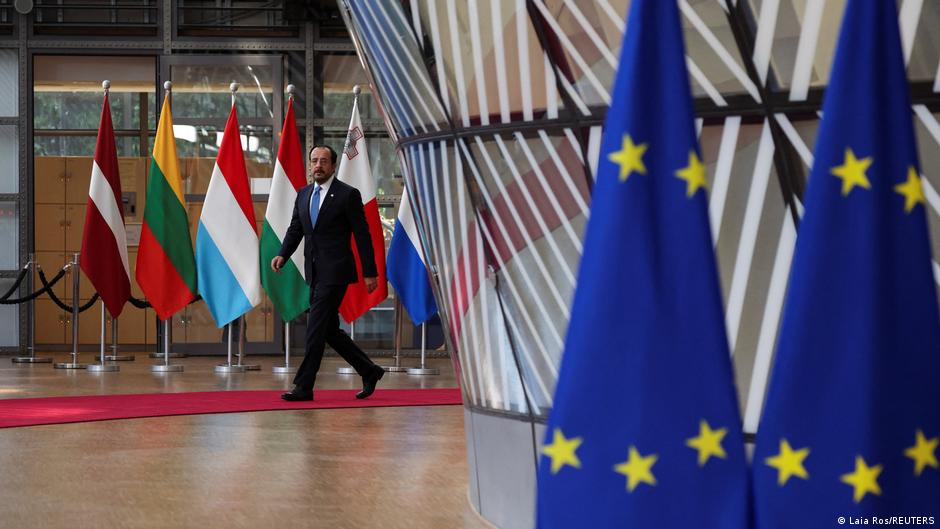
At a summit in Brussels on June 18, the European Union made a significant policy shift by agreeing to extend its sanctions on Russia for one year, a first since the measures were initially imposed following Russia’s invasion of Ukraine. Previously, extensions were limited to six-month periods, often hindered by the veto power of individual member states, notably Hungary under former Prime Minister Viktor Orbán.
Political Realignments Unlock Longer Sanction Horizon
The transition in Hungary’s leadership played a crucial role in this development. Viktor Orbán, whose government persistently blocked longer sanction extensions and consensus documents related to Russia since December 2024, was succeeded in May by Prime Minister Péter Medgyessy, who endorsed prolonging the sanctions to a full year. This change eliminated the primary obstacle to a more extended sanction regime.
The EU’s formal extension is expected to be ratified by the European Council in the coming weeks. This move signals a strategic commitment by all 27 member states to maintain sustained economic pressure on Russia, aimed at weakening its military economy to end the aggressive conflict in Ukraine. The accompanying declaration condemned Russia’s war and committed the Union to intensify economic constraints and diplomatic engagement.
"The EU intends to further increase pressure on Russia and continue weakening its military economy to end its brutal war and engage in meaningful peace negotiations." — EU Declaration, June 2026
Economic Implications and the Next Phase of Sanctions
The extension is not merely a diplomatic gesture; it carries significant structural economic consequences for both Russia and the EU. The EU specifically highlighted the importance of reducing Russia’s energy revenue, including through measures targeting the so-called "shadow fleet"—a network of vessels circumventing restrictions on Russian oil exports.
Looking ahead, the EU plans to introduce a 21st sanctions package, with details still under negotiation. Speculated components include travel bans on Russian military personnel involved in Ukraine, and sanctions against notable figures such as Patriarch Kirill of the Russian Orthodox Church and Arkady Dvorkovich, president of the International Chess Federation. Additionally, unprecedented measures targeting Russia's fisheries sector, alongside further restrictions on energy, finance, and trade, are expected.
However, unity within the EU remains fragile. Bulgaria’s Prime Minister Rumen Radev has already declared his intention to veto the next sanctions package, citing concerns over domestic economic impacts and opposition to measures targeting Patriarch Kirill. Despite this, Radev affirmed Bulgaria’s support for Ukraine’s EU accession talks, underscoring the complex balancing act between economic interests and geopolitical commitments within the bloc.
Historical Context and Long-Term Structural Effects
The decision to extend sanctions for a year rather than six months marks a departure from past cautious approaches, reflecting a recognition that short-term measures may be insufficient to influence a protracted conflict. Historically, economic sanctions have had mixed success in altering state behavior, often depending on the duration, scope, and enforcement unity among imposing countries.
For Russia, prolonged sanctions deepen economic isolation, affecting sectors critical to its military-industrial complex and energy exports, which remain a main source of state revenue. The emphasis on cutting off revenue streams from energy sales, including clandestine trade practices, underscores the EU’s strategic targeting of Russia’s economic lifelines.
For the EU, these sanctions carry costs as well, including potential disruptions to energy supplies and economic ties, especially in countries like Bulgaria and Hungary. The internal divisions highlighted by Bulgaria’s veto threat reveal structural challenges in maintaining a cohesive external economic policy in the face of national economic vulnerabilities.
The EU’s evolving sanctions strategy thus illustrates broader themes in international economic statecraft: the tension between collective security interests and national economic imperatives, the role of leadership changes in pivoting policy directions, and the long-term economic recalibrations resulting from sustained geopolitical conflicts.