Russia Deploys Northern Fleet Destroyer Admiral Levchenko to Baltic Sea Near Germany
The redeployment signals Moscow’s strategic intent to protect its maritime shadow fleet amid heightened Baltic tensions.
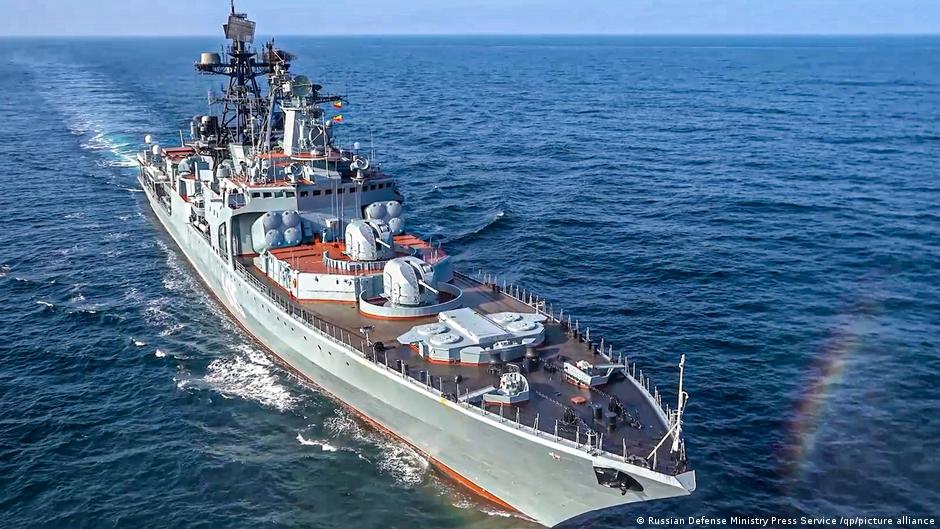
In a notable shift of naval assets, the Russian Navy has redeployed the large anti-submarine destroyer Admiral Levchenko from the Barents Sea to the Baltic Sea, positioning it near Germany’s island of Fehmarn. This maneuver reflects Russia’s ongoing maritime strategy to secure its so-called "shadow fleet" operations conducting oil exports through contested waters.
Strategic Redeployment in the Baltic
The Admiral Levchenko, one of the Northern Fleet’s largest anti-submarine vessels, was sighted passing the Fehmarn Belt, a critical maritime corridor between Denmark and Germany, at the end of July. Prior to this, the ship was photographed north of Rostock. The Russian Ministry of Defense has offered no official explanation for the redeployment or its specific mission in the Baltic Sea.
Observers note that this vessel likely replaces the destroyer Severomorsk, which previously patrolled the Fehmarn Belt. The Severomorsk ceased its patrol at the end of June, with Russian authorities stating it had completed its "long-range mission objectives." Its mission was described domestically as ensuring the security of civilian shipping, a euphemism that analysts interpret as safeguarding the transit of Russia’s "shadow fleet"—commercial vessels involved in circumventing sanctions to export Russian oil.
With only the corvette Soobrazitelny of the Baltic Fleet remaining near Fehmarn, the arrival of the Admiral Levchenko signifies a bolstering of Russia’s anti-submarine and escort capabilities in this strategically sensitive area.
Economic and Geopolitical Implications
The redeployment occurs against the backdrop of intensified Western sanctions on Russian energy exports following Moscow’s invasion of Ukraine. The so-called "shadow fleet"—a network of vessels operating outside normal commercial channels—is vital to Russia’s efforts to sustain oil revenues despite sanctions and restrictions on its conventional shipping routes.
"The positioning of a major Northern Fleet destroyer in the Baltic underscores Russia's determination to protect its covert maritime economic lifelines," analysts note.
Additionally, the maneuver is intertwined with broader geopolitical signals. The Severomorsk was escorted to its home port by the superyacht Graceful, built in Germany and linked to Russian President Vladimir Putin. Notably, the yacht was relocated from Hamburg to Kaliningrad just before the 2022 invasion of Ukraine and subsequently sanctioned by the United States. Reports suggest the yacht is now moving to Murmansk, likely to shield it from Ukrainian drone threats.
This interconnection between high-profile assets and military redeployments reveals the Kremlin’s comprehensive approach to safeguarding both symbolic and practical maritime interests within the increasingly contested Baltic theater.
Historical and Structural Context
The Baltic Sea has long been a focal point for Russian naval strategy, dating back to the Tsarist era and solidified during Soviet times as a crucial theater for controlling access to European markets and projecting power. The current redeployment echoes Cold War patterns wherein the Soviet Navy maintained a robust presence to secure the flow of resources and counter NATO naval influence.
Today’s maritime confrontations carry amplified economic stakes, as Russia’s energy exports remain a crucial revenue source amid escalating sanctions. The strategic escort of the shadow fleet by prominent naval vessels exemplifies an adaptive response to economic warfare, blending military presence with covert commercial operations.
In sum, the repositioning of the Admiral Levchenko reflects a deeper structural dynamic: the integration of naval power projection with economic resilience strategies amid geopolitical isolation. The Baltic Sea remains a critical arena where military deployments serve not only defense objectives but also underpin Russia’s efforts to navigate a challenging international economic environment.