EU Summons Russian Envoy After Missile Strikes on Kyiv-Area Exhibition and Consulate
EU condemns Russia's targeted missile attacks on civilian and diplomatic sites amid escalating Ukraine conflict.
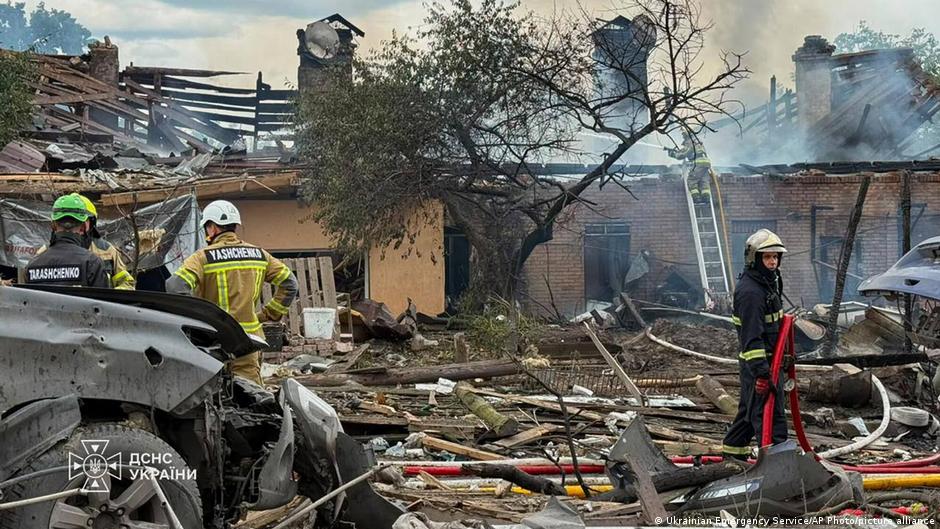
On July 24, the European Union summoned the Russian permanent representative to the EU following a series of missile strikes launched by Russian forces against Ukraine. The attacks notably hit a private weapons exhibition in the Kyiv region and the honorary Latvian consulate in Sloviansk, prompting strong diplomatic protests and warnings of further sanctions.
Targeted Strikes and Diplomatic Fallout
Kaja Kallas, the EU's High Representative for Foreign Affairs and Security Policy, denounced the strikes as indiscriminate and deliberate acts that violate international law. She emphasized that the missile attacks were part of a "purposeful policy" targeting civilian infrastructure and diplomatic missions. "The strike on the Latvian consulate underscores Moscow's complete disregard for international legal norms," Kallas stated.
"We will summon the Russian representative to the EU and propose expanding sanctions against additional Russian military-industrial enterprises and structures," Kallas announced.
The European External Action Service (EEAS) is preparing a formal note of protest to be delivered to Moscow, signaling a significant diplomatic escalation. The EU's response underlines concerns over Russia's ongoing military operations in Ukraine, which increasingly affect civilian and diplomatic targets beyond active combat zones.
Military and Humanitarian Impact of the Kyiv-Area Missile Attack
Earlier on July 24, Russian forces launched ballistic missile strikes using Zircon hypersonic weapons on the Kyiv region, targeting a private testing ground near Bucha where a drone and weapons exhibition was held. Ukrainian Prosecutor General Ruslan Kravchenko reported 10 fatalities and approximately 100 injuries from the strike. An investigation into "inadequate organization and conduct of the event" is underway.
The Russian Ministry of Defense confirmed the attack, claiming it targeted leading developers and producers of Ukrainian unmanned aerial vehicles (UAVs), as well as command personnel and special service operators involved in planning strikes on Russian territory.
Strategic Implications and Future Drone Capabilities
President Volodymyr Zelensky, in an interview published on the same day, revealed that Ukraine is developing drone technology capable of striking targets up to 10,000 kilometers away by 2027. He highlighted current UAVs able to reach 3,000 kilometers, comparable to Russia's capabilities.
"We are negotiating with the United States to establish drone production facilities within Ukraine," Zelensky explained. "Creating production lines is critical because drones have a much shorter operational lifecycle than artillery or missiles, often replaced every three to six months on the battlefield."
Zelensky also announced the formation of a "special command for long-range influence on Russia," a military unit tasked with organizing drone attacks deep within Russian territory. These measures represent a strategic shift aimed at increasing pressure on Moscow by expanding Ukraine's offensive reach beyond frontline engagements.
Economic and Structural Consequences
The escalation manifests not only in military dimensions but also in deepening economic and diplomatic rifts between Russia and the West. The EU's intent to broaden sanctions against Russia's military-industrial complex threatens to disrupt Russian defense supply chains and industrial output further. Concurrently, Ukraine's plans to build domestic drone production facilities reflect an adaptive restructuring of its defense industry toward high-tech, long-range capabilities.
These developments mark an intensification of the conflict's economic warfare aspect, where technological innovation, industrial capacity, and international sanctions interact to shape the trajectory of the war and postwar reconstruction challenges.