European Parliament Backs €115 Million Agile Fund for Defence Technology
The programme is designed to channel faster financing to European SMEs, start-ups and scale-ups developing disruptive defence technologies.
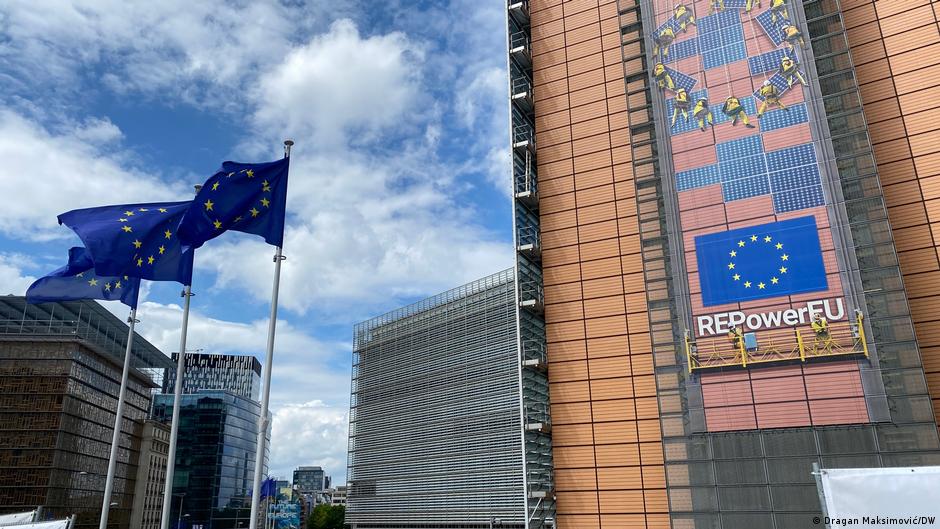
The European Parliament has approved the creation of Agile, a new European Union programme intended to support companies working on emerging defence technologies with a budget of €115 million. The vote marks another step in the bloc’s effort to narrow the distance between Europe’s technology sector and its defence industrial base, a gap that has become increasingly visible as warfare, procurement and industrial policy have shifted toward speed, software and rapid adaptation.
A large majority of members of the European Parliament supported the measure. According to the figures released with the parliamentary announcement, 536 lawmakers voted in favour, 101 voted against and 16 abstained. The programme must still be approved by the Council of the European Union before it is published in the Official Journal. Its launch is planned for early 2027, after negotiators from the Parliament and the Council reached a provisional agreement on the initiative in July 2026.
In a press release published on Tuesday, October 6, the European Parliament described Agile, formally Agile and Rapid Defence Innovation, as a new instrument with a €115 million budget aimed at providing rapid, flexible and targeted financial support to small and medium-sized enterprises, including start-ups and scale-ups, that are developing new and disruptive defence technologies.
Agile is intended to provide “rapid, flexible and targeted financial support” to European companies developing new defence technologies.
Industrial policy meets military urgency
The economic significance of the programme lies less in the absolute size of the budget than in what it signals about the EU’s evolving model of defence innovation. A €115 million allocation is modest compared with major weapons procurement programmes or national defence budgets. But it is targeted at the part of the economy that European defence systems have often struggled to absorb efficiently: smaller technology firms with potentially useful products, limited bureaucratic capacity and short commercial time horizons.
For decades, European defence procurement has tended to revolve around large prime contractors, long development cycles and nationally segmented industrial interests. That structure produced sophisticated platforms but often moved slowly. The Agile programme points toward a different economic logic, one in which defence capability is shaped not only by tanks, aircraft or naval systems, but also by sensors, autonomy, data processing, communications, software and testing infrastructure. In that environment, the bottleneck is not always invention; it is the ability to finance, test, certify and procure innovation quickly enough for military use.
The Parliament’s announcement said the programme is meant to stimulate innovation by accelerating the awarding of grants and improving access to testing and certification. It also gives member states a role in defining tasks, with the stated goal of ensuring that the products being developed match their defence capability needs. That design reflects a familiar tension in European industrial policy: the EU seeks cross-border scale and technological dynamism, while national governments remain central to defence requirements, budgets and security priorities.
A bridge between start-ups and the defence base
EU technology commissioner Henna Virkkunen said in spring 2026 that Agile should bring Europe’s “most creative technology companies” closer to the defence industry. That formulation captures one of the structural challenges facing the bloc. Europe has deep engineering capacity, research institutions and advanced manufacturing networks, but its start-up ecosystem has often found it difficult to convert dual-use or defence-relevant technology into military contracts at speed. Investors, meanwhile, have historically been cautious about defence exposure, although that attitude has been changing as security policy has moved closer to the centre of economic strategy.
Defence commissioner Andrius Kubilius made the security case in similar terms, saying at the same time that the ways of conducting war were undergoing “radical changes.” Armed forces, he said, need “new technologies, fast delivery and highly competitive prices” in order to be “smarter and faster than opponents.” From an economic perspective, that argument places defence procurement in the same competitive frame as advanced manufacturing and digital markets: the winners are not only those with the largest budgets, but those able to shorten the cycle between experimentation and deployment.
The historical parallel is the role of state demand in shaping technological ecosystems. In the United States, defence and security spending played a formative role in the development of semiconductors, aerospace, computing and communications. Europe’s model has generally been more fragmented, with defence markets divided among member states and procurement shaped by national champions. Agile does not erase that structure, but it suggests an incremental move toward a more coordinated innovation pipeline in which EU-level financing can reduce early-stage friction.
The programme’s emphasis on SMEs, start-ups and scale-ups is especially notable. These firms often operate with different cost structures and development rhythms from traditional defence contractors. They may be able to move quickly, but they also face high barriers when entering a market defined by security clearance, certification requirements, procurement rules and long payment cycles. By promising faster grants and access to testing and certification, Agile aims to address some of those barriers directly.
Economic consequences beyond the budget line
The broader economic consequences will depend on implementation. If the programme merely disperses small grants without clear procurement pathways, its effect may be limited. If, however, it helps firms validate products, align them with member-state capability needs and reach defence buyers more quickly, it could strengthen Europe’s defence technology supply chain at the margin. The structural question is whether public financing can generate a market in which smaller companies can survive beyond the grant phase.
There are also implications for competition. Kubilius’s reference to highly competitive prices points to a concern that defence innovation cannot rely solely on expensive, slow and bespoke systems. More suppliers, faster iteration and stronger links to commercial technology could place pressure on legacy procurement practices. At the same time, defence markets are not normal consumer markets. Security requirements, export controls, interoperability rules and political oversight all limit the extent to which open competition can function in the usual way.
The Council’s approval remains the next formal step before the programme can enter the EU’s legal framework through publication in the Official Journal. With the launch scheduled for early 2027, the practical test will come soon after: whether Agile can turn a relatively small budget into a mechanism that changes incentives for companies, investors, defence ministries and established industrial groups.
For Europe, the issue is no longer only how much to spend on defence, but how quickly spending can be translated into usable capability. The Parliament’s approval of Agile suggests that EU institutions increasingly see innovation speed as an economic and strategic variable in its own right.