Foreign Retailers in Russia Face Temporary Control and Political Shielding
The cases of Auchan, Leroy Merlin, Metro and Globus show how foreign retail assets in Russia have become exposed to state intervention.
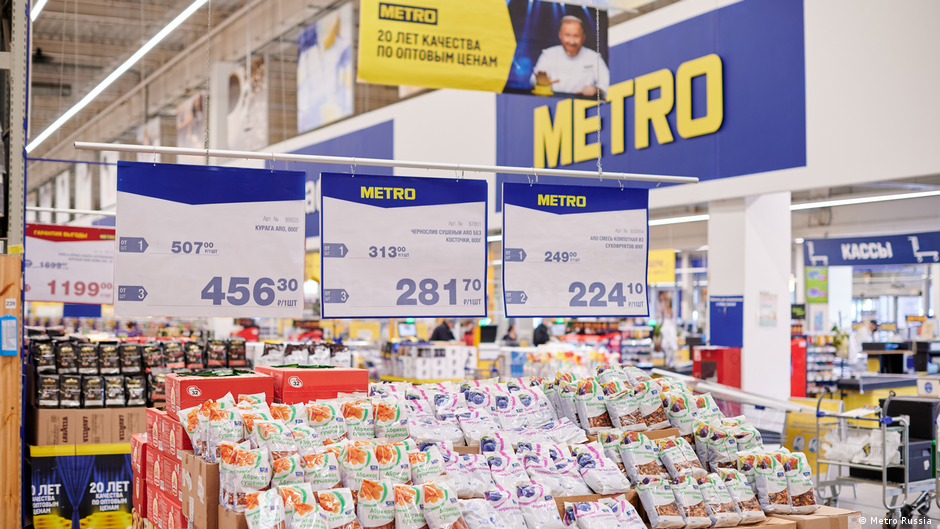
The position of foreign retailers in Russia has entered a new and more uncertain phase. A series of international retail groups that built businesses in the Russian market now face a basic question: whether their local assets can remain under their control, or whether the state will continue to expand temporary management over businesses whose owners are based abroad.
Assets linked to several foreign chains have already been placed under temporary administration. The measure has affected assets of France’s Auchan and Leroy Merlin, Germany’s Metro and other companies, leaving owners without access to businesses they previously controlled. The development has turned the Russian retail sector into a test case for how foreign commercial property is treated in a more confrontational political and economic environment.
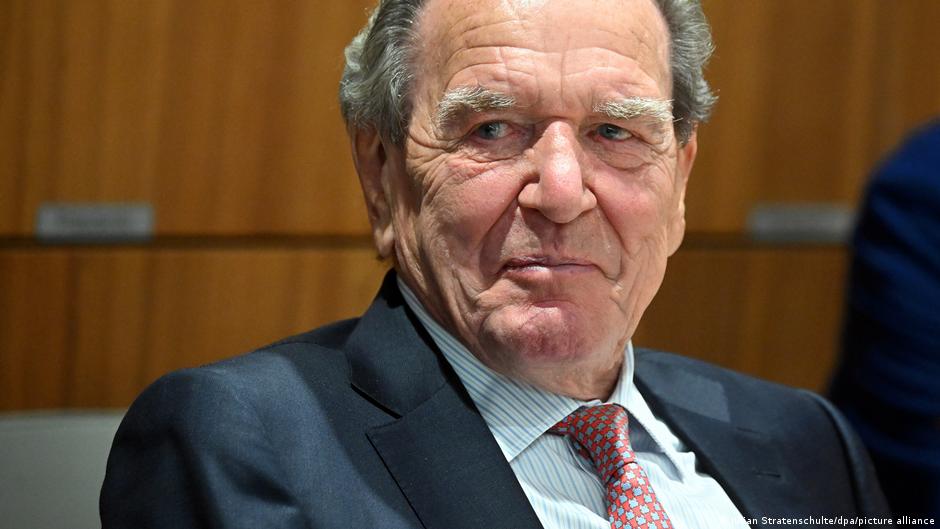
At the same time, the former Russian subsidiary of Germany’s Globus has taken a different and highly political route. Former German Chancellor Gerhard Schroeder has joined its supervisory board. His presence highlights another possible strategy for companies or former subsidiaries seeking protection, influence or continuity in a market where formal ownership structures may no longer be enough to safeguard control.
Temporary Management as an Economic Signal
Temporary administration is not the same as a formal declaration of nationalization, but for companies affected by it the practical consequences can be severe. If owners lose access to their assets and are no longer able to manage operations, the distinction between temporary control and permanent loss becomes increasingly important but also increasingly blurred.
For foreign investors, the retail cases send a signal that property rights in Russia are no longer governed only by corporate law, contracts and market performance. They are also shaped by political risk, nationality of ownership and the state’s assessment of strategic or social importance. Retailers occupy a particularly sensitive position because they are visible to consumers, employ large numbers of people and sit inside supply chains that affect daily household consumption.
That visibility matters. Unlike a financial holding or an industrial component supplier, a supermarket or home-improvement chain is part of ordinary economic life. Its shelves, stores, logistics networks and customer base make it both a business asset and a social infrastructure asset. This helps explain why the fate of foreign retailers has wider significance than the balance sheets of the parent companies alone.
For owners, temporary administration can mean the loss of practical control even before any formal change in ownership is completed.
The result is a climate in which foreign retailers must weigh not only commercial performance, but also their exposure to administrative decisions. For groups that remain present, the question is no longer simply whether the Russian market is profitable. It is whether profits, assets and management rights can still be treated as secure.
Historical Parallels and Structural Costs
The current situation echoes earlier moments in economic history when states used emergency powers, political pressure or administrative control to reshape ownership of foreign assets. Such measures are often justified as temporary or exceptional. Over time, however, they can alter investor expectations in a lasting way. Once the state demonstrates that access to assets can be suspended, the risk premium attached to the market changes.
Russia’s retail sector is especially exposed to these structural consequences. Foreign chains brought management systems, procurement practices, store formats and logistical expertise into the market. Even where brands were adapted to local conditions, their operating models reflected international retail standards. If foreign owners lose control, the assets may continue to function, but the longer-term question is whether the organizational knowledge behind them can be preserved.
There is also a broader capital-market effect. Foreign investors tend to view such cases not in isolation but as precedents. If retail assets can be placed under temporary management, other sectors may be seen as vulnerable as well. That perception can make future investment more expensive, reduce willingness to reinvest earnings and complicate any eventual normalization of economic relations.
The presence of Schroeder on the supervisory board of the former Russian Globus subsidiary adds a further dimension. It suggests that political networks may become part of the defensive toolkit for businesses trying to navigate the Russian environment. In more predictable markets, corporate governance relies on boards, auditors, regulators and courts. In a more politicized setting, well-connected figures can become symbols of access or reassurance, even if their exact practical role is limited.
For Germany, France and other European economies, the issue is not only corporate loss. It also concerns the erosion of a model in which commercial integration was expected to create mutual dependence and stability. Retail expansion into Russia was once part of a broader story of European companies entering a large consumer market. The current wave of temporary management shows how quickly such integration can be reversed when geopolitics overtakes business logic.
From Market Presence to Asset Defense
The cases of Auchan, Leroy Merlin, Metro and Globus point to a shift from ordinary market competition to asset defense. Companies that once focused on pricing, logistics, store expansion and consumer demand now face questions of legal access, administrative control and political insulation. This changes the economics of operating in Russia.
In conventional retail strategy, scale is an advantage. Large store networks, supplier contracts and distribution systems can lower costs and strengthen market share. Under temporary administration risk, however, the same scale can become a vulnerability. The more extensive the assets, the more there is to lose if control is interrupted.
For Russian consumers and employees, the immediate effects may not be visible if stores continue to operate. But ownership uncertainty can influence investment decisions, maintenance, supply relations and long-term planning. Retail is a low-margin, operationally demanding sector. It depends on constant reinvestment and managerial discipline. If governance becomes uncertain, the effects may accumulate gradually rather than appear as a sudden shock.
The central unresolved question remains whether temporary administration will become a bridge to nationalization, a bargaining tool, or a durable form of state-supervised control. The answer will shape not only the future of foreign retailers in Russia, but also the credibility of Russia as a destination for international capital in any post-crisis environment.
For now, the trajectory is clear enough: foreign retail assets in Russia are no longer merely commercial holdings. They have become political and economic instruments, caught between state control, ownership claims and the search for protection in a market where the rules are being rewritten in real time.