Schröder’s Globus Role in Russia Draws German Backlash Over Political Risk
The former chancellor’s move to Hyperglobus has revived German concerns over corporate exposure in Russia and the monetisation of political access.
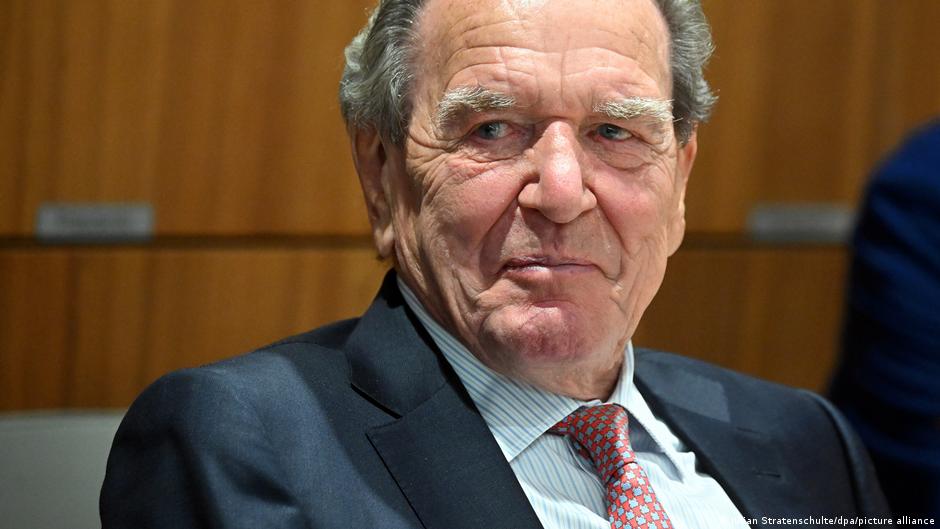
Former German chancellor Gerhard Schröder has taken a seat on the supervisory board of Hyperglobus, the former Russian subsidiary of the German hypermarket chain Globus, prompting sharp criticism from German politicians and economists. The appointment, confirmed by the company’s press service to DW on October 2, places Schröder in a role linked to the retailer’s “strategic development” in Russia at a moment when German business ties to the country remain politically and economically fraught.
The controversy is not simply about one former leader accepting another corporate post. For critics in Germany, the episode sits at the intersection of postwar political norms, sanctions-era business risk and the unresolved legacy of German corporate engagement with Russia. Schröder has long been viewed by many observers in Germany as a lobbyist for Russian companies, having previously held senior roles at Rosneft and at the operator of Nord Stream.
On Saturday evening, October 3, Roderich Kiesewetter, a Bundestag member and foreign policy expert from the governing Christian Democratic Union, denounced the new position. He described Schröder’s post as a “betrayal of Europe and his own country” and linked the appointment to the symbolism of public contact with the former chancellor.
“Anyone who publicly and demonstratively shakes Schröder’s hand is thereby trying to demonstrate their position,” Kiesewetter wrote on X.
That reference appeared to point to the September 28 ceremony in Karlsruhe marking the 75th anniversary of Germany’s Federal Constitutional Court. German President Frank-Walter Steinmeier attended the event and, upon entering the hall, shook hands with several people, including Schröder, who was seated in the front row as an honorary guest.
Thomas Jäger, a political science professor at the University of Cologne, also criticised the appointment in a post on X. “Schröder has a new lobbying assignment. In Russia. Where else?” he wrote, asking whether Steinmeier had known about the role when he greeted Schröder days earlier.
Corporate Insurance in a Politicised Economy
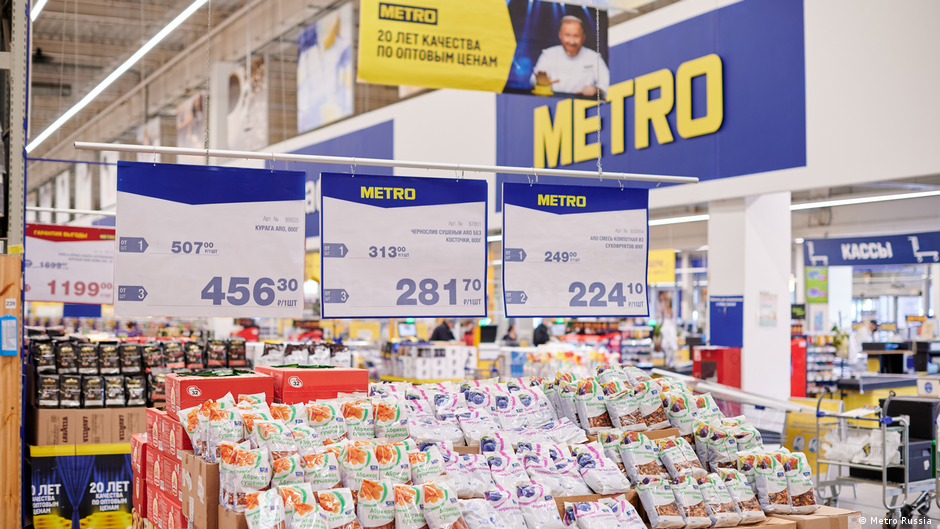
The economic implications of Schröder’s appointment are more complex than the political outrage suggests. German economist Janis Kluge, head of a research division at the Berlin-based German Institute for International and Security Affairs, argued that Hyperglobus may be seeking protection against the fate of Metro’s Russian assets. Those assets were placed under temporary administration by decree of Vladimir Putin.
In Kluge’s interpretation, bringing Schröder into the company’s leadership amounts to buying “lifetime insurance” against a similar outcome. He wrote on X that Schröder is once again monetising his access to Putin. The claim captures a wider anxiety among German analysts: in Russia’s wartime political economy, formal ownership rights may matter less than political access, proximity and perceived strategic usefulness.
That makes the Hyperglobus case relevant far beyond retail. Western firms with legacy operations in Russia have faced a difficult structural problem since the full-scale war in Ukraine began: exit can be costly, but remaining can expose companies to reputational damage, political pressure, legal uncertainty and state intervention. For companies still connected to Russian operations, even indirectly through ownership structures or legacy ties, governance decisions can become a form of risk management.
According to a comment provided to DW by Isabel del Alcazar von Buchwald, spokesperson for Globus Gruppe, the Russian business of the Globus chain has been “legally and organisationally independent” since January 1, 2025. At the same time, the shareholders of Russia’s Hyperglobus are the same German businesspeople as those of the wider group. That combination of legal separation and continuing shareholder overlap is precisely the kind of structure likely to attract scrutiny in Germany’s current political environment.
A Familiar German Dilemma
The Schröder case revives a broader historical debate over Germany’s long commercial relationship with Russia. For decades, major German companies operated on the assumption that trade, investment and energy interdependence could stabilise political relations. That logic underpinned parts of Germany’s approach to Russian gas and industrial exchange, and it helped create a dense network of corporate, political and personal ties.
Schröder became one of the most visible symbols of that era. His subsequent roles connected to Russian energy companies made him a frequent target for critics who argue that political office can create private economic value long after a mandate ends. The Hyperglobus appointment extends that debate from energy infrastructure into consumer retail, suggesting that the political economy of access is not confined to pipelines or state energy firms.
Jan Schnellenbach, a German economist and professor of microeconomics at Brandenburg University of Technology in Cottbus, accused the former chancellor of “shamelessness.” Referring to earlier claims about Schröder’s health in the context of German legal proceedings, he wrote on X: “Was it not said that he was too ill to appear before a German court? Do Russian money have healing powers?”
The intensity of such reactions reflects a changed German consensus. Before 2022, commercial engagement with Russia could still be defended by many businesses as pragmatic or apolitical. Today, the line between business judgment and geopolitical positioning is much harder to maintain. A management or supervisory role in a Russian-linked company is likely to be read not only as a corporate decision, but also as a statement about where legitimacy, loyalty and economic opportunity are being located.
For Hyperglobus, Schröder’s presence may be intended to signal influence and continuity. For German critics, it signals the opposite: an unresolved vulnerability in the country’s political and corporate culture, in which former high office can be converted into private leverage in markets shaped by authoritarian power. That is why the appointment has generated an argument not only over Schröder’s personal conduct, but over the lingering architecture of German-Russian economic ties.