Kolesnikova Says EU Diplomacy With Minsk Can Curb Russia’s Belarus Role
The Belarusian activist argues that calibrated diplomacy and sanctions relief can free prisoners while reshaping Europe’s security leverage.

Belarusian activist and musician Maria Kolesnikova has urged European Union governments to follow the example of the United States by using diplomacy, alongside sanctions, as a practical instrument for securing the release of political prisoners in Belarus. In an interview with DW, the former political prisoner rejected claims that her growing emphasis on dialogue signals a softer attitude toward Alexander Lukashenko’s regime.
For Kolesnikova, diplomacy is not a concession to authoritarian power but a means of extracting measurable outcomes from it. She said her own release demonstrated that negotiations can operate as a lever when they are tied to clear objectives and backed by external pressure.
“We are speaking with you now because diplomacy was used as an instrument of influence, as a tool for achieving specific goals,” Kolesnikova said on DW News.
Her argument is rooted in a stark political economy of repression. Kolesnikova noted that more than 800 people convicted under political articles remain in Belarusian prisons. Against that backdrop, she said, Europe should not treat contact with Minsk as inherently illegitimate if it can be used to save lives and reduce the scale of political imprisonment.
Sanctions, Bargaining Power and Political Prisoners
Kolesnikova pointed to what she called the effectiveness of the American negotiating track. According to her account, talks between Washington and Minsk led to the release of around 500 political prisoners in exchange for easing sanctions on Belarusian companies. “If we already see that the American track of negotiations has worked, then it should be used,” she said.
That formulation places sanctions less in the realm of symbolic punishment and more in the logic of economic bargaining. For years, Western sanctions on Belarus have served multiple purposes: expressing political condemnation, limiting the resources available to the state and its affiliated enterprises, and signalling to domestic opposition groups that democratic states have not normalized repression. Kolesnikova’s intervention suggests a more transactional dimension: sanctions can become a negotiable asset when tied to prisoner releases and other concrete humanitarian results.
For an economics-focused readership, the significance lies in the structure of incentives. Belarus is a small, open economy whose state-linked enterprises remain vulnerable to restrictions on finance, trade access and commercial partnerships. Sanctions relief can therefore carry value for Minsk, especially when it affects companies with strategic or fiscal importance. Yet the same logic creates a dilemma for Europe: any easing of restrictions can be interpreted as rewarding coercion unless it is matched by verifiable concessions.
Kolesnikova’s position does not amount to political rehabilitation of the Lukashenko system. She stressed that years in prison did not change her view of that system. Rather, she is arguing that moral clarity and diplomatic contact are not mutually exclusive. In her reading, the question is whether Europe can design a policy that preserves pressure while creating channels through which lives can be saved.
Belarus Between Europe and Russia
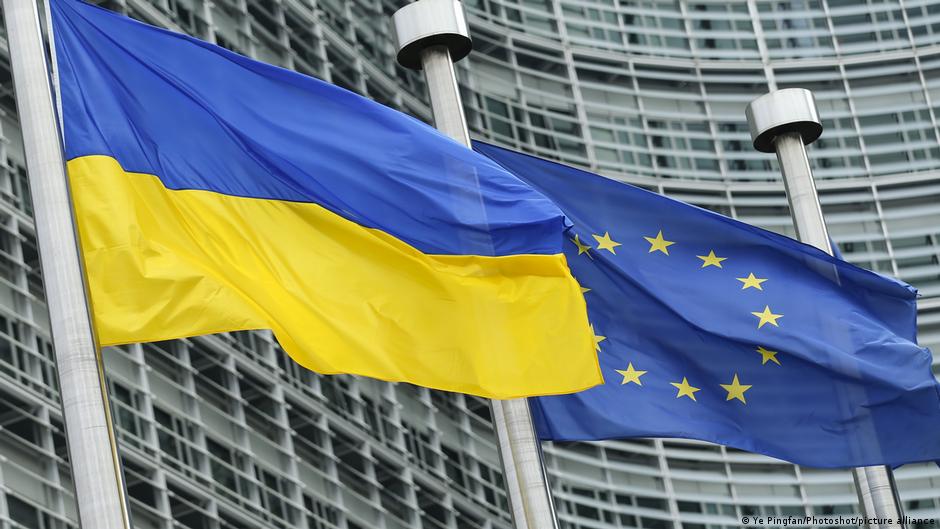
The broader economic and strategic stakes extend beyond prisoner releases. Kolesnikova said that Europe’s openness toward Belarus and Belarusians, rather than toward the regime itself, could reduce Russia’s sphere of influence in the country. She described that as a goal of Europe’s security architecture.
This is the most structural part of her argument. Since the disputed 2020 presidential election and the mass opposition protests that followed, Minsk has become more dependent on Moscow politically, financially and militarily. Western isolation of the Belarusian authorities has reinforced that pattern, even as it was adopted in response to repression. Kolesnikova’s analysis points to an unintended consequence: when European channels narrow, Russia’s relative leverage expands.
Historically, Belarus has often balanced between economic dependence on Russia and selective openings toward Europe. Cheap energy, market access and security guarantees from Moscow have long underpinned the Belarusian state model. But contacts with the EU, cross-border trade, educational mobility and civil society links have also served as partial counterweights. Kolesnikova’s call for “openness” appears to revive that balancing logic, while distinguishing Belarusian society from the apparatus that governs it.
She specifically mentioned recent talks between Polish Foreign Minister Radoslaw Sikorski and Belarusian Foreign Minister Maxim Ryzhenkov in New York on the sidelines of the 81st session of the UN General Assembly. After the meeting, Sikorski said, among other things, that Warsaw was preparing to open a new building for its embassy in Minsk.
For Poland and the EU, such gestures are politically sensitive. Belarus is not only a human rights issue but also a border, migration and security issue. Warsaw has been one of the strongest European supporters of Belarusian civil society, while also facing direct consequences from tensions along the Belarus-Poland frontier. Any renewed diplomatic channel therefore carries domestic and regional risks. Still, Kolesnikova’s argument is that the absence of engagement has costs of its own.
A Personal Case With Wider Implications
Kolesnikova’s own biography gives her comments unusual weight. She was arrested in September 2020 over opposition activity. In what she described as a fabricated criminal case, a court in Minsk sentenced her on September 6, 2021, to 11 years in prison.
She was released on December 13, 2025, together with Nobel Peace Prize laureate Ales Bialiatski and 121 other political prisoners. Their release followed negotiations between Belarusian ruler Alexander Lukashenko and a U.S. delegation led by John Coale, the special envoy for Belarus.
The economic consequences of the policy debate she raises are not abstract. A sanctions regime that never changes may lose bargaining value over time; a sanctions regime that changes too easily may lose credibility. Europe’s challenge is to preserve conditionality while making it clear what specific steps by Minsk would produce specific responses. Political prisoner releases, in Kolesnikova’s view, are a threshold where diplomacy can be justified because the humanitarian return is immediate and measurable.
Her comments also imply a longer-term question for European policy: whether Belarus should be treated solely as an extension of Russia’s strategic perimeter or as a society whose future alignment remains contestable. If Europe accepts the first premise, isolation becomes the default. If it accepts the second, selective engagement with Belarusian society, and even carefully calibrated contact with Minsk, becomes part of a competition over institutions, economic orientation and security architecture.
Kolesnikova is not asking Europe to trust the Belarusian authorities. She is asking it to use the instruments it already has with greater precision. In that sense, her message is less about reconciliation than leverage: diplomacy, sanctions and openness can work together if they are directed toward tangible outcomes and a longer effort to prevent Belarus from being absorbed fully into Russia’s sphere of influence.