Western Embassies Weigh Kyiv Relocation as Russia Targets Ukraine’s Infrastructure
Western governments are preparing contingency plans to move embassies from Kyiv to Lviv or Poland as Russian strikes intensify before winter.

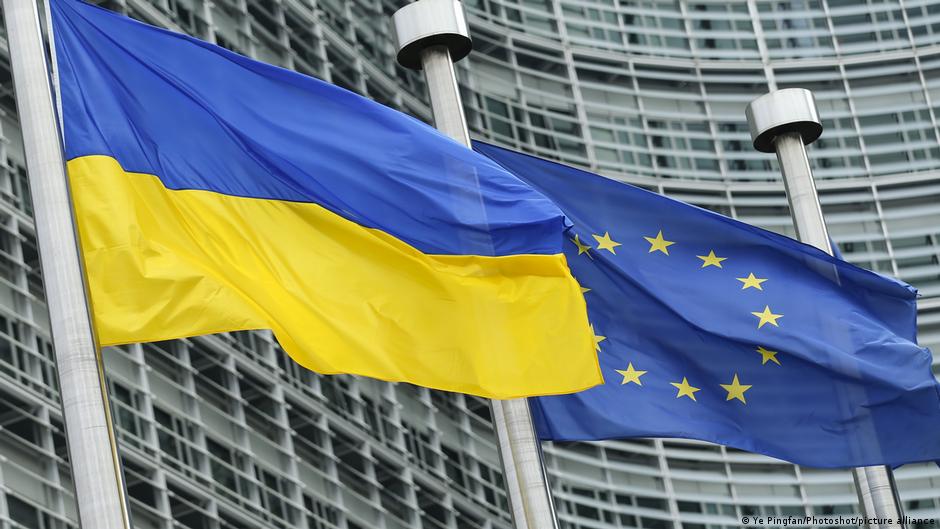
Western governments are preparing contingency plans to relocate their embassies from Kyiv to Lviv or to Poland as Russia intensifies attacks on the Ukrainian capital, according to senior diplomats cited by The Guardian. Publicly, Western diplomats continue to stress their intention to remain in Kyiv. Privately, however, the deterioration of security conditions is forcing a reassessment of diplomatic operations, personnel safety and the symbolic cost of any withdrawal from Ukraine’s capital.
The reported planning comes after a sharp increase in Russian strikes on Kyiv in recent days. The Guardian, citing two senior diplomats, reported on Friday, October 2, that Western countries are drawing up plans to move embassies out of the Ukrainian capital. One diplomat quoted by the newspaper described the threat in stark terms: Russia, the diplomat said, intends to “freeze Kyiv” and push it “back to the Stone Age,” adding that the situation is clearly worsening rapidly.
For Western governments, the question is not only logistical. Embassy location has become part of the broader political economy of wartime confidence. A move from Kyiv would be read in Moscow, Kyiv and European capitals as a signal about expected risks, the resilience of Ukraine’s state institutions and the willingness of allies to maintain a visible presence under fire. The dilemma is that staying carries operational danger, while leaving could create the impression that Ukraine is being abandoned at a critical moment.
Western diplomats publicly say they intend to remain in Kyiv, while privately preparing for a possible relocation if security conditions worsen further.
Diplomacy as an Economic Signal
The possible relocation of embassies would not, by itself, change the military balance. But in economic terms, diplomatic presence functions as a signal to investors, insurers, aid agencies and governments. Embassies are part of the infrastructure of international confidence: they process assistance, coordinate sanctions policy, support reconstruction planning and provide channels for commercial and humanitarian operations. A move to Lviv or Poland would therefore carry implications beyond staff security.
Lviv has repeatedly served as a fallback point during the war because of its location in western Ukraine near the Polish border and its role as a logistics hub. Moving embassies there would preserve a presence inside Ukraine while reducing exposure to attacks on Kyiv. Relocation to Poland would offer greater security and access to European transport and administrative networks, but it would also create a sharper political distance from Ukraine’s capital at a time when Kyiv remains the center of government, diplomacy and wartime decision-making.
The calculation recalls earlier moments in modern conflict when embassies and international institutions moved temporarily under pressure, with consequences that were both symbolic and practical. In such cases, the physical withdrawal of foreign missions can accelerate risk repricing: private companies delay projects, insurers reassess coverage, and governments must spend more effort reassuring markets and domestic audiences that support has not weakened. For Ukraine, whose war effort depends not only on military aid but also on budget support, energy resilience and confidence in state continuity, the optics of embassy movement matter.
Russia’s Winter Pressure Campaign
The reported contingency planning coincides with a broader Russian campaign against Ukrainian cities and infrastructure. Since September, Russian forces have been attacking Kyiv almost around the clock with drones and missiles, hitting schools, hospitals and data centers. Ukrainian President Volodymyr Zelensky told the Financial Times that the Kremlin had intensified air strikes in order to frighten civilians, force them to leave cities and weaken the country’s capacity to continue the war.
According to Zelensky, the main Russian targets are Kyiv, Kharkiv and Odesa. Ukrainian and European security officials familiar with intelligence assessments also said that Lviv, the western city that serves as an important logistics hub near Poland, is included in Russian plans. That detail complicates the assumption that a westward relocation inside Ukraine would automatically provide a durable safe haven for diplomatic missions.
The economic logic of the campaign is clear. Attacks on electricity, heating, water systems and digital infrastructure are designed to raise the cost of urban life, strain public finances and create population movements that place additional pressure on local authorities. Data centers, hospitals and schools are not only civilian institutions; they are also components of a modern economy’s operating system. Repeated strikes against them can disrupt government services, business continuity, education, health care and payment systems.
The New York Times reported on October 2 that Kyiv had intercepted Russian plans to cut major Ukrainian cities off from electricity, heating and water during the coming winter. According to the report, the intercepted document described three stages of attacks. The first stage would target substations near Ukraine’s western borders through which the country imports electricity from Europe. The second would damage hydroelectric power plants. The next step would be to halt all three operating Ukrainian nuclear power plants, which form the backbone of the country’s energy system.
Structural Consequences for Ukraine and Europe
If implemented, such a strategy would have consequences that extend well beyond immediate battlefield pressure. Ukraine’s ability to import electricity from Europe is a critical buffer against domestic generation losses. Targeting substations near the western borders would directly attack that buffer and increase the burden on European energy coordination. Damage to hydroelectric plants would add further pressure to an already stressed system, while any disruption affecting the country’s operating nuclear plants would strike at the core of national power supply.
For Europe, the stakes are also structural. Ukraine’s grid resilience, logistics corridors and administrative continuity are now linked to European security planning. Poland’s role as a rear base and transit point would become even more central if embassies or additional operations move across the border. That could deepen the integration of Ukraine’s wartime economy with neighboring European systems, but it could also concentrate operational risk in border regions and increase dependence on cross-border infrastructure.
The embassy contingency plans therefore reflect a larger shift in the war: Russia is trying to convert winter, infrastructure vulnerability and urban stress into strategic pressure. Western governments are responding by balancing symbolism against risk management. Remaining in Kyiv supports the message that Ukraine’s capital is functioning and defended. Preparing alternatives recognizes that diplomatic continuity may require mobility as attacks intensify.
The underlying economic question is whether Ukraine and its allies can preserve institutional confidence while Russia seeks to make the costs of normal governance rise through the winter. Embassy movements, energy imports, nuclear generation, logistics through Lviv and Poland, and civilian morale are all part of the same equation. The issue is no longer only where diplomats sit. It is whether Ukraine’s state and economy can continue operating under a campaign designed to make daily life, public services and international support progressively harder to sustain.