Former German Foreign Minister Annalena Baerbock to Teach at Columbia University in New York
After concluding her term as UN General Assembly President, Baerbock will join Columbia’s School of International and Public Affairs as a co-director and lecturer.
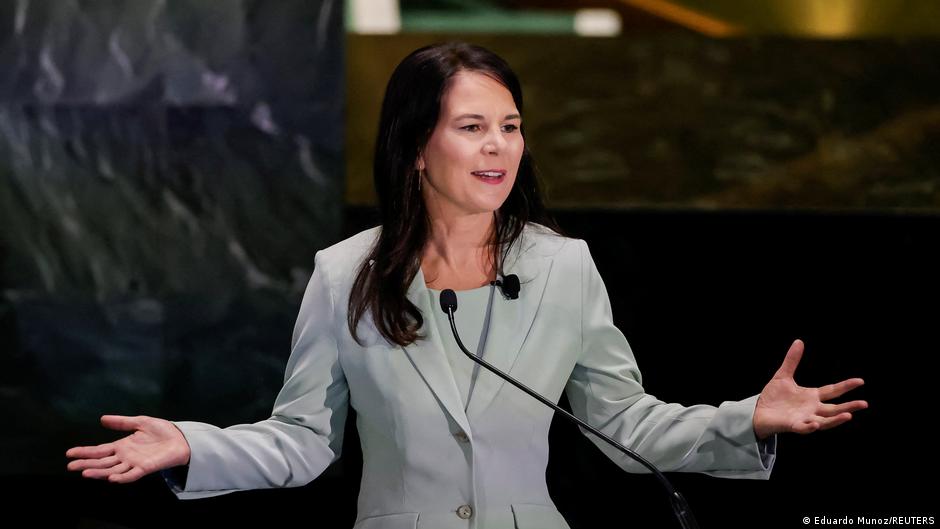
Announcing a notable transition from high-level diplomacy to academia, former German Foreign Minister Annalena Baerbock is set to take up a teaching position at Columbia University in New York City. This move follows the completion of her tenure as President of the United Nations General Assembly, a role she has held since September 2025.
Academic Appointment and Its Strategic Context
Baerbock will become co-director of the Master of Public Administration in Global Leadership program at Columbia’s School of International and Public Affairs (SIPA). This role is designed as a practice-oriented professorship rather than a traditional research chair, emphasizing leadership training and real-world public administration skills. Her contract spans three years, during which she will also serve as a visiting lecturer and public speaker.
The appointment reflects Columbia University's ongoing strategy to integrate high-profile practitioners into its academic programs, enhancing the experiential learning environment for students. Baerbock’s international experience, particularly in foreign policy and global governance, aligns with SIPA’s mission to prepare leaders for complex global challenges.
"I appreciate the diversity of New York City, which allows me to embrace a multitude of perspectives," Baerbock remarked during her UN presidency, signaling her connection to the city she will now call her academic base.
Historical Parallels and Political Career Trajectories
Baerbock’s transition is not without precedent in German political circles. Her predecessor in the German Foreign Ministry, Joschka Fischer, also moved into an academic role after leaving office. Fischer, who served from 1998 to 2005 and was also a Green party member, lectured on foreign policy at Princeton University, subsequently engaging in consultancy roles within international infrastructure projects and corporate sectors.
The pattern of senior politicians entering academia post-service reflects a broader trend whereby practical governance experience informs scholarly discourse and leadership development. This pathway offers a platform for former policymakers to influence future generations of leaders and contribute to policy debates from an educational standpoint.
Implications for Global Leadership Training
Baerbock’s move to Columbia occurs at a time when the demand for leaders equipped to navigate complex international landscapes is intensifying. Her insights from managing Germany’s foreign policy and presiding over a global multilateral institution will enrich the curriculum and provide students with a nuanced understanding of geopolitical dynamics and multilateral diplomacy.
Moreover, her tenure at the UN General Assembly highlighted the challenges of regional rotation and term limits within international organizations, offering valuable case studies on governance and institutional design for academic exploration.
As the baton passes to Bangladesh’s former Foreign Minister, Khalilur Rahman, Baerbock’s academic role will serve as a bridge connecting diplomatic practice with scholarly analysis, underscoring the evolving interplay between politics and education in shaping global governance.