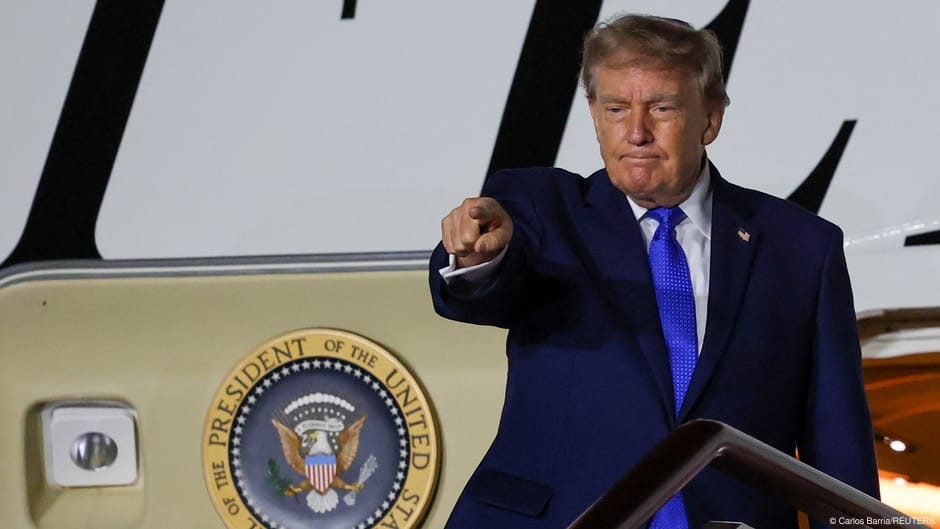
Trump’s Ukraine Deadline Collides With a Looming Shift in Congress
The White House is reportedly seeking an agreement by early 2027, before Democratic control of Congress weakens Trump’s leverage.
The Trump administration is pressing for a peace agreement between Ukraine and Russia before the end of 2026, according to four informed sources cited by the Financial Times. The timetable is tied to a looming change in Washington: Democrats are set to take control of both chambers of Congress in early January 2027 following the midterm elections, sharply reducing the influence of President Donald Trump’s Republicans.
The White House has communicated its preferred deadline to European and Ukrainian officials, the report said. That creates a negotiating window shaped as much by the US political calendar as by conditions on the battlefield. For markets and governments, the central issue is whether this compressed timetable can produce a durable settlement or merely encourage an agreement whose economic and security costs are deferred.
“The Americans are in a hurry, but Putin is not,” one source told the Financial Times.
A European official said Washington was applying intense pressure, prompting fears that Ukraine would be required to make major concessions. Ukrainian officials reportedly interpret renewed speed restrictions on Starshield, the military version of the Starlink satellite communications system, and conspicuous delays in Patriot air-defence missile deliveries as part of an effort to weaken Kyiv’s position and compel territorial concessions to Russia.
A senior Ukrainian official described the administration’s conduct as a deliberate choice intended to help Russia secure favourable terms in peace negotiations. Another FT source said Trump “likes Putin” and wants the process completed before January.
A political deadline with economic consequences
Peace efforts conducted against an electoral deadline carry a familiar structural risk: the parties do not face equal incentives to compromise. Washington wants an outcome before its domestic balance of power changes, while Moscow may benefit from waiting. If Russia expects a hurried US administration to increase pressure on Ukraine, delay itself becomes a source of bargaining power.
The economic implications extend beyond the immediate prospect of a ceasefire. Any agreement involving territorial concessions, uncertain security guarantees or limits on future military support would influence Ukraine’s reconstruction costs, sovereign risk and ability to attract long-term private capital. Investors generally require confidence that infrastructure, energy assets and supply routes will not again become military targets. A settlement reached quickly but lacking credible enforcement could reduce hostilities without removing the risk premium attached to Ukraine.
The pattern also recalls earlier periods when major diplomatic initiatives were constrained by political transitions in Washington. Incoming congressional majorities can alter funding, oversight and sanctions policy even when the presidency remains unchanged. In this case, Democratic control of both chambers could strengthen Kyiv’s position by expanding military assistance, while simultaneously narrowing Trump’s ability to use aid and delivery schedules as negotiating leverage.
Sources cited by The Kyiv Independent said Trump envoys Steven Witkoff and Jared Kushner told Russian and Ukrainian officials at a recent meeting in Berlin that the current negotiating round might be the last realistic chance for an agreement before Washington’s political environment changes. Democrats reportedly intend to increase military assistance to Kyiv substantially from January.
Moscow shows little sign of reciprocal urgency
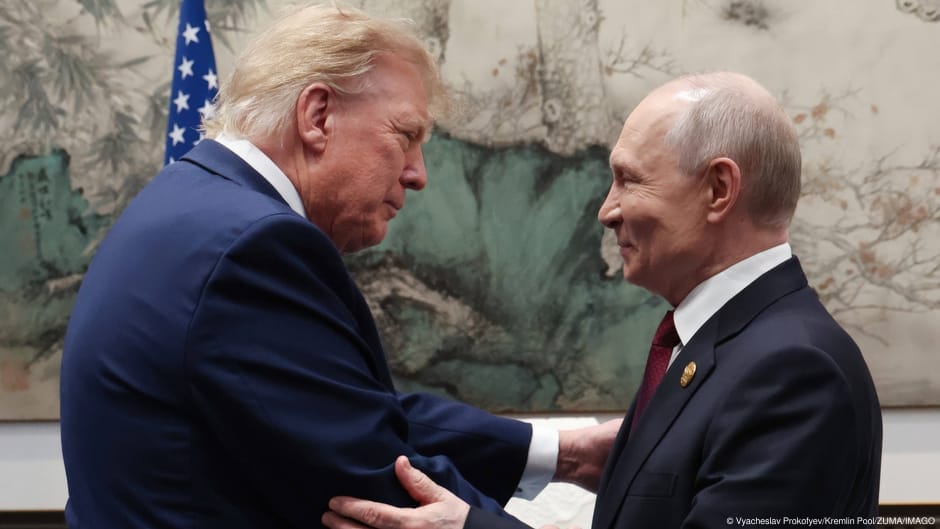
Trump said after bilateral talks with Russian President Vladimir Putin on the sidelines of the Asia-Pacific Economic Cooperation summit in Shenzhen that Putin had clearly expressed a desire to end the war through diplomacy. Speaking at a November 20 news conference, Trump again argued that “enormous hatred” between Putin and Ukrainian President Volodymyr Zelensky was obstructing an agreement.
Trump described his own relationship with the Kremlin leader as “fantastic,” said Putin wanted to end the war and called him “my friend” during their meeting in China. Bloomberg reported that Trump subsequently called European leaders from Air Force One as they met Zelensky in Berlin under the “coalition of the willing” format, telling them that Putin wanted the war to end.
Recent statements from Moscow, however, indicate that Putin’s circle remains unwilling to make fundamental concessions. Russian Deputy Foreign Minister Sergei Ryabkov said both Ukrainian membership in NATO and US-proposed security guarantees modelled on the North Atlantic Treaty were unacceptable to Russia, even if Ukraine fully relinquished the Donbas.
Putin also said at a news conference in China that he had considered a partial ceasefire but abandoned the idea following successful Ukrainian attacks on the Crimean Bridge. “After the strikes on the Crimean Bridge, we will not negotiate,” he said.
This divergence matters economically because the distribution of urgency determines the distribution of concessions. Washington’s approaching deadline may make speed a policy objective, but it does not create a corresponding incentive for Moscow. Russia could instead seek to convert US political pressure into territorial, security and sanctions gains without relaxing its core demands.
For Europe, the resulting uncertainty complicates defence budgets, energy planning and commitments to Ukraine’s reconstruction. A negotiated reduction in fighting could lower near-term fiscal pressure and geopolitical risk. Yet an unstable settlement could leave European governments financing deterrence, reconstruction and renewed military support simultaneously. The White House is therefore racing not only to secure a diplomatic result, but to define the economic and security architecture that will remain after its leverage in Congress diminishes.