King Charles III’s U.S. Visit Highlights Strains in Anglo-American Relations Amid Middle East Tensions
The British monarch’s first visit in 17 years underscores challenges in U.S.-UK ties amid divergent policies over Iran conflict and NATO dynamics.
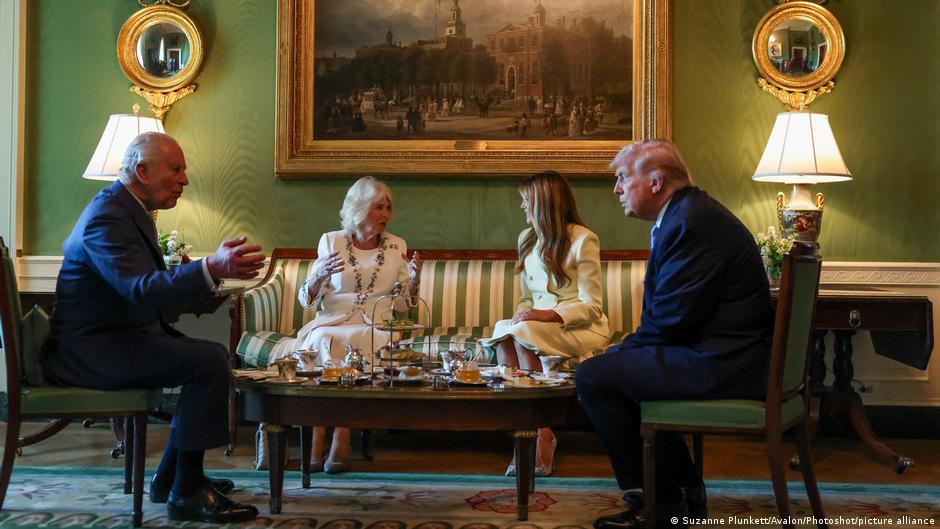
King Charles III and Queen Camilla embarked on their official visit to the United States on April 27, marking the first British monarchial visit since 2007. The trip unfolds amid growing complexities in transatlantic relations, particularly due to diverging stances on the ongoing conflict involving Iran and regional security concerns.
Received at the White House by President Donald Trump and First Lady Melania Trump, the royal couple’s itinerary includes a historically significant speech before both chambers of the U.S. Congress on April 28. This event represents only the second time a British monarch has addressed the American legislature; Queen Elizabeth II made a similar speech in 1991 amid post-Cold War geopolitical shifts.
Diplomatic Context: A Delicate Restoration of the "Special Relationship"
The visit coincides with recent diplomatic friction between the United States and the United Kingdom, primarily triggered by conflicting policies over the escalating conflict between the U.S. and Israel on one side and Iran on the other. In March, British Prime Minister Keir Starmer notably declined to permit the U.S. military to utilize British bases for strikes against Iran and refused to deploy British naval vessels to the strategically vital Strait of Hormuz.
"Charles III arrived in the U.S. with a 'delicate' mission to restore the traditionally close Anglo-American alliance, shaken by divergent approaches to the Iran conflict," analysts note.
Adding to tensions, former President Trump publicly criticized the British Royal Navy's capability to secure the Strait of Hormuz, describing their fleet as "too old" to undertake such operations. Furthermore, Trump disparaged NATO as a "paper tiger," labeling member states as "cowards" due to their reluctance to support U.S. military actions in the Middle East, and even contemplated a potential U.S. withdrawal from the alliance.
Conversely, Prime Minister Starmer expressed frustration over the volatility of British energy prices, linking instability to geopolitical maneuvers by global leaders such as Trump and Russian President Vladimir Putin. Starmer emphasized his administration’s commitment to investing in domestic energy infrastructure to reduce dependence on foreign powers manipulating global gas markets.
Structural Implications for Transatlantic Security and Economic Cooperation
The visit and its surrounding context underscore deeper structural shifts in the Anglo-American alliance, reflecting evolving priorities and political dynamics on both sides of the Atlantic. Historically, the "special relationship" has been grounded in shared strategic interests, military cooperation, and economic integration.
However, the recent divergence over Iran policy illustrates the increasing complexity of maintaining this alliance amid competing domestic pressures and international challenges. The UK’s cautious approach, prioritizing energy security and regional stability, contrasts with the U.S.'s more aggressive stance, potentially signaling a redefinition of traditional roles within NATO and bilateral cooperation frameworks.
Economically, the dispute over energy pricing and supply highlights the interconnectedness of global markets and the geopolitical risks inherent in energy dependence. Starmer’s push for energy autonomy represents a strategic shift towards resilience in the face of external shocks, which could recalibrate trade and investment patterns between the UK and its allies.
While President Trump downplayed the impact of strained relations on King Charles III's visit, emphasizing the monarch’s apolitical role and personal rapport, the broader implications of this diplomatic moment resonate beyond ceremonial gestures. The visit symbolically reaffirms commitment to cooperation, yet it also exposes fault lines that could reshape the future trajectory of transatlantic relations in security and economic domains.
As King Charles III and Queen Camilla proceed to New York for the September 11 commemoration events, their presence reiterates a shared history and enduring partnership, even as the geopolitical landscape challenges the foundational assumptions of their alliance.