Macron Seeks EU-Wide Social Media Ban for Children Under 15
France’s president is pushing Brussels to turn a blocked national measure into a harmonized European rule for minors online.
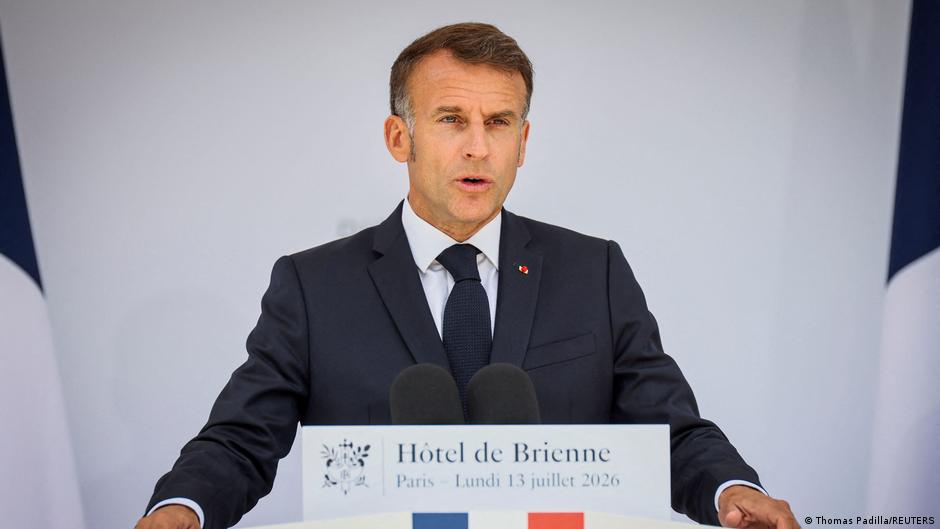
French President Emmanuel Macron has asked European Commission President Ursula von der Leyen to prepare a “European legislative act” that would ban children under the age of 15 from using social media, according to AFP. The request, set out in a letter dated August 29 and reviewed by the agency on Monday, September 7, marks an attempt to move a politically charged domestic initiative onto the European Union’s regulatory agenda.
The proposal comes after France’s Constitutional Council blocked a corresponding national law on August 14. The country’s highest constitutional review body said the provision violated freedom of expression, a finding that turned a high-profile child-protection measure into a legal setback for the French president. Reuters described the decision as a blow to Macron, who then instructed Prime Minister Sebastien Lecornu to prepare a new, “legally flawless” draft law.
Macron, who is due to leave office after elections in April 2027, has said he hopes to “find a way forward” in the coming months through a revised national legislative act that would comply with both EU law and the French Constitution. In his letter to von der Leyen, however, he argued that the matter now requires a broader European response.
“It is now crucial to go further and harmonize this provision through a new European document,” Macron wrote, according to the reported contents of the letter.
A National Defeat Becomes a European Test
The shift from Paris to Brussels is not only a legal maneuver. It reflects a wider structural question facing European governments: whether child protection in digital markets can be handled by individual states, or whether it must be regulated at the level of the single market. Social networks operate across borders, with business models built on scale, advertising data, and constant user engagement. A national ban, even if politically popular, can collide with constitutional protections, enforcement limits, and the legal architecture of the EU.
For Macron, a European framework could offer two advantages. First, it could reduce the risk that national rules are found incompatible with higher legal standards. Second, it could prevent regulatory fragmentation, where platforms face one set of obligations in France, another in Germany, and still another elsewhere in the bloc. In economic terms, the issue is not simply whether children should be on TikTok, Instagram, or Snapchat; it is whether Europe can impose common constraints on platforms whose revenues depend on attention, data collection, and network effects.
The proposed ban followed a December 2025 report from France’s health oversight authority, which warned of harmful effects on children from platforms such as TikTok, Instagram, and Snapchat. The risks cited included lower self-esteem and a possible rise in self-harm, suicides, and drug use. The report also pointed to the scale of youth smartphone use: according to the cited statistics, every second teenager spends between two and five hours a day on a smartphone, while 58% use phones to access social networks.
The Economics of Age Restrictions
For social media companies, age-based restrictions carry direct commercial implications. Younger users are not only current participants in digital markets; they are also future consumers whose habits, preferences, and social graphs can be formed early. A ban for children under 15 would affect user growth, advertising inventories, product design, and the data pipelines that support targeted engagement. Even where minors do not represent the most valuable advertising segment in immediate revenue terms, they are central to long-term platform retention.
That is why the debate has an economic dimension beyond public health. The largest social platforms function as attention markets, converting time spent online into advertising opportunities and behavioral data. If regulation removes a portion of young users from those markets, the effect could be to change incentives around product design: fewer features aimed at early adolescent engagement, stronger age-verification systems, and potentially higher compliance costs for platforms operating in Europe.
Those costs would not fall evenly. Global platforms may be better equipped to absorb new verification, moderation, and legal compliance systems. Smaller services could find the burden heavier, particularly if the EU requires robust proof of age while also respecting privacy rules. As with earlier European digital regulation, a child-access ban could therefore reshape competition as much as conduct. Rules designed to restrain dominant platforms sometimes end up raising the fixed costs of operating in the market.
There is also a parallel with previous European attempts to regulate industries whose harms emerge over time rather than instantly. Tobacco advertising restrictions, alcohol controls, and age limits on gambling all reflected the same basic policy logic: minors are treated as a protected category, and markets built around habit formation are subject to special constraints. Social media differs because expression, communication, and commerce are tightly intertwined. That is why the French Constitutional Council’s freedom-of-expression objection matters economically as well as legally. A platform ban is not just a consumer-safety rule; it touches access to communication infrastructure.
Australia as a Policy Precedent
The French debate is unfolding after Australia blocked access to most social networks for people under 16 in December 2025. That move has become an international reference point for governments considering whether age thresholds can be imposed on major platforms. Macron’s proposal would place the EU closer to that emerging model, although any European measure would have to navigate the bloc’s own legal order and its emphasis on fundamental rights, internal-market consistency, and proportionality.
The political timing is also important. The initiative gained momentum after Macron made the ban a key part of his domestic agenda in his final year in office. By asking von der Leyen to take up the issue, he is trying to turn a contested French measure into a European standard before his presidency ends. Whether that succeeds will depend not only on public concern about children’s mental health, but also on whether EU institutions believe a blanket age ban can be reconciled with rights protections and market rules.
The deeper economic consequence is that Europe may be moving toward a new phase of platform regulation. The first generation of digital policy focused heavily on competition, privacy, and illegal content. A ban on social media use below a fixed age would go further by regulating access to digital markets based on developmental risk. If adopted, it would signal that the EU sees the attention economy not merely as a technology sector, but as a regulated social infrastructure with age-based boundaries.
For now, Macron’s appeal to the Commission is a request rather than a law. But it places Brussels at the center of a dispute that France could not resolve alone: how to protect minors online without breaching constitutional freedoms, fragmenting the single market, or entrenching the very platforms regulators seek to discipline.