AfD Victory in Saxony-Anhalt Alarms Europe’s Neighbors and Markets
Poland, France and the Czech Republic reacted sharply as preliminary results put the far-right AfD far ahead in an eastern German state vote.
The preliminary victory of Alternative for Germany in Saxony-Anhalt has landed well beyond the borders of the eastern German state. For neighboring governments, the result is not only a domestic German political event but a signal about the direction of Europe’s largest economy, the durability of postwar political norms and the pressures now reshaping party systems across the continent.
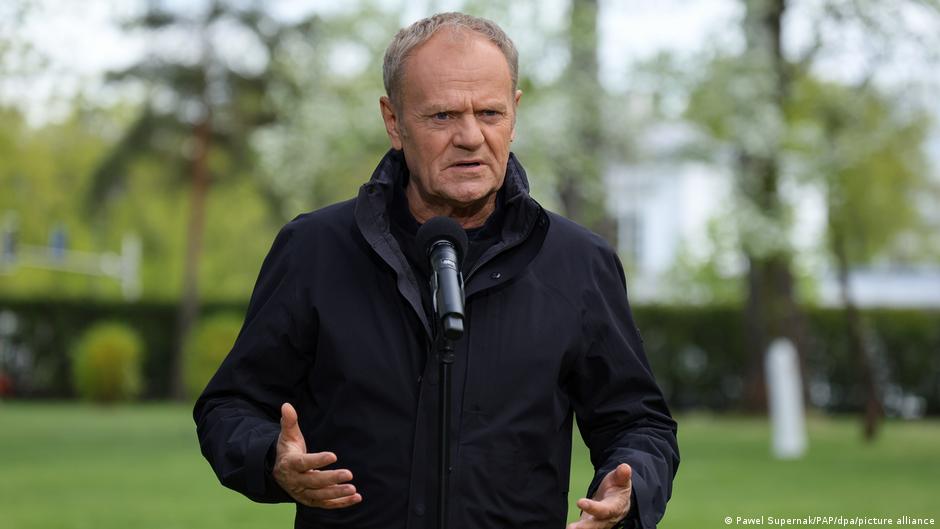
Polish Prime Minister Donald Tusk reacted with unusual bluntness after early results showed the far-right AfD leading decisively in the election to the Saxony-Anhalt state parliament. Writing on X on Sunday evening, September 6, Tusk said he was stunned by the party’s success and warned against celebrating it in Poland.
“In Poland, only idiots or traitors can rejoice at the triumph of the AfD party in Germany,” Tusk wrote.
He added that such people had, in his view, “accumulated somewhat” in the opposition parties Confederation and Law and Justice, known as PiS. The comment underlined how Germany’s regional elections can become political reference points in neighboring states, especially where debates over nationalism, migration, sovereignty and the European Union already structure domestic competition.
According to preliminary results in Saxony-Anhalt, Alternative for Germany won comfortably with 44 percent of the vote. Its candidate for state premier is Ulrich Siegmund. The Christian Democratic Union, whose member Sven Schulze is the incumbent state premier, was projected at 17.4 percent. The Social Democratic Party of Germany was at 9.2 percent, the Greens at 8.9 percent, the Left Party at 8.6 percent and the Sahra Wagenknecht Alliance at 5.1 percent. The Free Democratic Party and other parties failed to clear the five percent threshold, according to the preliminary count.
On that basis, the 83 seats in the Saxony-Anhalt legislature could be distributed as follows: AfD would receive 39 seats, the CDU 15, the Left Party, Greens and SPD eight each, and the Sahra Wagenknecht Alliance five. Final preliminary results were expected during the night into September 7.
A Regional Vote With Continental Implications
The scale of the AfD result matters because Saxony-Anhalt is not a marginal arena in the political economy of Germany. Eastern German states have long carried the imprint of post-reunification restructuring: deindustrialization, demographic decline in many towns, wage gaps with western regions and persistent grievances over representation. Those structural conditions have repeatedly created openings for parties that frame economic insecurity as a failure of mainstream elites.
For investors and policymakers, the immediate issue is not simply whether the AfD can enter government in Saxony-Anhalt. It is whether a party outside the traditional governing consensus can further fragment Germany’s federal system, complicate coalition formation and weaken the predictability that has long been one of the country’s economic assets. German state governments influence education, policing, infrastructure implementation and parts of industrial policy. They also shape the Bundesrat, the federal chamber representing the states, where national legislation can be slowed, amended or blocked.
The arithmetic in Saxony-Anhalt points to a legislature in which the AfD would be the largest force but not necessarily able to govern. Yet even without executive power, a result of 44 percent would shift bargaining power, public debate and strategic calculations among mainstream parties. For companies, municipalities and European institutions, prolonged coalition negotiations or unstable governing arrangements can translate into delayed decisions on investment, energy transition projects, transport links and public procurement.
The political response in the Czech Republic showed the opposite interpretation from Tusk’s. Tomio Okamura, speaker of the Chamber of Deputies of the Czech parliament and founder of the right-wing Freedom and Direct Democracy party, congratulated the German far-right party on its success during an appearance on public broadcaster CT. He said he hoped above all that it would join a new governing coalition in Saxony-Anhalt. Since late 2025, the Czech Republic has been governed by a coalition consisting of billionaire Andrej Babis’s right-populist ANO party, Okamura’s SPD and the Motorists party.
That reaction illustrates how far-right and right-populist parties increasingly treat each other’s advances as part of a broader European cycle. A strong AfD performance in Germany can energize aligned forces elsewhere, reinforcing narratives that the political center is losing its capacity to manage living costs, migration, energy security and industrial change.
History, Trade and the Cost of Fragmentation
France’s response was framed in explicitly European and historical terms. Benjamin Haddad, France’s minister for European affairs, wrote on X that the result marked a “grave moment for Europe.” He said governments must listen to anger, anxieties and fears and respond to them, while insisting that nationalism and xenophobia would never be the solution. He also urged Europeans not to forget their history, saying that this was the significance of decisions taken by France and Germany.
For Econpress readers, the economic significance lies in the link between political fragmentation and Europe’s capacity to act collectively. Germany is central to eurozone fiscal debates, EU budget negotiations, industrial subsidy rules, defense procurement, energy policy and trade positioning toward the United States and China. When its internal politics become more polarized, the cost is not confined to Berlin or Magdeburg. It can slow European coordination at moments when speed is economically valuable.
There is also a historical parallel with earlier periods in which regional distress and distrust of institutions changed the trajectory of national politics. The lesson is not mechanical repetition, but the importance of structural economic strain. Parties such as the AfD gain ground where voters believe mainstream economic management has failed to protect incomes, identity, local services or future prospects. The policy response therefore cannot be only rhetorical condemnation. It also requires credible answers on housing, wages, infrastructure, migration management and the uneven geography of growth.
That is why the reactions from Warsaw, Prague and Paris are so revealing. Tusk treated the AfD’s triumph as a warning rooted in Poland’s experience of German history and contemporary security. Okamura treated it as an opportunity for ideological alignment across borders. Haddad framed it as a test of Europe’s memory and political resilience. Together, those responses show that a state election in eastern Germany has become a proxy for a wider struggle over the continent’s economic model and democratic center of gravity.
The Saxony-Anhalt result is preliminary, but the message is already being processed across Europe: the economic discontents of the post-crisis, post-pandemic and post-energy-shock years are no longer peripheral to politics. They are reorganizing it.