Finland Completes 200-Kilometer Border Fence With Russia Amid Security Shift
The project reflects Finland’s reassessment of border security, Schengen obligations and infrastructure priorities after Russia’s war against Ukraine.
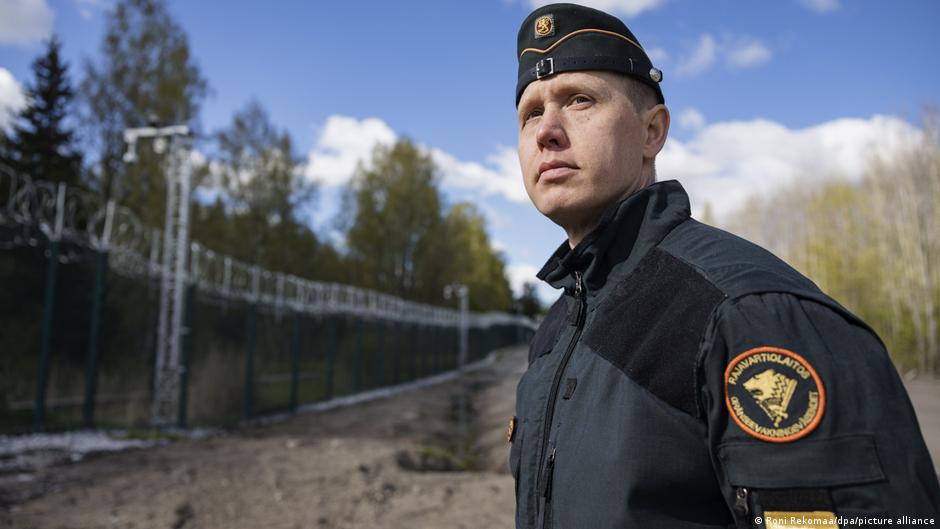
Finland has completed construction of a 200-kilometer barrier along its border with Russia, a project that Helsinki has framed not only as a security measure but also as a structural response to a changed economic and geopolitical environment in northern Europe.
The Finnish Border Guard, part of a NATO member state’s security system, announced on Monday, September 7, that the barrier had been finished. Interior Minister Mari Rantanen described the fence as an essential component of border security at a time of heightened uncertainty.
“The main task of the state is to ensure the security of its citizens. The barrier wall on the eastern border is an integral part of an effective border security system in these unpredictable times,” Rantanen said.
Her statement underlined a broader shift in Finland’s policy posture since Russia’s full-scale war against Ukraine. For decades, Finland’s long eastern frontier was managed within a framework shaped by geography, trade, cross-border contacts and a historically careful relationship with Moscow. The completion of the fence marks another visible sign that this framework has been replaced by one centered on deterrence, controlled mobility and hard security infrastructure.
A Border Project With Economic Weight
The Finnish Border Guard has called the barrier one of the largest infrastructure projects in Finland. Its physical elements go beyond a simple fence: the system includes a 4.5-meter-high barrier, technical surveillance equipment, a road network and a 25-meter-wide cleared strip. These components indicate that the investment is intended to function as a permanent operational system rather than a symbolic line on the frontier.
The scale of the work also gives the project an economic dimension. According to the Border Guard, hundreds of companies were involved in implementation. At construction sites, as many as 600 people and 150 pieces of equipment worked each day. That made the fence a security project with direct industrial, labor and logistics effects inside Finland, mobilizing contractors, machinery, materials and support services across a large geographic area.
Such projects often illustrate how security spending can reshape public investment priorities. Resources that might previously have flowed into transport, housing, energy or civilian digital infrastructure are redirected toward border control and resilience. In Finland’s case, the fence is part of a larger recalibration in which the state’s assessment of risk has altered the economic value placed on territorial control and surveillance capacity.
Rantanen also linked the project to Finland’s role as a member of the Schengen Area. She said Finland bears its share of responsibility for security at the external borders. That point matters economically as well as politically: Schengen depends on confidence that external frontiers can be managed effectively, allowing internal mobility and commerce to function without routine border controls among member states.
In this sense, Finland’s eastern border is not only a national frontier. It is part of a wider European system that supports labor mobility, trade flows and integrated supply chains. When pressure increases at an external border, the costs are not limited to security agencies. They can affect transport planning, municipal budgets, regional businesses and the political sustainability of open internal borders within Europe.
From Cross-Border Normality to Strategic Separation
Finland began construction in March 2023 against the backdrop of Russia’s war against Ukraine. Helsinki was concerned that Russia could use migrants as a means of applying pressure on the country. That fear placed Finland within a wider European debate over so-called instrumentalized migration, in which population movements are treated by governments not only as humanitarian or administrative challenges but also as tools of geopolitical leverage.
The Finnish case also carries historical resonance. Border infrastructure tends to expand during periods when states conclude that informal understandings, diplomatic restraint or economic interdependence no longer provide sufficient protection. During the Cold War, physical and administrative barriers across Europe reflected the separation of political systems and security blocs. Finland’s new fence does not recreate that historical order, but it reflects a comparable logic: uncertainty raises the value of controlled borders and lowers the perceived benefits of openness with a hostile or unpredictable neighbor.
For border communities, however, the economics of separation are rarely abstract. In Imatra, near the construction area, enthusiasm for the project was absent, though residents had come to accept it, Mayor Matias Hilden said in an interview with DW. “It is a little sad that we need this,” he said.
That local reaction captures a recurring tension in security infrastructure. National governments assess threats at the strategic level, while municipalities experience the consequences in daily life: altered landscapes, changed perceptions of place, reduced cross-border normality and a new association between local development and national defense. Even where residents accept the rationale, a fence can signal the end of an earlier economic geography in which proximity to the border could mean opportunity as well as risk.
The September 2022 influx of Russians into Finland after Russian President Vladimir Putin announced partial mobilization also forms part of the background. A large number of Russians fled to Finland at that time, demonstrating how rapidly political decisions in Russia could create pressure on neighboring states. For Finnish policymakers, that episode likely reinforced the argument that border management needed to be prepared for sudden and politically driven movement.
The completed barrier therefore should be read as both a physical installation and an economic policy signal. It shows that Finland is willing to commit large-scale infrastructure resources to border resilience, embed technology and mobility control into its eastern frontier, and align national investment with its responsibilities inside Schengen and NATO.
The consequences will unfold over time. The immediate effect is a strengthened border security system. The longer-term effects may include new patterns of public procurement, altered regional planning, higher baseline spending on surveillance and maintenance, and a further reduction in the economic interaction that once characterized parts of the Finnish-Russian frontier. In an era defined by Russia’s war against Ukraine and Finland’s NATO membership, the fence is not merely a response to a single risk. It is part of a durable restructuring of how Finland prices security, sovereignty and openness.